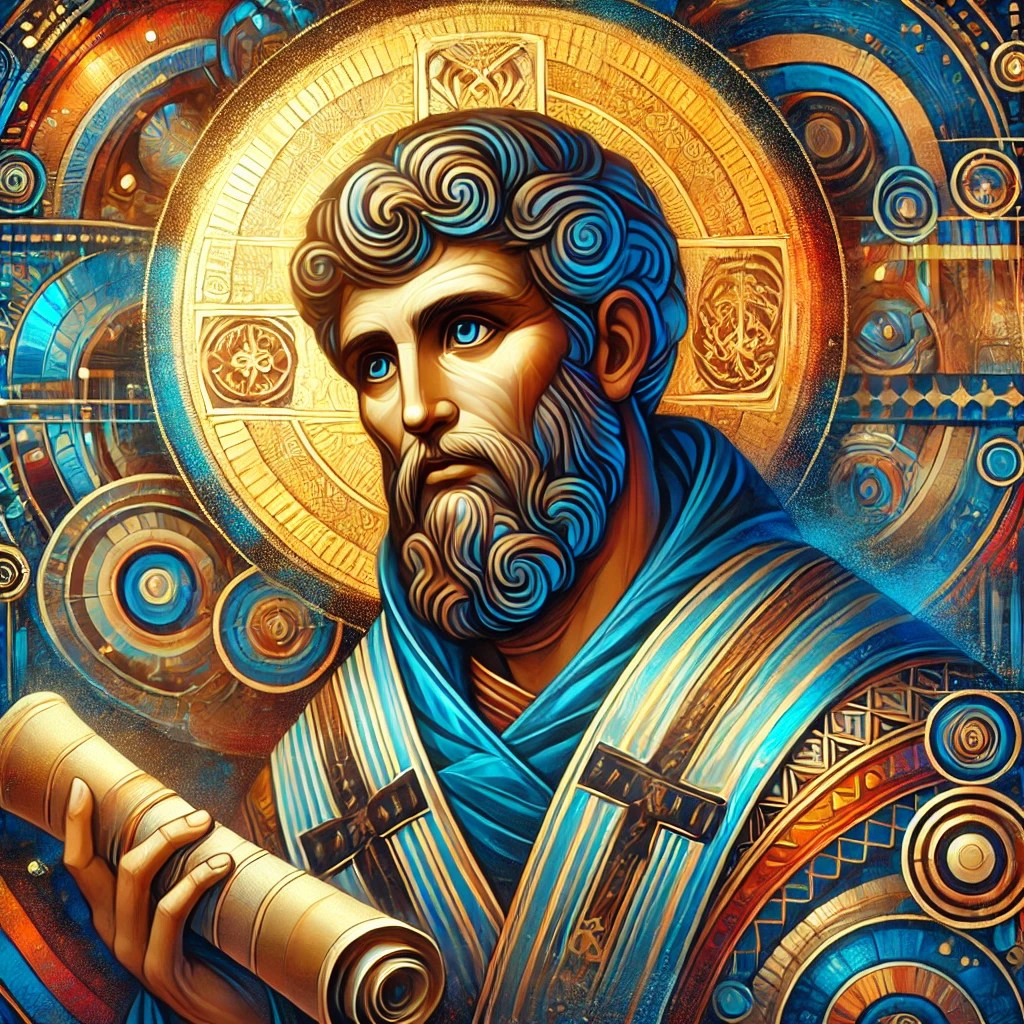
A Beacon of Orthodoxy
Saint John of Damascus, also known as John Damascene, is one of the most celebrated figures in Christian history. Born during the 7th century in Damascus, he is revered for his eloquent defense of the veneration of holy images during the Iconoclastic Controversy. This theological battle over the use of icons in worship was a defining moment in Church history, and John stood at its forefront, armed with reason, scripture, and tradition. As a theologian, poet, and monk, his works have left an enduring legacy. Declared a Doctor of the Church, Saint John of Damascus bridges the gap between Eastern and Western Christianity, his writings inspiring believers across centuries to hold steadfast to their faith.
Early Life and Spiritual Awakening
John was born around 675 AD into a distinguished Christian Arab family in Damascus during the reign of the Umayyad Caliphate. His father, Sarjun ibn Mansur, served as a high-ranking official in the Caliph’s court. This position allowed John access to an exceptional education that encompassed theology, philosophy, Greek rhetoric, and music. His mentor, a Sicilian monk named Cosmas, played a critical role in nurturing John’s intellectual and spiritual development, preparing him for the challenges he would later face.
Despite the Islamic governance of Damascus, John’s family practiced their Christian faith openly. Growing up in this environment, John witnessed firsthand the tensions between different religious communities, which instilled in him a deep respect for defending and articulating the truths of Christianity.
John’s spiritual awakening is less a story of dramatic conversion and more of a gradual deepening of his faith. This culminated in his decision to renounce his political career after his father’s death, choosing instead to embrace the monastic life. His move to the Monastery of Saint Sabas near Jerusalem marked the beginning of a life wholly devoted to prayer, writing, and defending the Christian faith.
Defender of Icons
The 8th century saw the Byzantine Empire embroiled in the Iconoclastic Controversy, a theological debate that questioned the use of religious images (icons) in worship. Emperor Leo III’s edict against the veneration of icons led to widespread destruction of religious art and persecution of those who defended it. The controversy struck at the heart of Christian worship, dividing believers and clergy alike.
John of Damascus, though living under Islamic rule and outside the jurisdiction of the Byzantine Emperor, boldly took up the cause of defending icons. From the safety of the Caliph’s court, he wrote three monumental treatises: On the Divine Images, which argued that icons serve as “windows to the divine” and are essential for teaching and devotion. He appealed to the Incarnation, emphasizing that since Christ took on human flesh, it is fitting to represent Him and other holy figures in visible forms.
Despite being physically removed from the turmoil of the Byzantine Empire, John’s writings were smuggled into the empire, where they became instrumental in the eventual restoration of icons at the Second Council of Nicaea in 787. His courage to speak the truth, even at great personal risk, made him a pivotal figure in preserving Christian orthodoxy.
Monastic Life and Theological Contributions
After withdrawing from public life, John entered the Monastery of Saint Sabas near Jerusalem, a renowned center of ascetic spirituality. Here, he dedicated himself to a life of prayer, writing, and hymn composition. He authored several influential works, including The Fountain of Knowledge, a comprehensive theological encyclopedia. This work is divided into three parts: Philosophical Chapters, On Heresies, and An Exact Exposition of the Orthodox Faith. The latter is particularly significant, as it systematically explains Christian doctrine and has become a cornerstone in both Eastern and Western theological studies.
In addition to his theological writings, John was a gifted poet and hymnographer. Many of his hymns, such as those for the Paschal liturgy (Orthodox Easter), are still sung in Eastern Christian liturgies today. His ability to combine theological depth with poetic beauty enriched the Church’s worship and catechesis, ensuring his teachings reached both the learned and the humble.
Enduring Legacy
Saint John of Damascus passed away on December 4, 749 AD. Following his death, stories of miracles associated with his intercession began to emerge. Pilgrims visiting the Monastery of Saint Sabas reported healings and divine interventions, and his relics were venerated as a source of grace. Over the centuries, his feast day on December 4th has been a time for the faithful to reflect on his life and seek his intercession.
The Second Council of Nicaea in 787 affirmed the veneration of icons, vindicating John’s theological stance. This victory solidified his place in Church history as a defender of the faith. Both Eastern and Western Churches honor him, emphasizing his universal appeal and the timeless relevance of his teachings.
Emulating Saint John’s Zeal
Saint John of Damascus teaches us the value of courage, intellect, and unwavering faith in the face of opposition. His life challenges us to defend the truths of our faith with love and reason, especially in a world that often misunderstands or dismisses them. Here are a few ways we can integrate his lessons into our daily lives:
- Deepen Our Knowledge of the Faith: Just as Saint John dedicated himself to learning and teaching, we too can take time to study the Scriptures, the Catechism, and Church teachings to strengthen our understanding.
- Defend the Truth with Love: In conversations about our faith, let us emulate John’s example of using reason, humility, and compassion.
- Enrich Worship: John’s hymns remind us of the power of beauty in worship. Let us bring our best efforts to liturgical life, whether through singing, serving, or praying more attentively.
- Persevere in Prayer: John’s monastic life was grounded in prayer. We too can strive to make prayer the anchor of our daily lives, seeking God’s guidance in all we do.
Engage with Us!
We look forward to hearing your reflections and supporting one another as we strive to embody the courage, intellect, and devotion that Saint John of Damascus exemplified.
- How can Saint John of Damascus’ defense of icons inspire us to stand firm in our beliefs today?
- What role does beauty play in your personal worship and prayer life, as it did in Saint John’s hymns and writings?
- How can we use our unique talents, like Saint John did, to serve God and defend the faith in our own communities?
Let us encourage each other to live out our faith with love and humility.
Saint John of Damascus, pray for us!
Follow us on Instagram and Facebook for more insights and reflections on living a faith-filled life.

 Holy Manna!
Leave a comment