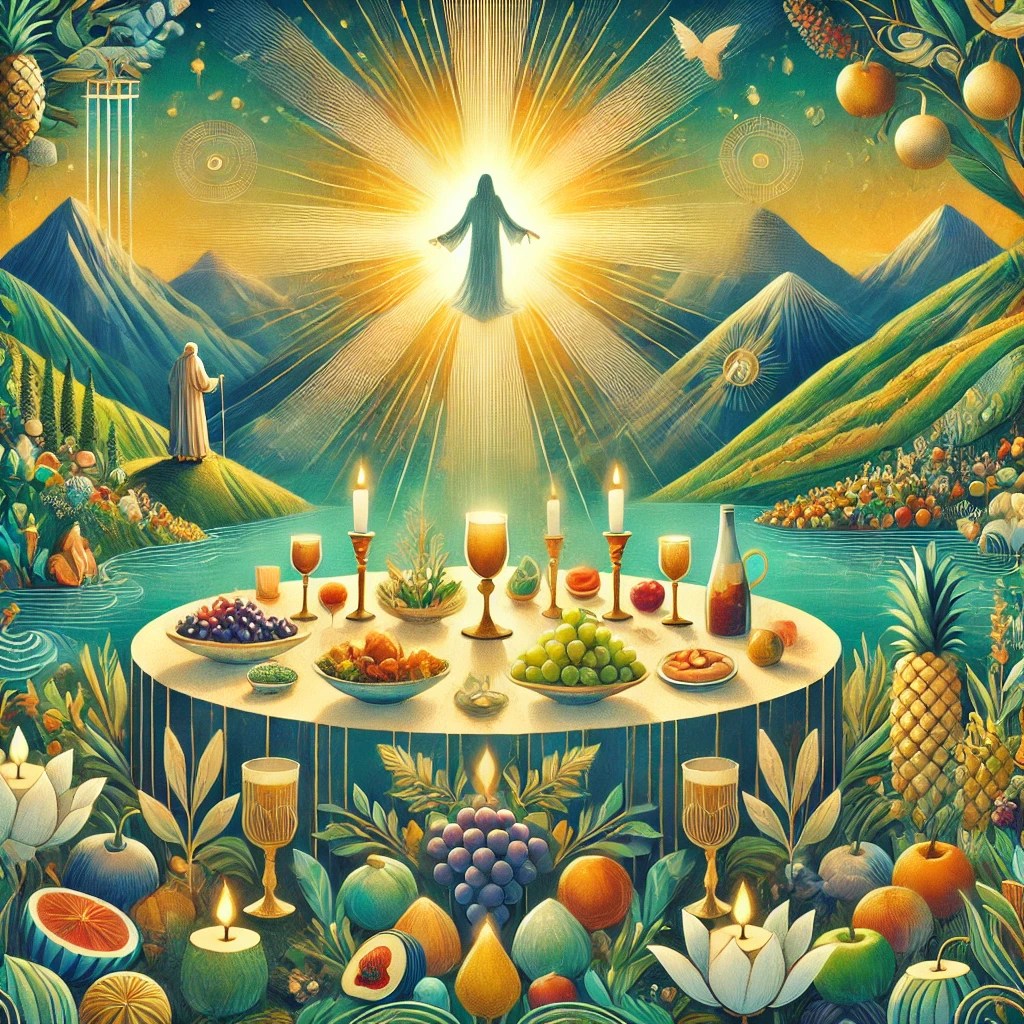
Feasting on the Abundance of God’s Love
Have you ever felt overwhelmed by the generosity of someone who went out of their way to meet your needs? Imagine that feeling magnified infinitely, as God invites us to trust in His boundless care. Today’s readings immerse us in the theme of God’s abundant provision—not just for our physical needs, but for the deepest hunger of our souls.
In Isaiah 25, we are drawn into a breathtaking vision of a heavenly banquet where death is defeated, tears are wiped away, and disgrace is no more. This prophecy resonated deeply with Israel, a people who often experienced exile, famine, and hardship, as it painted a picture of divine abundance and restoration. It wasn’t just about food—it was about communion with God.
The beloved Psalm 23 takes this theme further, offering the familiar image of the Lord as our shepherd. His provision is intimate and personal, guiding us to green pastures, restoring our souls, and preparing a table in the presence of our enemies. This psalm has comforted countless hearts, reminding us that God is not only powerful but tender and ever-present in our struggles.
Finally, in The Gospel of Matthew, we witness Jesus fulfilling these promises. He cures the sick, showing His compassion for their physical ailments, and feeds the hungry, miraculously multiplying bread and fish to satisfy a crowd. Here, Jesus doesn’t just provide sustenance—He reveals Himself as the Bread of Life, the ultimate fulfillment of God’s promise of abundance.
These readings invite us to reflect on the generous heart of God. How do you experience His provision in your life today? How can we, like Jesus, share His abundance with others? Let’s dive into these passages and open our hearts to the feast He has prepared for us.
First Reading – Isaiah 25:6-10
The Banquet of Salvation
The Book of Isaiah is often called the “Fifth Gospel” because of its prophetic glimpses into God’s plan for salvation, culminating in the coming of the Messiah. Today’s passage draws us to “this mountain,” a symbolic representation of Mount Zion, where God establishes a feast for all nations and triumphs over death itself. Written during a period of upheaval, likely amid the Assyrian threat to Jerusalem, this passage gave Israel hope for restoration and unity under God’s reign. It is a message of abundance and victory, fitting perfectly into today’s theme of God’s boundless provision.
Isaiah’s prophecy not only spoke to ancient Israel but also resonates deeply with Christians, pointing to the Eucharist, the ultimate banquet where God’s people are nourished both physically and spiritually. Let us dive into this powerful reading verse by verse.
Isaiah 25:6-10
New Revised Standard Version Catholic Edition
6 On this mountain the Lord of hosts will make for all peoples
a feast of rich food, a feast of well-aged wines,
of rich food filled with marrow, of well-aged wines strained clear.
7 And he will destroy on this mountain
the shroud that is cast over all peoples,
the sheet that is spread over all nations;
8 he will swallow up death forever.
Then the Lord God will wipe away the tears from all faces,
and the disgrace of his people he will take away from all the earth,
for the Lord has spoken.
9 It will be said on that day,
Lo, this is our God; we have waited for him, so that he might save us.
This is the Lord for whom we have waited;
let us be glad and rejoice in his salvation.
10 For the hand of the Lord will rest on this mountain.
The Moabites shall be trodden down in their place
as straw is trodden down in a dung-pit.
Detailed Exegesis
Verse 6: “On this mountain the Lord of hosts will make for all peoples a feast of rich food, a feast of well-aged wines, of rich food filled with marrow, of well-aged wines strained clear.”
God’s “mountain” often symbolizes His dwelling place and presence. Here, Mount Zion represents the spiritual elevation of humanity through God’s providence. The feast includes the finest foods and drinks, symbolizing not only physical satisfaction but also the spiritual fullness God provides. It anticipates the Messianic banquet described in Matthew 8:11 and the heavenly banquet in Revelation 19:9.
Verse 7: “And he will destroy on this mountain the shroud that is cast over all peoples, the sheet that is spread over all nations.”
The “shroud” and “sheet” symbolize death and sin, which veil humanity in despair. By destroying this, God opens the way for eternal life and reconciliation, a theme fulfilled in Christ’s resurrection.
Verse 8: “He will swallow up death forever. Then the Lord God will wipe away the tears from all faces, and the disgrace of his people he will take away from all the earth, for the Lord has spoken.”
This verse is one of the most powerful Old Testament proclamations of God’s victory over death, echoed in 1 Corinthians 15:54: “Death has been swallowed up in victory.” God’s tender act of wiping away tears shows His intimate care for His people, signaling the complete restoration of their dignity.
Verse 9: “It will be said on that day, Lo, this is our God; we have waited for him, so that he might save us. This is the Lord for whom we have waited; let us be glad and rejoice in his salvation.”
This declaration of faith and joy reflects the hope and trust Israel places in God’s promises. It is a communal proclamation, pointing to the ultimate salvation brought by Christ, for whom the world had been waiting.
Verse 10: “For the hand of the Lord will rest on this mountain. The Moabites shall be trodden down in their place as straw is trodden down in a dung-pit.”
While the first part reassures God’s protective presence, the second warns of judgment on Israel’s enemies, represented by Moab. This verse reflects God’s justice, ensuring that all evil will be subdued in His divine plan.
Teachings
The Catechism of the Catholic Church (CCC) teaches that the Eucharist is “a pledge of the glory to come” (CCC 1402). Isaiah’s prophecy foreshadows this reality, where the heavenly banquet fulfills God’s promise to unite all nations. Saints such as St. Augustine saw in this passage a prefiguration of the heavenly joy prepared for God’s faithful.
Historically, this text became foundational for eschatological (end times) hope, inspiring countless martyrs and faithful to trust in God’s ultimate victory over sin and death. The resurrection of Christ, as the fulfillment of this prophecy, remains the cornerstone of Christian hope.
Reflection
Isaiah’s vision invites us to place our trust in God’s abundant provision. In a world where scarcity and fear often dominate, this reading reminds us that God’s love knows no bounds. He invites us to His banquet, offering not just sustenance but eternal joy.
How can we live with this confidence in God’s providence? Do we believe that He can provide for our deepest needs, even when we feel empty?
This week, consider attending daily Mass or adoration, where you can experience the Eucharistic banquet Isaiah foresaw. Reflect on the ways God has provided for you, and challenge yourself to share His abundance with others, whether by feeding the hungry, comforting the grieving, or offering hope to someone in despair.
God is calling you to the feast. Will you say yes to His invitation?
Responsorial Psalm – Psalm 23
The Divine Shepherd and His Overflowing Abundance
Psalm 23, one of the most beloved passages in all of Scripture, paints a vivid image of God as a shepherd—a protector, provider, and guide for His people. Written by King David, this psalm likely draws from his own experiences as a shepherd, translating his intimate knowledge of the role into a beautiful depiction of God’s care. For the Israelites, the shepherd was a symbol of leadership, especially in how God guided His chosen people through the wilderness and into the Promised Land.
Today’s theme of God’s abundant provision is deeply reflected in this psalm. Its imagery of still waters, green pastures, and an overflowing cup reminds us that God does not just meet our needs; He goes beyond, offering peace, restoration, and eternal security. This timeless psalm invites us to rest in the confidence of God’s shepherding presence.
Psalm 23
New Revised Standard Version Catholic Edition
The Divine Shepherd
A Psalm of David
1 The Lord is my shepherd, I shall not want.
2 He makes me lie down in green pastures;
he leads me beside still waters;
3 he restores my soul.
He leads me in right paths
for his name’s sake.
4 Even though I walk through the darkest valley,
I fear no evil;
for you are with me;
your rod and your staff—
they comfort me.
5 You prepare a table before me
in the presence of my enemies;
you anoint my head with oil;
my cup overflows.
6 Surely goodness and mercy shall follow me
all the days of my life,
and I shall dwell in the house of the Lord
my whole life long.
Detailed Exegesis
Verse 1: “The Lord is my shepherd, I shall not want.”
This opening declaration sets the tone for the entire psalm. Calling God “my shepherd” is deeply personal, reflecting trust and intimacy. The phrase “I shall not want” emphasizes God’s sufficiency in providing for every need, echoing Jesus’ reassurance in Matthew 6:33: “Seek first the kingdom of God…and all these things will be given to you.”
Verse 2: “He makes me lie down in green pastures; he leads me beside still waters.”
Green pastures and still waters symbolize peace, rest, and nourishment. In a desert context, such places were rare and precious, reflecting the abundant care of the shepherd who leads his flock to the best locations. Spiritually, it reminds us of the tranquility found in God’s presence, a theme echoed in the Eucharist, where God nourishes our souls.
Verse 3: “He restores my soul. He leads me in right paths for his name’s sake.”
Restoration points to God’s power to heal and renew us, both spiritually and emotionally. The “right paths” signify a moral and righteous life, guided by God’s wisdom. Acting “for his name’s sake” reminds us that God’s care for us is not just for our good but for His glory.
Verse 4: “Even though I walk through the darkest valley, I fear no evil; for you are with me; your rod and your staff—they comfort me.”
This verse captures God’s presence in our trials. The “darkest valley” (or “valley of the shadow of death”) symbolizes life’s hardships and mortality. The rod and staff—tools of the shepherd—represent God’s protection and guidance. Together, they provide comfort, reminding us that we are never abandoned.
Verse 5: “You prepare a table before me in the presence of my enemies; you anoint my head with oil; my cup overflows.”
This shift to banquet imagery reinforces God’s provision, even in the face of adversity. The table is a sign of divine hospitality, the oil signifies consecration and blessing, and the overflowing cup reflects God’s generosity. This verse is a clear precursor to the Eucharist, where God invites us to His table in abundance.
Verse 6: “Surely goodness and mercy shall follow me all the days of my life, and I shall dwell in the house of the Lord my whole life long.”
This verse is a declaration of trust in God’s unwavering goodness and faithfulness. The promise to dwell in God’s house forever signifies eternal communion with Him, a foreshadowing of heaven.
Teachings:
The Catechism of the Catholic Church (CCC) emphasizes the role of God as our shepherd, particularly in the context of Christ as the Good Shepherd. CCC 754 teaches, “The Church is, accordingly, the sheepfold, the sole and necessary gateway to which is Christ.” This psalm resonates deeply with this image, reminding us of Christ’s pastoral care, especially in the Eucharist, where He leads us to “green pastures.”
Saint Augustine often reflected on Psalm 23, connecting it to the Eucharist as the ultimate table prepared for God’s people. He wrote, “The table that is prepared is spiritual refreshment, the bread and wine which God has provided for His Church to strengthen and renew us.”
Historically, this psalm has been a source of comfort in times of trial, prayed by saints, martyrs, and the faithful throughout centuries. It embodies the Church’s trust in God’s providential care, even in the darkest times.
Reflection:
Psalm 23 invites us to reflect on God’s constant and abundant care in our lives. In a world that often leaves us feeling empty or restless, this psalm reassures us that God’s provision is both personal and perfect.
How can we let God lead us to His “green pastures” in our daily lives? Do we trust Him to guide us even in life’s darkest valleys?
This week, take time to pray with this psalm, asking God to reveal areas where you may need to surrender control and allow Him to shepherd you. Look for tangible ways to share God’s abundant goodness with others—whether through acts of kindness, encouragement, or generosity.
In every moment, remember that your Good Shepherd walks beside you, preparing a place of rest and abundance for your soul. Will you follow His lead?
Holy Gospel – Matthew 15:29-37
The Compassionate Provider
The Gospel of Matthew is rich with themes of Jesus’ mission to reveal the Kingdom of God through both word and deed. Today’s passage situates us in Galilee, where Jesus performs profound acts of healing and multiplication, demonstrating His compassion for the physical and spiritual needs of the people.
In a culture where physical ailments often carried a stigma of sin or divine punishment, Jesus’ healing miracles were radical acts of restoration, affirming the dignity of the afflicted. Furthermore, the feeding of the four thousand in a remote area recalls God’s provision of manna in the wilderness during Israel’s exodus. This miracle emphasizes Jesus as the fulfillment of divine care, fitting seamlessly with today’s theme of God’s abundant provision.
Matthew 15:29-37
New Revised Standard Version Catholic Edition
Jesus Cures Many People
29 After Jesus had left that place, he passed along the Sea of Galilee, and he went up the mountain, where he sat down. 30 Great crowds came to him, bringing with them the lame, the maimed, the blind, the mute, and many others. They put them at his feet, and he cured them, 31 so that the crowd was amazed when they saw the mute speaking, the maimed whole, the lame walking, and the blind seeing. And they praised the God of Israel.
Feeding the Four Thousand
32 Then Jesus called his disciples to him and said, “I have compassion for the crowd, because they have been with me now for three days and have nothing to eat; and I do not want to send them away hungry, for they might faint on the way.” 33 The disciples said to him, “Where are we to get enough bread in the desert to feed so great a crowd?” 34 Jesus asked them, “How many loaves have you?” They said, “Seven, and a few small fish.” 35 Then ordering the crowd to sit down on the ground, 36 he took the seven loaves and the fish; and after giving thanks he broke them and gave them to the disciples, and the disciples gave them to the crowds. 37 And all of them ate and were filled; and they took up the broken pieces left over, seven baskets full.
Detailed Exegesis
Verse 29: “After Jesus had left that place, he passed along the Sea of Galilee, and he went up the mountain, where he sat down.”
The mountain, often a symbol of divine revelation, sets the stage for significant events in Scripture. Jesus ascending the mountain suggests He is about to teach, perform miracles, or reveal God’s power, as Moses did on Mount Sinai.
Verse 30: “Great crowds came to him, bringing with them the lame, the maimed, the blind, the mute, and many others. They put them at his feet, and he cured them.”
The people’s trust in Jesus is evident as they bring their most vulnerable to Him. His curing of all ailments fulfills Isaiah’s prophecy (Isaiah 35:5-6), which foretells the Messiah healing the blind, deaf, lame, and mute. These acts affirm Jesus as the long-awaited Savior.
Verse 31: “So that the crowd was amazed when they saw the mute speaking, the maimed whole, the lame walking, and the blind seeing. And they praised the God of Israel.”
The crowd’s amazement leads to worship, acknowledging these miracles as evidence of God’s presence. Their praise of the “God of Israel” indicates that these acts are not merely human achievements but divine interventions.
Verse 32: “Then Jesus called his disciples to him and said, ‘I have compassion for the crowd, because they have been with me now for three days and have nothing to eat; and I do not want to send them away hungry, for they might faint on the way.’”
Here, Jesus’ compassion is deeply personal. His concern for their physical sustenance underscores that God cares for both spiritual and material needs. The mention of three days may hint at the resurrection, where ultimate restoration and provision are found.
Verse 33: “The disciples said to him, ‘Where are we to get enough bread in the desert to feed so great a crowd?’”
The disciples’ question reflects human limitation and doubt, contrasting Jesus’ divine ability to provide. The “desert” recalls Israel’s dependence on God for manna, reinforcing the parallel between this miracle and God’s past provision.
Verse 34: “Jesus asked them, ‘How many loaves have you?’ They said, ‘Seven, and a few small fish.’”
The number seven often symbolizes perfection or completeness in Scripture, hinting at the sufficiency of God’s provision. Jesus takes their meager offering and transforms it into abundance.
Verse 35-36: “Then ordering the crowd to sit down on the ground, he took the seven loaves and the fish; and after giving thanks he broke them and gave them to the disciples, and the disciples gave them to the crowds.”
Jesus’ actions echo the Eucharistic celebration, where bread is blessed, broken, and shared. This act not only satisfies physical hunger but points to the greater spiritual nourishment found in the Eucharist.
Verse 37: “And all of them ate and were filled; and they took up the broken pieces left over, seven baskets full.”
The leftover baskets signify the overabundance of God’s grace. The “filling” of the crowd foreshadows the satisfaction found in Christ, whose love and provision are never exhausted.
Teachings:
The Catechism of the Catholic Church teaches that Jesus’ miracles “strengthen faith in the One who does his Father’s works; they bear witness that he is the Son of God” (CCC 548). The feeding of the four thousand illustrates this, emphasizing that Christ’s compassion is both divine and transformative.
The Eucharist, described in CCC 1324 as the “source and summit of the Christian life,” is prefigured in this passage. Just as Jesus blessed and broke the bread, so too in the Mass we are spiritually fed with His Body and Blood, fulfilling our deepest hunger.
Saint Ambrose wrote that the feeding miracles “showed what is ours becomes Christ’s when offered to Him, and what is Christ’s satisfies the world.” This insight reminds us to bring even our small offerings to God, trusting Him to multiply them for the good of others.
Reflection:
This Gospel challenges us to trust in Jesus’ compassion and provision. When we feel overwhelmed by life’s needs or unsure of how to help others, this passage reminds us to bring what little we have to Christ, confident in His ability to make it enough.
Do you trust in Jesus’ ability to provide for your needs? How can you bring your gifts, however small, to Him today?
Consider this week how you might share God’s abundance with others. Perhaps it’s through giving your time, sharing a meal, or offering words of encouragement. Attend Mass with a renewed awareness of the Eucharist as the ultimate sign of God’s overflowing generosity.
In the hands of Jesus, even the smallest gifts can lead to miracles. Are you ready to bring Him what you have?
Living in God’s Overflowing Abundance
Today’s readings invite us to rest in the truth of God’s boundless provision. From Isaiah’s vision of a heavenly banquet to Psalm 23’s serene confidence in the Good Shepherd, and finally, Matthew’s account of Jesus’ compassion in healing and feeding the multitude, we see a God who meets His people’s every need with love and generosity.
These passages remind us that God’s care extends beyond the physical—He restores our souls, wipes away our tears, and satisfies the deepest longings of our hearts. Whether it is through His promise to defeat death, His guidance through life’s valleys, or the miraculous abundance of the Eucharist, God calls us to trust in His providence and share His blessings with others.
How is God inviting you to trust Him more deeply today? Where is He asking you to let go of fear and lean into His care?
This week, consider ways to reflect on God’s abundance in your life. Spend time in prayer or Eucharistic adoration, thanking Him for the ways He has provided for you, both seen and unseen. Look for opportunities to share this abundance with others—whether through acts of kindness, offering forgiveness, or providing for someone in need.
God is the ultimate host, inviting each of us to His table of grace and overflowing love. Let us respond with gratitude and trust, confident that His goodness and mercy will follow us all the days of our lives. Will you accept His invitation today?
Engage with Us!
We’d love to hear how today’s readings spoke to your heart! Share your reflections in the comments and join the conversation about God’s abundant provision and love. To help you dive deeper, here are some questions to ponder and discuss:
- First Reading (Isaiah 25:6-10): How does the vision of a heavenly banquet inspire you to trust in God’s ultimate plan for salvation? What does the promise of God wiping away tears mean to you personally?
- Responsorial Psalm (Psalm 23): Which part of this psalm resonates most with your current spiritual journey? How do you experience God as your Good Shepherd in daily life?
- Holy Gospel (Matthew 15:29-37): How can you bring your “loaves and fish” to Jesus, trusting Him to multiply your efforts? What does this miracle teach you about God’s compassion for the whole person—body and soul?
Let us encourage one another to live a life of faith, trusting in God’s providence, and doing everything with the love and mercy Jesus taught us. May we carry His light into the world, sharing His abundance with all we meet. God bless you on your journey!
Follow us on Instagram and Facebook for more insights and reflections on living a faith-filled life.

 Holy Manna!
Leave a comment