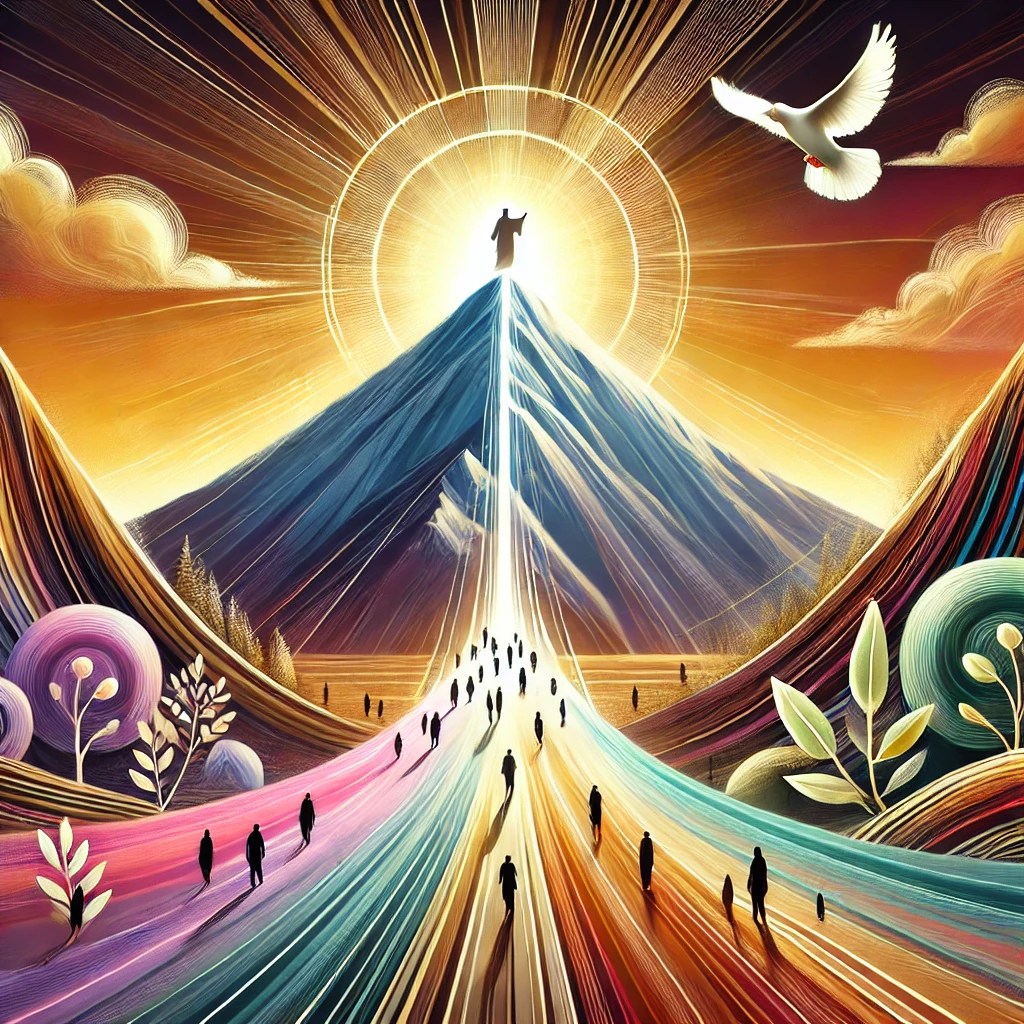
Walking in the Light of Faith
Have you ever imagined a world where peace triumphs over conflict, and unity prevails over division? Today’s readings paint a vivid picture of God’s Kingdom—a place of universal invitation, transformative faith, and enduring peace. They call us to step into the light of His presence and embrace the promise of a future shaped by His love.
From the prophet Isaiah’s vision of nations streaming to the mountain of the Lord, to the psalmist’s prayer for peace within the holy city of Jerusalem, and the extraordinary faith of a Roman centurion in The Gospel of Matthew, we are reminded of God’s boundless mercy and His desire to bring all people into communion with Him. Together, these passages emphasize the universality of salvation, the peace that flows from God’s justice, and the faith needed to walk in His ways.
Understanding the cultural and historical backdrop enriches the message. Isaiah’s prophecy was delivered in a time of turmoil for Israel, offering hope for a future where God’s reign would bring peace and reconciliation. Jerusalem, central to the Psalm, symbolized not only a physical city but a spiritual home where God’s justice and blessings were made manifest. In the Gospel, the Roman centurion’s faith is striking because he was an outsider—a Gentile soldier who recognized the authority of Jesus better than many in Israel, underscoring the inclusive nature of the Kingdom of Heaven.
How might these themes of peace, faith, and unity resonate in your life today? As we explore these readings, let us reflect on the ways we are called to build a world rooted in God’s justice and mercy, where faith opens the door to transformation.
First Reading – Isaiah 2:1-5
The Mountain of the Lord: A Vision of Peace and Unity
The Book of Isaiah holds a central place in the prophetic tradition, blending themes of judgment and hope, and emphasizing God’s ultimate plan to reconcile the world to Himself. This particular passage is part of Isaiah’s opening chapters, which set the stage for the larger narrative of God’s salvation plan. It ties seamlessly into today’s theme by emphasizing the universality of God’s Kingdom and the transformative power of walking in His light.
Isaiah 2:1-5
New Revised Standard Version Catholic Edition
The Future House of God
2 The word that Isaiah son of Amoz saw concerning Judah and Jerusalem.
2 In days to come
the mountain of the Lord’s house
shall be established as the highest of the mountains,
and shall be raised above the hills;
all the nations shall stream to it.
3 Many peoples shall come and say,
“Come, let us go up to the mountain of the Lord,
to the house of the God of Jacob;
that he may teach us his ways
and that we may walk in his paths.”
For out of Zion shall go forth instruction,
and the word of the Lord from Jerusalem.
4 He shall judge between the nations,
and shall arbitrate for many peoples;
they shall beat their swords into plowshares,
and their spears into pruning hooks;
nation shall not lift up sword against nation,
neither shall they learn war any more.
Judgment Pronounced on Arrogance
5 O house of Jacob,
come, let us walk
in the light of the Lord!
Detailed Exegesis
Verse 2:
“In days to come the mountain of the Lord’s house shall be established as the highest of the mountains, and shall be raised above the hills; all the nations shall stream to it.”
This verse presents a future-oriented vision of hope. In biblical literature, mountains often symbolize places of divine encounter and authority. Here, “the mountain of the Lord” represents the Temple in Jerusalem, elevated not physically but spiritually as the central place of worship and instruction for all nations. The imagery of “nations streaming to it” highlights the inclusivity of God’s salvation, extending beyond Israel to encompass the entire world.
Verse 3:
“Many peoples shall come and say, ‘Come, let us go up to the mountain of the Lord, to the house of the God of Jacob; that he may teach us his ways and that we may walk in his paths.’ For out of Zion shall go forth instruction, and the word of the Lord from Jerusalem.”
Here, Isaiah portrays a universal pilgrimage—a collective turning to God. The people’s desire to learn His ways reflects a humble acknowledgment of their dependence on His guidance. Zion (Jerusalem) is the epicenter of God’s revelation, from which His Word will illuminate the world. This foreshadows the Church’s mission, rooted in Christ, to spread the Gospel to all nations (cf. Matthew 28:19).
Verse 4:
“He shall judge between the nations, and shall arbitrate for many peoples; they shall beat their swords into plowshares, and their spears into pruning hooks; nation shall not lift up sword against nation, neither shall they learn war any more.”
This powerful verse envisions the justice and peace of God’s Kingdom. The transformation of weapons into tools of cultivation symbolizes a world no longer plagued by conflict but instead flourishing under God’s reign. It points to the ultimate fulfillment of peace in Christ, the Prince of Peace, whose kingdom will be marked by justice and harmony (cf. Isaiah 9:6).
Verse 5:
“O house of Jacob, come, let us walk in the light of the Lord!”
Isaiah closes with a call to action for God’s chosen people. Walking in the “light of the Lord” means living in alignment with His will, allowing His truth and justice to guide daily life. This verse speaks not only to ancient Israel but to all believers, challenging us to embrace God’s ways wholeheartedly.
Teachings
The Catechism of the Catholic Church (CCC) emphasizes the universality of salvation and the Church’s role in spreading the Gospel, echoing Isaiah’s prophecy:
- “The Church is the place where humanity must rediscover its unity and salvation. The Church is ‘the world reconciled.’ She is that bark which ‘in the full sail of the Lord’s cross, by the breath of the Holy Spirit, navigates safely in this world’” (CCC 845).
- Additionally, the Church teaches that true peace comes from God’s justice, as foretold by Isaiah. “Earthly peace is the image and fruit of the peace of Christ, the messianic ‘Prince of Peace’” (CCC 2305).
Saint Augustine’s writings also align with this reading, as he reflects on the heavenly Jerusalem as the ultimate fulfillment of God’s Kingdom: “There we shall rest and see, see and love, love and praise. Behold what will be in the end without end!” (City of God, Book 22).
Reflection
This reading invites us to reflect on the universality of God’s call. Are there areas in your life where you resist walking in the light of the Lord? Isaiah’s vision challenges us to embrace God’s peace, allowing Him to transform the “weapons” of our hearts—anger, pride, division—into tools that cultivate love and unity.
Practically, we can live this message by:
- Praying for peace and reconciliation in our communities and relationships.
- Seeking God’s Word daily to guide our actions.
- Working actively to foster understanding and unity among people of different backgrounds.
What steps can you take today to bring God’s light into your corner of the world? Let us respond to Isaiah’s invitation and walk in the peace and justice of the Lord.
Responsorial Psalm – Psalm 122
A Song of Peace and Unity: The Heart of Jerusalem
Psalm 122 is a joyful hymn of pilgrimage, sung by worshippers traveling to Jerusalem, the sacred city central to Israel’s identity and faith. Designated as a “Song of Ascents,” this psalm reflects the anticipation and reverence of God’s people as they approach His house to worship. Jerusalem was not merely a physical city but a spiritual symbol of God’s presence and covenant with His people.
The psalm aligns beautifully with today’s theme, celebrating the peace and unity found in God’s Kingdom. It underscores the call to dwell in harmony and gratitude, which is echoed in Isaiah’s vision of nations streaming to God’s mountain and in the Gospel’s depiction of faith uniting people from all walks of life. Jerusalem serves as a metaphor for the Church, the spiritual home where all God’s people gather in His peace.
Psalm 122
New Revised Standard Version Catholic Edition
Song of Praise and Prayer for Jerusalem
A Song of Ascents. Of David.
1 I was glad when they said to me,
“Let us go to the house of the Lord!”
2 Our feet are standing
within your gates, O Jerusalem.
3 Jerusalem—built as a city
that is bound firmly together.
4 To it the tribes go up,
the tribes of the Lord,
as was decreed for Israel,
to give thanks to the name of the Lord.
5 For there the thrones for judgment were set up,
the thrones of the house of David.
6 Pray for the peace of Jerusalem:
“May they prosper who love you.
7 Peace be within your walls,
and security within your towers.”
8 For the sake of my relatives and friends
I will say, “Peace be within you.”
9 For the sake of the house of the Lord our God,
I will seek your good.
Detailed Exegesis
Verse 1:
“I was glad when they said to me, ‘Let us go to the house of the Lord!’”
This opening verse expresses the psalmist’s joy and eagerness to approach God’s dwelling place. The invitation to the “house of the Lord” symbolizes an intimate encounter with God and unity among His people. For us, this reflects the joy of participating in the Eucharist and the communal worship of the Church, where we encounter the living Christ.
Verse 2:
“Our feet are standing within your gates, O Jerusalem.”
The psalmist marvels at having arrived in Jerusalem, the city of God. This verse emphasizes the physical act of entering a sacred space, symbolizing both a personal pilgrimage and the collective journey of the faithful toward God’s Kingdom. It reminds us of our spiritual journey toward heaven, the new Jerusalem (cf. Revelation 21:2).
Verse 3:
“Jerusalem—built as a city that is bound firmly together.”
This verse highlights the unity and order of Jerusalem, which reflects God’s design. The city’s physical construction mirrors the spiritual unity that God desires for His people. This resonates with the Church as the Body of Christ, described in Ephesians 4:16 as “joined and held together.”
Verse 4:
“To it the tribes go up, the tribes of the Lord, as was decreed for Israel, to give thanks to the name of the Lord.”
This verse emphasizes pilgrimage and gratitude. All tribes of Israel traveled to Jerusalem to worship, signifying the unity of God’s people in their shared faith and thanksgiving. For Christians, this foreshadows the universal nature of the Church, where all nations come together to praise God.
Verse 5:
“For there the thrones for judgment were set up, the thrones of the house of David.”
Jerusalem’s thrones symbolize justice and divine order, rooted in God’s covenant with David. This verse reminds us that Christ, the ultimate fulfillment of David’s lineage, reigns as the righteous judge in the heavenly Jerusalem (cf. Luke 1:32-33).
Verse 6:
“Pray for the peace of Jerusalem: ‘May they prosper who love you.’”
This call to prayer for peace is both literal and symbolic. For ancient Israel, Jerusalem’s peace meant security and blessings for the nation. For Christians, it reflects our prayer for the peace of Christ to reign in our hearts and communities.
Verses 7-9:
“Peace be within your walls, and security within your towers. For the sake of my relatives and friends I will say, ‘Peace be within you.’ For the sake of the house of the Lord our God, I will seek your good.”
The psalmist’s closing verses focus on peace, security, and the collective good. Jerusalem’s wellbeing was vital for the community’s flourishing, symbolizing the peace that flows from God’s presence. This mirrors our role as peacemakers in the Church and the world, living out Christ’s command to love one another.
Teachings
The Catechism of the Catholic Church connects the themes of unity and peace in Psalm 122 with the Church’s mission:
- “The Church…is the visible plan of God’s love for humanity, because God desires that the whole human race may become one people of God, form one Body of Christ, and be built up into one temple of the Holy Spirit” (CCC 776).
- The call to “pray for the peace of Jerusalem” aligns with the Christian mission of intercession and fostering unity. “Intercession is an obligation of the Christian life” (CCC 2634).
Saint John Paul II frequently invoked this psalm as a call for Christians to pray for peace, especially in times of conflict, emphasizing that true peace flows only from God. He stated, “Peace within the walls of Jerusalem means peace for the whole world.”
Reflection
This psalm challenges us to reflect on our role in building and maintaining peace in our communities and hearts. Do we approach worship with the joy and reverence expressed by the psalmist? Do we pray and work for unity and peace in our homes, workplaces, and parishes?
Practically, we can:
- Commit to praying regularly for peace—both globally and in our personal lives.
- Work to foster understanding and unity, especially in divisive situations.
- Approach Mass and other communal worship with gratitude, recognizing it as an opportunity to encounter Christ and unite with others in faith.
What steps can you take this week to bring the peace of Christ to those around you? May this psalm inspire us to be instruments of peace, always seeking the good of others for the sake of God’s Kingdom.
Holy Gospel – Matthew 8:5-11
Faith Beyond Borders: The Humility of the Centurion
This encounter takes place in Capernaum, a bustling Galilean town where Jesus performed many miracles. Roman centurions were high-ranking officers, commanding about 100 soldiers. They represented the occupying force in Judea, making the centurion’s respectful approach to Jesus and his recognition of divine authority extraordinary. This Gospel reading emphasizes that God’s Kingdom is open to all who approach Him in faith, echoing the universality prophesied by Isaiah and the peace celebrated in Psalm 122.
Matthew 8:5-11
New Revised Standard Version Catholic Edition
Jesus Heals a Centurion’s Servant
5 When he entered Capernaum, a centurion came to him, appealing to him 6 and saying, “Lord, my servant is lying at home paralyzed, in terrible distress.” 7 And he said to him, “I will come and cure him.” 8 The centurion answered, “Lord, I am not worthy to have you come under my roof; but only speak the word, and my servant will be healed. 9 For I also am a man under authority, with soldiers under me; and I say to one, ‘Go,’ and he goes, and to another, ‘Come,’ and he comes, and to my slave, ‘Do this,’ and the slave does it.” 10 When Jesus heard him, he was amazed and said to those who followed him, “Truly I tell you, in no one in Israel have I found such faith. 11 I tell you, many will come from east and west and will eat with Abraham and Isaac and Jacob in the kingdom of heaven,
Detailed Exegesis
Verse 5:
“When he entered Capernaum, a centurion came to him, appealing to him.”
Capernaum serves as the setting for several key miracles in Jesus’ ministry. The centurion’s approach is striking—not only is he a Gentile, but as a Roman officer, he represents the very power that oppressed the Jewish people. His willingness to seek help from Jesus, a Jewish teacher, reveals profound humility.
Verse 6:
“And saying, ‘Lord, my servant is lying at home paralyzed, in terrible distress.’”
The centurion’s concern for his servant reflects compassion and humanity uncommon for his position. In a time when slaves were often treated as property, his care for his servant highlights his character. By addressing Jesus as “Lord,” he acknowledges Jesus’ authority and divine power.
Verse 7:
“And he said to him, ‘I will come and cure him.’”
Jesus’ response demonstrates His willingness to bridge cultural and social divides. By agreeing to enter the house of a Gentile, Jesus shows that His mission transcends the boundaries of ethnicity and tradition, extending God’s mercy to all.
Verse 8:
“The centurion answered, ‘Lord, I am not worthy to have you come under my roof; but only speak the word, and my servant will be healed.’”
This verse reveals the depth of the centurion’s faith and humility. Acknowledging his unworthiness according to Jewish customs (Gentile homes were considered ritually unclean), he places complete trust in Jesus’ authority. His words echo the sentiment we repeat at every Mass before receiving the Eucharist: “Lord, I am not worthy that you should enter under my roof.”
Verse 9:
“For I also am a man under authority, with soldiers under me; and I say to one, ‘Go,’ and he goes, and to another, ‘Come,’ and he comes, and to my slave, ‘Do this,’ and the slave does it.’”
The centurion uses his experience of authority to recognize Jesus’ divine power. Just as his own words command action, he trusts that Jesus’ word alone is enough to heal his servant. This demonstrates an extraordinary understanding of Jesus’ authority over creation.
Verse 10:
“When Jesus heard him, he was amazed and said to those who followed him, ‘Truly I tell you, in no one in Israel have I found such faith.’”
Jesus’ amazement underscores the rarity of such profound faith, especially coming from a Gentile. His statement is both a compliment to the centurion and a challenge to the Jewish people, calling them to deeper faith in God’s power.
Verse 11:
“I tell you, many will come from east and west and will eat with Abraham and Isaac and Jacob in the kingdom of heaven.”
Here, Jesus envisions a Kingdom open to all nations, fulfilling Isaiah’s prophecy of nations streaming to God’s holy mountain. This verse foreshadows the inclusion of the Gentiles in God’s plan of salvation, a cornerstone of the Christian faith.
Teachings
This Gospel reading illustrates key teachings from the Catechism of the Catholic Church:
- Faith transcends cultural and social boundaries. “Believing in Jesus Christ and in the One who sent him for our salvation is necessary for obtaining that salvation” (CCC 161). The centurion exemplifies this belief, despite being an outsider to the Jewish faith.
- Humility is essential to discipleship. The centurion’s recognition of his unworthiness mirrors the Church’s teaching on humility: “Man is a beggar before God” (CCC 2559).
- The universality of salvation is central to God’s plan. “The Church is the place where humanity must rediscover its unity and salvation. The Church is ‘the world reconciled’” (CCC 845). The centurion’s faith foreshadows the gathering of all nations into God’s Kingdom.
Saint Augustine reflects on the faith of outsiders, writing, “It is not the privilege of birth, but the humility of faith, that makes people children of Abraham.”
Reflection
This passage calls us to examine the strength and humility of our own faith. Do we approach Jesus with the same trust and openness as the centurion? Like the centurion, we are invited to place our needs and the needs of others before the Lord, trusting fully in His authority and mercy.
Practical steps to live this Gospel include:
- Cultivating humility by acknowledging our dependence on God’s grace.
- Praying for others with the same compassion as the centurion, especially those who are marginalized or in need of healing.
- Recognizing and celebrating the diversity within the Church as a reflection of God’s universal call to salvation.
How can you demonstrate faith and humility in your daily life? May the centurion’s example inspire us to approach Jesus with trust, inviting His healing presence into every aspect of our lives.
Walking in the Light of Faith and Unity
Today’s readings invite us to envision God’s Kingdom—a Kingdom of peace, unity, and salvation that transcends all boundaries. In Isaiah 2:1-5, we see a vision of a world where nations stream to the mountain of the Lord, laying down their weapons to embrace God’s justice and peace. Psalm 122 deepens this vision, calling us to pray for peace and unity within God’s holy city and to approach worship with gratitude and joy. Finally, in Matthew 8:5-11, the faith of the Roman centurion reminds us that God’s mercy is not limited by race, status, or tradition; it is open to all who approach Him in humility and trust.
These readings challenge us to take concrete steps toward building a world that reflects the peace and justice of God’s Kingdom. They call us to set aside divisions and conflicts, to nurture faith that bridges barriers, and to bring God’s light into the darkest corners of our lives and communities.
How will you respond to God’s invitation to walk in His light today? Perhaps it’s by fostering peace in your relationships, deepening your daily prayer life, or stepping out in faith to serve someone in need. The promise of God’s Kingdom is not just a distant hope—it begins with us, here and now.
Let us embrace this call with joy and trust, just as the centurion did, and walk forward as pilgrims together toward the mountain of the Lord. May our lives reflect the peace, unity, and faithfulness of God’s Kingdom, inspiring others to join the journey. “Come, let us walk in the light of the Lord” (Isaiah 2:5).
Engage with Us!
We would love to hear how today’s readings have touched your heart! Share your reflections, insights, or questions in the comments below. Your thoughts could inspire someone else on their faith journey. To guide your reflection, consider these questions:
- First Reading (Isaiah 2:1-5): How do you envision the “light of the Lord” guiding your life today? What “weapons” of conflict in your heart can you transform into tools for peace?
- Responsorial Psalm (Psalm 122): What does peace within your community or family look like? How can you contribute to that peace this week?
- Holy Gospel (Matthew 8:5-11): How does the centurion’s faith inspire you to trust in God’s authority? In what ways can you grow in humility and compassion like the centurion?
As we step into this week, let us strive to live lives of faith, hope, and love, embodying the mercy and peace that Jesus has taught us. Remember, every small act of kindness and trust in God brings us closer to His Kingdom. Together, let us walk in His light and share His love with all we meet.
Follow us on Instagram and Facebook for more insights and reflections on living a faith-filled life.

 Holy Manna!
Leave a comment