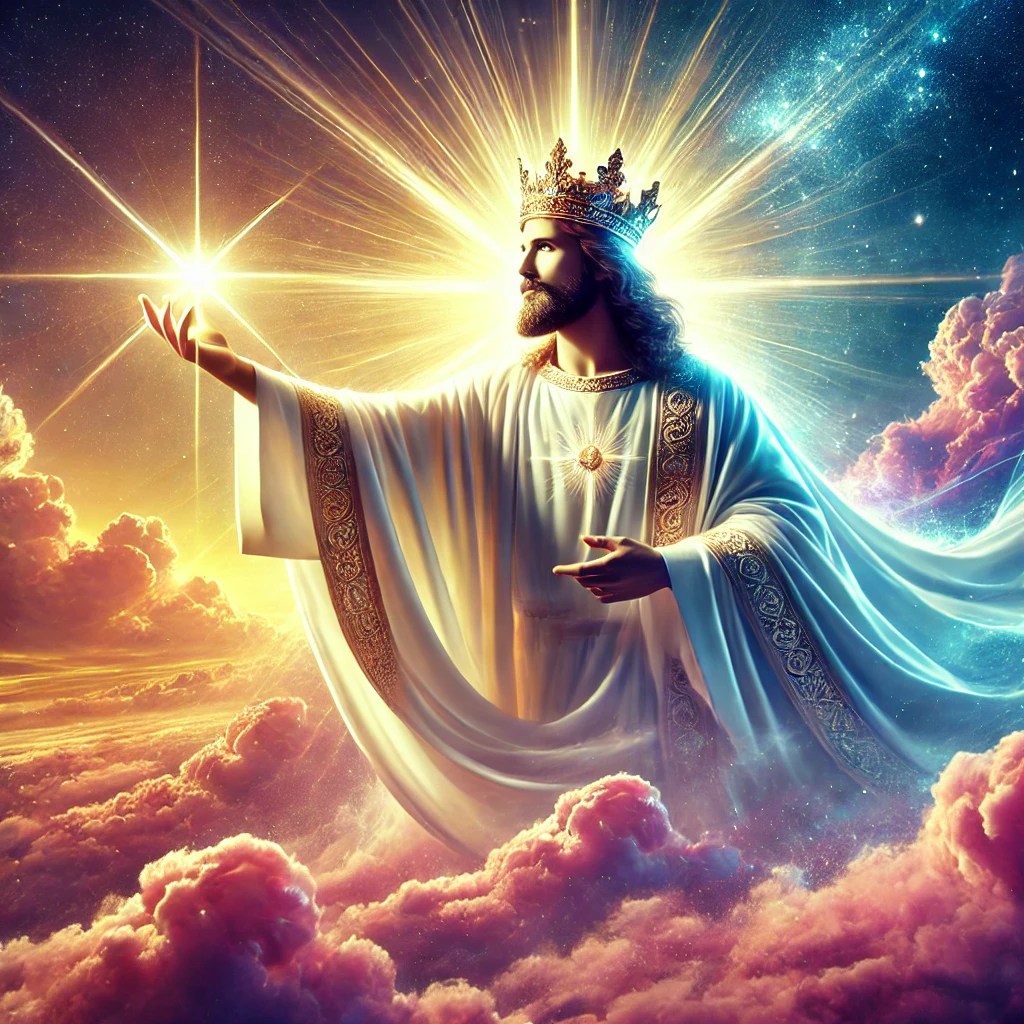
Embracing the Eternal Reign of Christ
What does it mean to call Christ our King? Today’s readings invite us to ponder a kingship unlike any other—a dominion that is eternal, all-encompassing, and rooted in truth. In a world that often measures power by wealth, armies, or influence, Jesus stands apart, revealing a kingdom “not from this world,” as he tells Pilate in the Gospel of John. But what, then, does this heavenly kingdom look like, and how are we called to live within it?
This week, we celebrate the feast of Christ the King, a relatively recent addition to the liturgical calendar, established by Pope Pius XI in 1925 as a response to growing secularism and totalitarianism. At the time, the Church faced mounting political ideologies that elevated earthly power and sidelined faith. This feast was designed as a powerful reminder that our ultimate allegiance belongs not to earthly rulers or shifting societal ideals, but to Christ, the eternal King whose kingdom transcends all temporal boundaries.
Today’s passages unfold this divine kingship in layers. In Daniel, we encounter a prophetic vision of “one like a human being” granted an indestructible, everlasting dominion—a vision pointing to the Messiah, Jesus, who reigns forever. The psalmist follows with a song of reverence for the Lord, proclaiming that God’s rule, established from all eternity, is robed in majesty and holiness. In Revelation, we hear that Jesus is “the ruler of the kings of the earth,” the Alpha and the Omega, whose authority encompasses all of history. And finally, in John’s Gospel, Jesus clarifies the nature of his kingship, affirming that it is not bound by earthly power structures but grounded in the eternal truth of God.
Through these passages, we are invited to see Christ’s kingship as both a present reality and a promise of what is to come. His kingdom is not built on political might but on the truth and love of God, calling us to a citizenship rooted in faith and holiness. As we reflect on these readings, let us ask ourselves, How do I live out my allegiance to this eternal King in my daily life?
First Reading – Daniel 7:13-14
The Eternal Dominion of Christ
The Book of Daniel is filled with visions and prophecies that foreshadow the coming of the Messiah and reveal God’s ultimate plan for salvation. Set during Israel’s exile in Babylon, Daniel speaks directly to a people living under foreign oppression, awaiting deliverance and a future where God’s sovereignty is fully realized. Today’s reading—Daniel’s vision of “one like a human being” coming with the clouds—is one of the most powerful messianic prophecies in the Old Testament. This “Son of Man” is given an eternal kingdom, emphasizing Christ’s universal kingship and prefiguring his second coming, when all will see him in glory. This vision of the eternal King harmonizes with today’s celebration of Christ the King, reminding us that, no matter the powers of this world, Christ’s kingdom alone endures forever.
Daniel 7:13-14
New Revised Standard Version Catholic Edition
13 As I watched in the night visions,
I saw one like a human being
coming with the clouds of heaven.
And he came to the Ancient One
and was presented before him.
14 To him was given dominion
and glory and kingship,
that all peoples, nations, and languages
should serve him.
His dominion is an everlasting dominion
that shall not pass away,
and his kingship is one
that shall never be destroyed.
Detailed Exegesis
Verse 13:
“As I watched in the night visions, I saw one like a human being coming with the clouds of heaven. And he came to the Ancient One and was presented before him.”
In this verse, Daniel describes a vision where a figure “like a human being” (often translated as “Son of Man”) comes with the clouds. This imagery—coming on clouds—conveys divine authority. In ancient Jewish thought, clouds are often associated with God’s presence, as seen in Exodus where God appears to Israel in a cloud. The figure is presented before the “Ancient One,” symbolizing God the Father, which points to a unique relationship between this human figure and the Divine. The title “Son of Man,” which Jesus frequently uses in the Gospels, reveals both his humanity and divinity, highlighting him as the fulfillment of this prophecy.
Verse 14:
“To him was given dominion and glory and kingship, that all peoples, nations, and languages should serve him. His dominion is an everlasting dominion that shall not pass away, and his kingship is one that shall never be destroyed.”
This verse powerfully proclaims the universality and eternity of the Messiah’s kingship. Unlike the earthly kingdoms of Babylon, Persia, Greece, or Rome, Christ’s reign will last forever. The vision specifies that “all peoples, nations, and languages” will serve him, showing that his kingdom transcends political, ethnic, and cultural boundaries. Here we see the promise of Christ’s ultimate victory and sovereignty over all creation—a kingship marked by divine authority, glory, and permanence.
Teachings and References
Catechism of the Catholic Church (CCC) 664:
The Catechism teaches that Christ’s ascension and enthronement at the right hand of the Father fulfill this vision: “Being seated at the Father’s right hand signifies the inauguration of the Messiah’s kingdom, the fulfillment of the prophet Daniel’s vision concerning the Son of man.” This passage from Daniel anticipates Jesus’ role as the eternal King who reigns alongside the Father.
St. Augustine on Christ’s Kingdom:
St. Augustine describes Christ’s kingship as spiritual and eternal: “The kingdom of God is not visible in the same way that earthly kingdoms are. It is within the faithful and among the just. His rule is hidden but will be fully revealed at the end of time.” Augustine’s insight emphasizes that while Christ’s kingdom is not always visible in worldly terms, it is very real and active in the lives of believers.
Historical Event – Feast of Christ the King:
Instituted in 1925, the Feast of Christ the King was Pope Pius XI’s response to secular ideologies that attempted to replace religious values with state-centered power. It was a call for Catholics to recognize Christ as the ultimate ruler of their lives, reaffirming his eternal kingship amid the transitory and often corrupt systems of human governance.
Reflection and Application
Daniel’s vision of the “Son of Man” reminds us that Jesus reigns above all earthly authorities and promises us a kingdom that will never be shaken. We may find ourselves surrounded by the “kingdoms” of this world—social expectations, political pressures, or personal ambitions that pull us away from God. Today’s reading calls us to reflect on our allegiance. Who truly reigns in your heart?
Consider practical ways to deepen your commitment to Christ as King in your daily life:
- Renew your faith by acknowledging Christ’s presence and authority in every area of your life, from work to family to personal goals.
- Serve others with humility, seeing every person as part of the universal kingdom where Christ is King.
- Pray for guidance to discern God’s will, especially when faced with challenges from the “kingdoms” of this world that distract or distance us from God.
As you reflect on this reading, ask yourself: In what ways am I serving Christ’s eternal kingdom? How can I allow his kingship to shape my decisions, values, and actions each day?
Responsorial Psalm – Psalm 93:1-2, 5
The Lord, Clothed in Majesty
Psalm 93 is a hymn of praise celebrating the majesty and eternal kingship of God, whose throne is “established from of old.” The psalmist exalts the Lord as a sovereign ruler, adorned with strength and holiness, whose authority brings order and stability to creation. Written within the context of ancient Israel’s deep reverence for God’s kingship, this psalm speaks to a timeless truth: the Lord reigns above all earthly powers, and His decrees are sure. This passage complements today’s theme by reinforcing the eternal kingship of Christ, whose rule, like the Father’s, endures forever. In a world of fleeting kingdoms and shifting values, Psalm 93 reminds us of the unchanging nature of God’s authority and the call to trust in His holy rule.
Psalm 93:1-2, 5
New Revised Standard Version Catholic Edition
The Majesty of God’s Rule
1 The Lord is king, he is robed in majesty;
the Lord is robed, he is girded with strength.
He has established the world; it shall never be moved;
2 your throne is established from of old;
you are from everlasting.
5 Your decrees are very sure;
holiness befits your house,
O Lord, forevermore.
Detailed Exegesis
Verse 1:
“The Lord is king, he is robed in majesty; the Lord is robed, he is girded with strength.”
This opening line proclaims the Lord’s kingship with vivid imagery. To be “robed in majesty” reflects honor, power, and the splendor associated with a divine ruler. The phrase “girded with strength” signifies that God’s authority is fortified by His omnipotence, unlike human rulers whose power is limited. This verse underscores the unmatched strength and glory of God, inviting us to see Him as the ultimate source of order and security in creation.
Verse 1 (continued):
“He has established the world; it shall never be moved;”
In ancient Hebrew thought, the stability of creation was attributed to God’s power. To say that the world “shall never be moved” conveys the assurance that God’s creation is anchored by His unchanging nature. This line reminds us that, despite life’s uncertainties, God’s providence upholds the cosmos, reflecting the permanence of His kingdom.
Verse 2:
“Your throne is established from of old; you are from everlasting.”
This verse emphasizes the eternal nature of God’s kingship. Unlike earthly rulers who are limited by time, God’s reign has no beginning or end. His throne has been “established from of old,” which signifies that His authority is rooted in eternity. For the faithful, this verse offers comfort, assuring us that God’s rule is unbreakable and eternal, a foundation that has existed since before time began.
Verse 5:
“Your decrees are very sure; holiness befits your house, O Lord, forevermore.”
The psalmist highlights the reliability of God’s word, describing His decrees as “very sure.” This means that God’s laws and promises are trustworthy, unaltered by the shifts of history. The phrase “holiness befits your house” points to the sanctity of God’s dwelling and those who come into His presence. This final verse calls believers to recognize that God’s house is one of holiness, where divine truth and righteousness prevail eternally.
Teachings and References
Catechism of the Catholic Church (CCC) 2809:
The Catechism teaches that “the holiness of God is the inaccessible center of his eternal mystery.” The psalm’s depiction of God’s house as holy reflects the Catholic understanding that God is utterly transcendent, yet invites humanity into a relationship with His sanctity. Psalm 93’s theme of holiness calls us to live lives that reflect this divine purity.
St. Thomas Aquinas on God’s Eternal Kingship:
St. Thomas Aquinas describes God’s kingship as unique in that it is both eternal and unchanging. He writes, “God’s rule is neither diminished nor threatened by the events of time,” explaining that God’s authority remains unassailable, a truth echoed in Psalm 93’s portrayal of God’s throne as “established from of old.”
Historical Event – Dedication of the Temple in Jerusalem:
This psalm was likely recited or sung during the dedication of the Temple, where God’s “house” was seen as a holy place representing His divine rule. The Temple’s holiness and stability reflected the desire for God’s eternal rule among His people. The idea of a holy dwelling is also seen in the Church today, where the Eucharist is kept in reverence as a sign of Christ’s real presence and kingship.
Reflection and Application
Psalm 93 invites us to consider the majesty and strength of God’s kingship in a personal way. In our lives, we often look for stability and assurance in changing circumstances, but this psalm reminds us that true stability is found only in God’s eternal rule. Are there areas in your life where you feel uncertain or fearful? By entrusting these areas to God, who is “robed in majesty” and “girded with strength,” we find peace and security.
Consider these practical steps to integrate the message of Psalm 93 into your spiritual journey:
- Trust in God’s stability: When faced with instability, remember that God’s kingdom is immovable. Bring your concerns to prayer, asking for the grace to trust in His eternal rule.
- Embrace holiness: The psalm tells us that “holiness befits [God’s] house.” Seek to live a life of holiness by aligning your actions, thoughts, and intentions with God’s truth.
- Reflect on God’s majesty: Spend time in silent adoration or contemplation, meditating on God’s majesty. Let this time remind you of His greatness and inspire reverence in your daily life.
As you reflect, ask yourself: How does acknowledging God’s kingship bring peace to my life? What steps can I take to live more fully in God’s holy presence each day?
Second Reading – Revelation 1:5-8
Christ, Our Faithful Witness and Eternal King
The Book of Revelation, written by the apostle John, is a prophetic and symbolic work that reveals the final victory of Christ and the establishment of God’s kingdom. Written during a time of persecution for the early Christian community, Revelation provides both a warning and a source of hope, reminding believers of the coming triumph of Jesus, the “faithful witness” and “firstborn of the dead.” Today’s passage introduces Christ as the ruler of all earthly kings, a title that elevates him above any temporal authority, declaring him Lord over life and death. In the context of Christ the King Sunday, these verses remind us of Jesus’ redemptive love and ultimate power as the Alpha and Omega, who reigns from the beginning of time to its end.
Revelation 1:5-8
New Revised Standard Version Catholic Edition
5 and from Jesus Christ, the faithful witness, the firstborn of the dead, and the ruler of the kings of the earth.
To him who loves us and freed us from our sins by his blood, 6 and made us to be a kingdom, priests serving his God and Father, to him be glory and dominion forever and ever. Amen.
7 Look! He is coming with the clouds;
every eye will see him,
even those who pierced him;
and on his account all the tribes of the earth will wail.
So it is to be. Amen.
8 “I am the Alpha and the Omega,” says the Lord God, who is and who was and who is to come, the Almighty.
Detailed Exegesis
Verse 5:
“and from Jesus Christ, the faithful witness, the firstborn of the dead, and the ruler of the kings of the earth.”
This verse introduces Jesus in three distinct titles: “faithful witness,” “firstborn of the dead,” and “ruler of the kings of the earth.” As the “faithful witness,” Jesus perfectly reveals God’s truth to humanity, enduring suffering and death to testify to the Father’s love. The phrase “firstborn of the dead” signifies Christ’s resurrection, establishing him as the first to conquer death and the one who will raise all believers. Finally, as “ruler of the kings of the earth,” Jesus is acknowledged as having authority over all earthly powers, underscoring his sovereignty over all realms.
Verse 5 (continued):
“To him who loves us and freed us from our sins by his blood,”
John’s language here emphasizes Jesus’ love for humanity, shown in his sacrifice. Through his blood, Christ frees us from the bondage of sin, redeeming us and reconciling us with God. This powerful act of love transforms our lives, calling us to recognize Jesus not only as king but also as our loving redeemer.
Verse 6:
“and made us to be a kingdom, priests serving his God and Father, to him be glory and dominion forever and ever. Amen.”
Here, John describes how Jesus has made believers into a kingdom of priests. This concept reflects the priesthood of all believers, a teaching that asserts each Christian’s role in bringing God’s love and presence into the world. By freeing us from sin, Christ enables us to participate in his kingdom, offering our lives in service to God. This verse praises Christ’s eternal glory and dominion, a fitting tribute to our eternal king.
Verse 7:
“Look! He is coming with the clouds; every eye will see him, even those who pierced him; and on his account all the tribes of the earth will wail. So it is to be. Amen.”
This verse speaks to Christ’s second coming, an event that will be visible to all, including those who rejected or harmed him. The phrase “coming with the clouds” echoes the messianic prophecy in Daniel 7:13, establishing a link between Jesus and the awaited Messiah. The mention of “all the tribes of the earth” indicates the universal scope of this moment, when Christ’s glory will be revealed to every nation.
Verse 8:
“I am the Alpha and the Omega,” says the Lord God, “who is and who was and who is to come, the Almighty.”
God’s declaration as the “Alpha and Omega” highlights His eternal nature. These titles, referring to the first and last letters of the Greek alphabet, emphasize that God encompasses all things and transcends time. This statement assures believers that Christ, who is fully united with the Father, remains the beginning and end of all creation. His unchanging and almighty nature provides hope and security, affirming that God’s kingdom will stand forever.
Teachings and References
Catechism of the Catholic Church (CCC) 766:
The Catechism describes the Church as born from the pierced side of Christ, connecting to this passage where “those who pierced him” will see him return. This symbolism reminds us that Christ’s sacrifice is both the source of our salvation and the beginning of the Church, uniting believers as one kingdom and priesthood.
St. John Paul II on the Kingship of Christ:
Pope St. John Paul II spoke of Christ’s kingship as one of love and service, not domination. In his encyclical Redemptor Hominis, he emphasizes that Jesus’ rule is “rooted in love, expressed in service, and aimed at the salvation of all.” This vision aligns with the reading’s message of Jesus as the ruler of all, whose love has freed us from sin.
Historical Event – The Early Christian Persecutions:
During the time Revelation was written, Christians faced persecution for refusing to worship the emperor as a god. In this context, declaring Jesus as “the ruler of the kings of the earth” was a bold statement of faith. Early Christians risked their lives to testify that only Christ deserved their ultimate allegiance, and this reading reminds us of the unshakeable faith that anchored their witness.
Reflection and Application
In a world with many competing “kings”—social norms, material pursuits, or personal ambitions—Revelation’s portrayal of Christ as the ultimate ruler challenges us to place him first in our lives. Jesus’ love frees us from the need to seek fulfillment in worldly power or achievements, inviting us into his kingdom of love and truth. Where in your life are you called to recognize Jesus as your king?
Consider these practical ways to respond to this reading:
- Live as a “priest” in God’s kingdom: Reflect on how you can offer acts of kindness, prayer, or sacrifice to serve others in Christ’s name.
- Trust in God’s sovereignty: When faced with difficulties or the pressures of worldly “kings,” remember that Christ’s dominion is everlasting. Pray for the strength to prioritize His kingdom.
- Prepare for his coming: Just as early Christians awaited Christ’s return, live each day as a chance to welcome him into your heart. Let this anticipation shape your decisions, knowing that he is the “Alpha and Omega.”
As you meditate on this reading, ask yourself: How can I live in a way that reflects my loyalty to Christ as King? In what ways can I honor his love and sacrifice in my daily life?
Holy Gospel – John 18:33-37
A Kingdom Not of This World
The Gospel of John offers a unique glimpse into the final hours of Jesus’ life, particularly through his encounter with Pontius Pilate. In today’s reading, we witness a profound conversation between Jesus and Pilate about kingship, truth, and the nature of Jesus’ mission. When asked if he is the “King of the Jews,” Jesus clarifies that his kingdom is not an earthly one; it transcends human politics and power. This passage is central to today’s theme, underscoring the heavenly nature of Christ’s kingship and his mission to testify to the truth. As we reflect on Christ the King Sunday, this reading challenges us to understand and embrace the kind of kingship that Jesus embodies—one rooted in eternal truth and divine purpose, not in worldly authority.
John 18:33-37
New Revised Standard Version Catholic Edition
33 Then Pilate entered the headquarters again, summoned Jesus, and asked him, “Are you the King of the Jews?” 34 Jesus answered, “Do you ask this on your own, or did others tell you about me?” 35 Pilate replied, “I am not a Jew, am I? Your own nation and the chief priests have handed you over to me. What have you done?” 36 Jesus answered, “My kingdom is not from this world. If my kingdom were from this world, my followers would be fighting to keep me from being handed over to the Jews. But as it is, my kingdom is not from here.” 37 Pilate asked him, “So you are a king?” Jesus answered, “You say that I am a king. For this I was born, and for this I came into the world, to testify to the truth. Everyone who belongs to the truth listens to my voice.”
Detailed Exegesis
Verse 33:
“Then Pilate entered the headquarters again, summoned Jesus, and asked him, ‘Are you the King of the Jews?’”
Pilate’s question arises from the accusations brought by the Jewish authorities, who framed Jesus as a political threat to Roman rule. This title, “King of the Jews,” was politically charged; claiming such a title could suggest a rebellion against Caesar. However, Pilate’s question reveals his curiosity rather than belief, as he tries to understand the nature of Jesus’ kingship.
Verse 34:
“Jesus answered, ‘Do you ask this on your own, or did others tell you about me?’”
Jesus’ response challenges Pilate to consider his own understanding of who Jesus is. By redirecting the question, Jesus invites Pilate to look beyond political assumptions. This response also highlights that Jesus’ kingship is not defined by the opinions of others or by earthly politics, but by his unique role in God’s salvific plan.
Verse 35:
“Pilate replied, ‘I am not a Jew, am I? Your own nation and the chief priests have handed you over to me. What have you done?’”
Pilate’s answer reflects his frustration and detachment from the religious conflicts of the Jews. He cannot understand why Jesus’ own people would hand him over. Pilate’s question, “What have you done?” suggests he is seeking a clear explanation, yet he remains indifferent to the spiritual dimension of Jesus’ mission.
Verse 36:
“Jesus answered, ‘My kingdom is not from this world. If my kingdom were from this world, my followers would be fighting to keep me from being handed over to the Jews. But as it is, my kingdom is not from here.’”
Here, Jesus defines the nature of his kingship: it is not based on earthly power, force, or territorial ambition. Unlike earthly kingdoms, which are often established and maintained by military might, Jesus’ kingdom is based on truth and love. His statement, “My kingdom is not from this world,” indicates a realm beyond earthly borders and politics, rooted in divine truth and purpose.
Verse 37:
“Pilate asked him, ‘So you are a king?’ Jesus answered, ‘You say that I am a king. For this I was born, and for this I came into the world, to testify to the truth. Everyone who belongs to the truth listens to my voice.’”
Pilate’s question reflects his confusion and his attempt to grasp Jesus’ identity. Jesus’ response affirms his kingship but redefines it in terms of his mission to “testify to the truth.” This truth is God’s revelation, the ultimate reality of God’s kingdom. Jesus’ statement, “Everyone who belongs to the truth listens to my voice,” invites all to align themselves with this truth, underscoring that his kingship is inseparable from his role as the embodiment of divine truth.
Teachings and References
Catechism of the Catholic Church (CCC) 544:
The Catechism teaches that the kingdom of God belongs to the poor and lowly, those who embrace humility and truth. Jesus’ declaration that his “kingdom is not from this world” reflects this, as his rule calls for humility and service, not worldly ambition. His followers are thus called to align their lives with his example.
St. Augustine on the Kingdom of Truth:
St. Augustine writes about the kingdom of God as a kingdom of truth and grace, contrasting it with earthly kingdoms. Augustine explains that God’s kingdom is within those who live by his teachings. This aligns with Jesus’ statement that his kingdom is “not from this world” and calls believers to orient their lives toward the eternal.
Historical Context – Roman Authority and Jewish Expectation of a Messiah:
At the time, Jewish people were waiting for a Messiah who would liberate them from Roman oppression. The concept of a “king” was therefore politically sensitive. Pilate, as a Roman governor, would see any claim to kingship as a threat. However, Jesus redefines kingship, emphasizing spiritual truth over political rebellion, thus reframing the expectations of both Romans and Jews.
Reflection and Application
Jesus’ words to Pilate reveal the essence of his kingdom—a realm rooted in truth and love rather than power or control. As followers of Christ, we are invited to live within this kingdom by embracing the truth he embodies. What does it mean for us to live in a kingdom “not of this world”? It challenges us to live differently, to reject the pursuit of power, prestige, or material gain in favor of the truth and love of God.
Consider these practical steps for living out the message of this reading:
- Align with God’s truth: Reflect on areas of your life where you may be tempted by worldly values. Choose to make decisions grounded in Christ’s truth, even when it challenges societal norms.
- Seek humility and service: Like Jesus, whose kingship is one of service, look for ways to serve others in your family, workplace, and community.
- Listen to Jesus’ voice: Spend time in prayer and Scripture, allowing Christ’s words to guide you. Embrace a spirit of obedience to his teachings, particularly in areas where society’s values diverge from the Gospel.
As you reflect on this reading, ask yourself: In what ways can I live as a citizen of Christ’s kingdom rather than conforming to this world? How can I testify to the truth in my daily interactions and decisions?
Embracing the Eternal Kingdom of Christ
Today’s readings converge on a profound truth: Jesus Christ is the King of an eternal, unshakeable kingdom—a realm “not of this world,” where love, truth, and holiness reign supreme. From Daniel’s prophetic vision of a divine ruler to the Psalmist’s praise of the Lord robed in majesty, from John’s proclamation of Jesus as the “firstborn of the dead” and ruler over all earthly powers to Jesus’ conversation with Pilate, we are reminded that Christ’s kingship transcends any earthly authority. His is a kingdom that invites all people, all nations, and all hearts to live in the light of God’s truth.
Each passage challenges us to realign our lives with Christ’s eternal kingship, to reject the fleeting temptations of worldly power, and instead to live
in humble service to God and neighbor. Christ’s kingdom is built not on conquest or wealth but on sacrificial love and enduring truth. As followers of Jesus, we are called to live as citizens of this kingdom, bearing witness to the truth, and joining in Christ’s priestly mission of love and reconciliation.
How can we bring Christ’s kingdom into our daily lives? By choosing to serve rather than dominate, to forgive rather than condemn, and to seek truth above all else, we take part in this eternal kingdom. Christ is not only a king to be admired; he is a king to be followed, a king who walks with us in our joys and trials.
Engage with Us!
We’d love to hear your thoughts! Share your reflections in the comments below and let us grow together in faith. As we meditate on Christ’s kingship and his call to a kingdom “not of this world,” consider these questions for each reading. Your insights could inspire others on their spiritual journey!
- First Reading (Daniel 7:13-14): How does the vision of Christ as a king with an everlasting dominion influence your understanding of Jesus’ role in your life? In what areas can you invite him to reign more fully?
- Responsorial Psalm (Psalm 93:1-2, 5): This psalm speaks of God’s majesty and unshakeable authority. Where do you need to find stability in God’s eternal presence, especially amid life’s uncertainties?
- Second Reading (Revelation 1:5-8): How does knowing Jesus as the “firstborn of the dead” and “ruler of the kings of the earth” bring hope and purpose to your daily life? What does it mean to live as part of his kingdom and priesthood?
- Holy Gospel (John 18:33-37): Jesus testifies that his kingdom is “not from this world.” What might God be inviting you to change or prioritize to live more fully in his truth and love rather than worldly values?
Let’s encourage one another to live with the love and mercy that Jesus taught us, reflecting his eternal kingdom in all that we do. May our lives be guided by his truth and our hearts strengthened by his kingship.
Follow us on Instagram and Facebook for more insights and reflections on living a faith-filled life.

 Holy Manna!
Leave a comment