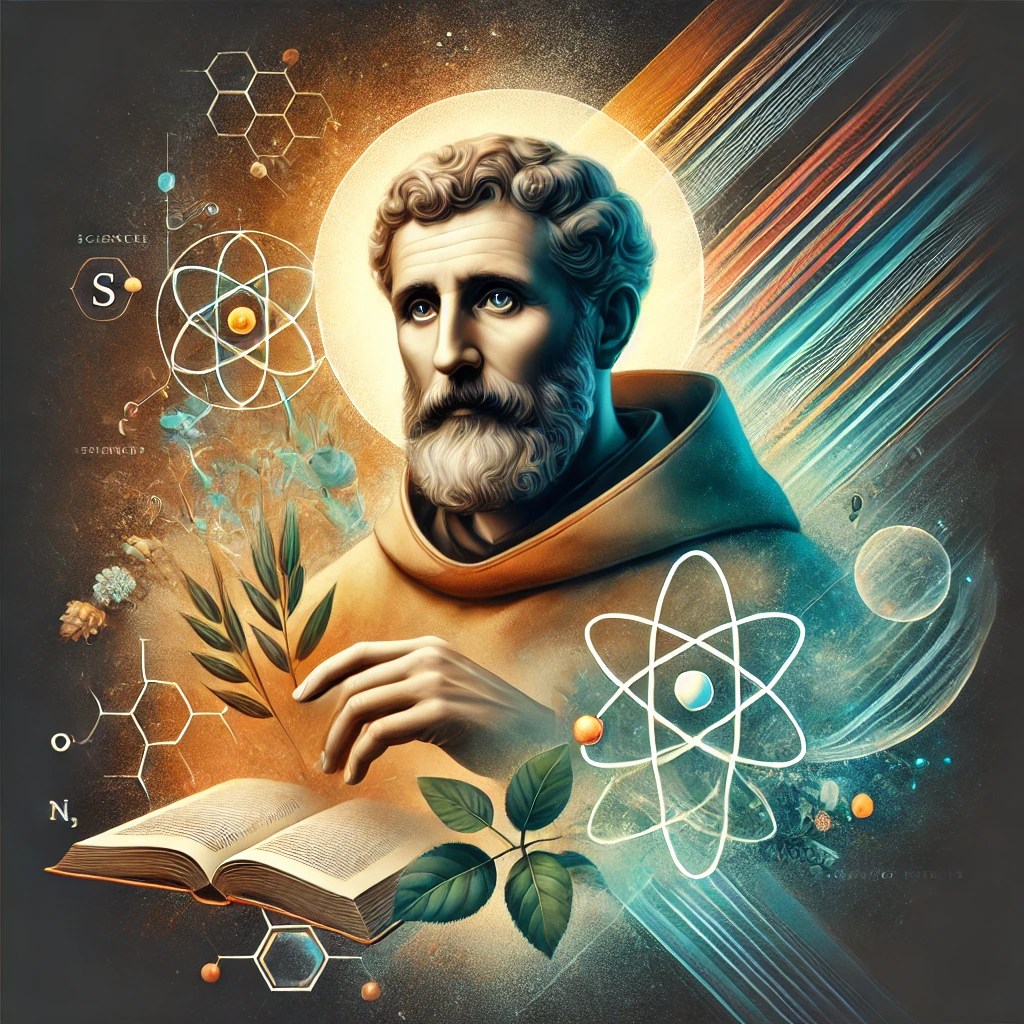
Scholar, Scientist, and Servant of God
Today’s saint, Saint Albert the Great (also known as Albertus Magnus), stands out as a rare synthesis of intellect, faith, and humility. Known as the Universal Doctor due to his encyclopedic knowledge across diverse fields, he made significant contributions to natural science, theology, and philosophy, bridging the gap between the physical and metaphysical worlds. Albert’s work deeply influenced not only the theological landscape but also the foundations of Western scientific thought. Canonized in 1931 and declared a Doctor of the Church the same year, Albert is recognized not only for his writings but for the way he harmonized Aristotelian philosophy with Christian doctrine. This integration paved the way for the acceptance of philosophical inquiry in Christian theology, helping to establish an enduring tradition of faith informed by reason.
His legacy endures not only in academia but in the hearts of the faithful, who see in him an example of how science and faith complement rather than conflict. Saint Albert’s deep love for God inspired him to seek out the mysteries of creation, and in doing so, he has become the patron saint of scientists, philosophers, and all who seek to understand the world in light of their faith. Today, Saint Albert reminds us of the Catholic understanding that all truth, whether scientific or spiritual, ultimately points back to God.
From Noble Birth to Dominican Friar
Saint Albert was born around 1200 in Lauingen, Swabia (now modern-day Germany), into a wealthy and noble family. His father served as a military lord, which positioned Albert within a privileged class with access to quality education. In his youth, he was sent to Italy to study at the prestigious University of Padua, where he was exposed to the works of classical philosophers, particularly Aristotle. This early exposure sparked Albert’s lifelong intellectual curiosity, but at the time, it was primarily secular and did not directly reflect a vocation to religious life.
Albert’s conversion from an academic to a deeply spiritual life began with an encounter with Blessed Jordan of Saxony, a prominent Dominican preacher and successor to Saint Dominic. Albert was moved by Jordan’s fervor, preaching, and life of simplicity, which introduced him to a new path—one dedicated to both faith and knowledge. Against the wishes of his noble family, who preferred a traditional path for him, Albert joined the Dominican Order, known as the Order of Preachers. Taking the habit marked a radical change; Albert renounced wealth and privilege, embracing instead a life of poverty, obedience, and service.
As a Dominican friar, Albert was sent to the University of Paris, where his intellectual abilities quickly distinguished him. His method of teaching, marked by clarity and respect for his students, made him popular and drew many pupils, including the young Thomas Aquinas. The friendship and mentorship between Albert and Thomas would profoundly shape Catholic theology for centuries, as Thomas absorbed Albert’s approach of integrating faith with reason. Together, they would lay a strong foundation for the Church’s theological framework, with Albert’s influence evident in many of Thomas’s later works.
Signs of Divine Grace in an Intellectual Giant
Though often celebrated for his intellect, Saint Albert was also seen as a holy man, and various miraculous events were associated with him during his life. These miracles underscored the depth of his faith and the closeness of his relationship with God, which was manifest even in his scholarly pursuits.
One well-known miracle occurred while he was teaching at Cologne, where he experienced a mystical vision of the Blessed Virgin Mary. This vision not only strengthened his Marian devotion but also provided him with insights into the mysteries of creation and the divine order. Those around him believed that the Virgin’s intercession illuminated his mind, enabling him to comprehend and teach complex spiritual and scientific truths.
Another notable event took place during a gathering of Dominicans when a fierce rainstorm threatened to disrupt a provincial chapter meeting. Albert’s calm yet fervent prayer resulted in the rain ceasing almost immediately, allowing the meeting to proceed without interruption. His fellow friars saw this as an affirmation of God’s providence over Albert’s mission. For Albert, such incidents were not sources of pride but rather reminders of God’s omnipotence and mercy, reinforcing his commitment to a life of humility.
Saint Albert’s most remarkable miracles were intellectual, however. His unique ability to delve into the complexities of nature—analyzing plants, animals, minerals, and human anatomy—was unprecedented. This scientific prowess, uncommon in his era, was often viewed as miraculous in itself, a divine gift that enabled him to explore creation in a way that glorified God.
A Life of Sacrifice and Service
Throughout his life, Saint Albert endured significant challenges. His commitment to scholarship was not universally accepted, as many in the Church initially viewed his philosophical pursuits with suspicion, especially his attempts to incorporate Aristotle’s teachings into Christian theology. At the time, Greek philosophy was considered potentially dangerous, and some feared that integrating secular knowledge with sacred doctrine could lead to heresy. Despite these suspicions, Albert persevered, demonstrating that reason could enhance rather than diminish faith. His willingness to tackle controversial subjects showed his courage and dedication to both truth and the Church.
When appointed as the Bishop of Regensburg in 1260, Albert faced another set of challenges. Although he accepted the role reluctantly, he immediately began instituting reforms and working to alleviate poverty. Albert traveled on foot to the distant parts of his diocese, living humbly and serving the people with a true pastoral heart. He faced resistance from those who felt his reforms were too ambitious or who were threatened by his commitment to helping the poor. However, his gentle yet firm approach helped him to overcome many of these obstacles.
Perhaps his greatest hardship was toward the end of his life, when he suffered from a gradual loss of memory and intellect—a deeply painful trial for one whose life was dedicated to learning. Although his mental faculties faded, his faith and trust in God never wavered. He spent his final years in Cologne, living simply and continuing to serve the Church to the best of his ability.
A Legacy of Healing and Wisdom
After his death on November 15, 1280, Albert was interred in Cologne, where his tomb became a site of pilgrimage. Stories of miraculous healings and divine interventions began to spread as people prayed for his intercession. Those who came to his tomb reported cures from various ailments, especially mental and intellectual difficulties. His reputation as a healer of minds led to a tradition of students and scholars praying to him for guidance in their studies.
Relics of Saint Albert, preserved with great reverence, are venerated in Cologne. Pilgrims continue to visit his tomb, seeking his intercession for clarity of thought, wisdom, and peace in times of mental or intellectual struggle. Over the centuries, his feast day and sites of devotion have drawn many of the faithful, including scientists and philosophers, who recognize in him a saint who sanctified intellectual work through faith.
Embracing Faith and Reason in Daily Life
Saint Albert’s legacy is a profound testament to the Catholic understanding that faith and reason are gifts from God, meant to work together in harmony. In today’s world, where science and religion are often seen in opposition, Albert reminds us that true knowledge, rooted in humility, can deepen our faith. As Catholics, we are called to see all aspects of creation as reflections of God’s glory. By engaging thoughtfully with the world, we grow closer to the Creator.
Saint Albert’s life shows us how to embrace the mysteries of faith while exploring the wonders of the created world. His virtues—humility, intellectual curiosity, resilience, and love for God—are examples we can strive to embody daily.
Engage with Us!
Saint Albert’s life is rich with inspiration. We invite you to reflect on how you balance faith with daily responsibilities, studies, or work. How do you incorporate learning and humility into your journey of faith? Share your insights in the comments, and let’s support each other on this path.
Reflection Questions:
- How do I view knowledge and learning? Am I willing to approach both faith and reason with an open heart, knowing that all truth leads to God?
- How do I respond to the challenges in my own faith journey? Like Albert, can I face misunderstandings or doubts with patience and trust?
- What role does humility play in my pursuit of knowledge and faith? Saint Albert’s life teaches us to approach learning with a spirit of humility, always recognizing God as the source of wisdom.
Together, may we deepen our love of God through both our hearts and minds, embracing truth with the joy and humility exemplified by Saint Albert the Great.
Saint Albert the Great, pray for us!
Follow us on Instagram and Facebook for more insights and reflections on living a faith-filled life.

 Holy Manna!
Leave a comment