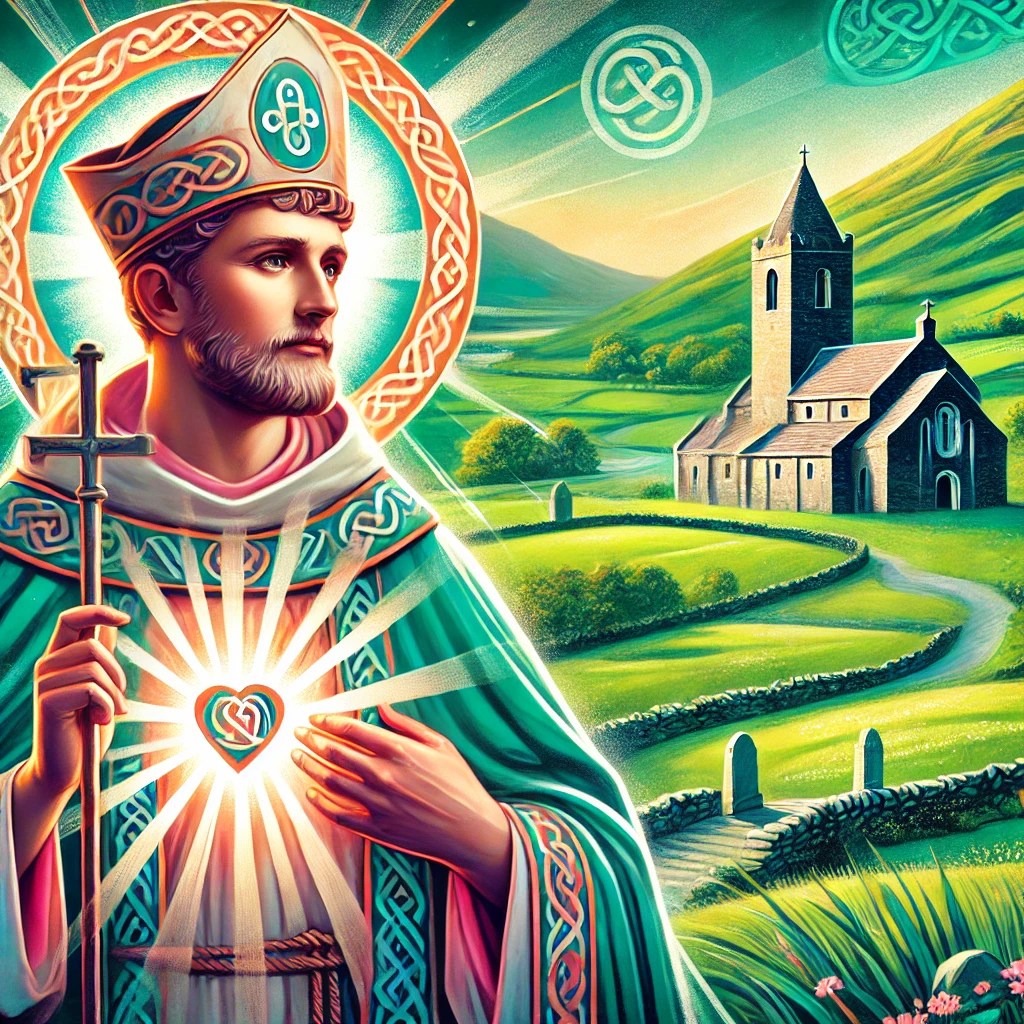
A Faithful Companion and Healer
Saint Benignus of Armagh, celebrated on November 9, is a remarkable yet often lesser-known figure in early Christianity. Revered for his compassionate heart and unwavering dedication to spreading the Gospel, he played a pivotal role in Ireland’s conversion to Christianity alongside Saint Patrick. Often called the “Beloved Disciple of Ireland,” Saint Benignus was instrumental in establishing communities of faith, especially among those marginalized or oppressed in his society. Known for his spiritual wisdom, gift of healing, and the many miracles attributed to him, Benignus is a model of humble service and resilient faith. The lessons from his life resonate across generations, making him a profound inspiration for all striving to live a life rooted in Christ.
From Humble Beginnings to a Calling with Saint Patrick
Benignus was born around 400 A.D. in Ireland, in a time when pagan beliefs dominated the land. While details about his family are scarce, it is known that Benignus’s early life was marked by an inherent gentleness and openness to others—a characteristic that would come to define his ministry. The path of his life changed dramatically when he encountered Saint Patrick, who arrived in Ireland to spread the Christian faith. Moved by Patrick’s message of salvation and the power of Christ’s love, young Benignus felt a stirring within his heart to join him on his mission. Legend holds that Benignus, only a young boy at the time, approached Patrick during his preaching and pledged his loyalty to both the man and the message he shared. In this encounter, Benignus became one of Patrick’s first converts and, in time, one of his closest and most trusted disciples.
As he grew in faith and spiritual knowledge under Patrick’s mentorship, Benignus quickly became a leader among the new Christian converts. Patrick entrusted him with significant responsibilities, eventually ordaining him as a bishop. Benignus’s role as a teacher and preacher expanded, and he traveled widely across Ireland, sharing the Gospel, guiding converts, and establishing churches and schools. His name—derived from the Latin word for “kind”—reflects his gentle and humble nature, which endeared him to all he encountered and made him an ideal witness of Christ’s love.
A Heart for Healing and an Instrument of God’s Mercy
One of the most defining aspects of Saint Benignus’s ministry was his miraculous gift of healing. Stories of Benignus performing extraordinary healings circulated widely, strengthening the faith of believers and sparking curiosity among those who had not yet accepted Christianity. Unlike some miracle workers of his time, Benignus was known for his quiet, unassuming manner in his work; he was more concerned with helping others than gaining any attention for himself.
One story recounts how Benignus healed a gravely ill child who was near death. Moved by the family’s distress, Benignus prayed fervently over the child and blessed him with the sign of the cross. Miraculously, the child was restored to health, and the family, filled with gratitude and awe, converted to Christianity. Another story describes how Benignus, upon entering a village plagued by illness, prayed over the afflicted and brought about a swift end to the disease. He was not only a healer of physical ailments but also a spiritual guide, offering prayers, counseling, and comfort to those struggling with spiritual burdens.
These miracles were often accompanied by conversions and baptisms, as many saw the power of God working through him and turned their hearts to Christ. Benignus’s miracles extended beyond healing, as he was also credited with protecting villages from disasters, such as floods and storms, through his prayers. The faith and compassion he demonstrated were essential in bringing people to the love and mercy of Christ.
Persevering Through Trials and Opposition
Though Saint Benignus was not martyred in the traditional sense, his life was marked by considerable hardships due to his commitment to the Christian mission. Evangelizing in pagan Ireland was dangerous; he faced resistance from those clinging to the old beliefs and leaders who felt their authority threatened by the rise of Christianity. On several occasions, Benignus was threatened, ostracized, and ridiculed. Despite the dangers, he stood firm, relying on prayer, patience, and God’s grace to see him through each trial.
One significant challenge came as he worked to establish Christian teachings and practices within communities resistant to change. Many viewed Christianity as foreign, and Benignus’s ministry faced obstacles, especially in areas where paganism was deeply entrenched. He endured verbal abuse and physical threats, yet he never retaliated or responded with anger. Instead, Benignus continued to preach peacefully, teaching by example and by quietly showing mercy to those who opposed him.
In the latter years of his life, Benignus suffered from illness, which he bore with patience and trust in God. Although he passed away peacefully and not as a martyr, the struggles he faced for the faith, his tireless service, and his sacrifices for the Gospel are remembered as acts of spiritual martyrdom, displaying a resilience that drew others to Christ.
The Enduring Legacy of Saint Benignus
Following his death, Saint Benignus was revered as a holy intercessor. Numerous accounts of miracles emerged as people sought his aid in prayer. Pilgrims flocked to his tomb, located in Armagh, to seek his intercession and were met with miraculous healings. Stories of Benignus’s continued influence grew: ailments were cured, and prayers were answered, testifying to his enduring presence among the faithful.
One of the most famous miracles associated with his relics occurred when a group of pilgrims visited his tomb, praying fervently for healing. They reported experiencing sudden relief from pain and illness, crediting Saint Benignus with the healing. His relics became a powerful symbol of faith, and his tomb at Armagh became a significant site for pilgrimages, where the faithful still visit to ask for his intercession. Additionally, the Abbey of Saint Benignus in Dijon, France, named in his honor, stands as a testament to his influence even beyond Ireland. This tradition of veneration highlights his lasting impact on the faithful and the Church, with many continuing to honor him as a beloved saint and a powerful intercessor.
Embracing Humility, Compassion, and Steadfast Faith
Saint Benignus’s life encourages us to embrace humility, compassion, and steadfast faith in our own spiritual journeys. His example invites us to be kind-hearted and humble, embodying the very meaning of his name. We are called to stand firm in our faith, regardless of the challenges we may face, and to be instruments of healing and comfort to those around us.
Here are some practical ways to apply Saint Benignus’s virtues to our daily lives:
- Show Kindness to All: Benignus’s life calls us to be compassionate, especially toward those who are suffering or in need. Small acts of kindness can have a powerful impact, and by approaching others with humility, we can reflect Christ’s love in our everyday encounters.
- Stay Firm in Faith: Just as Benignus faced resistance, we may encounter doubts or opposition in our journey. Let us remember his courage and perseverance, drawing strength from prayer and the Sacraments to remain faithful even in difficult times.
- Pray for Healing, Both Physical and Spiritual: Benignus’s legacy as a healer reminds us that we can pray for others who are struggling, whether they face physical illness or spiritual hardships. Through prayer, we can ask God to work through us, just as He worked through Saint Benignus, bringing peace and healing to those around us.
Engage with Us!
Saint Benignus’s life offers rich lessons in kindness, faith, and resilience. We invite you to reflect on his story and consider how you can embody these values in your own life. Share your thoughts and reflections with us:
- Which aspect of Saint Benignus’s life resonates with you the most?
- How can you practice humility and kindness in your daily interactions?
- Is there a challenge you face in your faith, and how can Saint Benignus’s example provide encouragement?
Let’s support each other as we seek to live out our faith with love, courage, and humility. Like Saint Benignus, may we be vessels of God’s love, always seeking to do good, serve others, and spread the message of Christ with every action.
Saint Benignus, pray for us!
Follow us on Instagram and Facebook for more insights and reflections on living a faith-filled life.

 Holy Manna!
Leave a comment