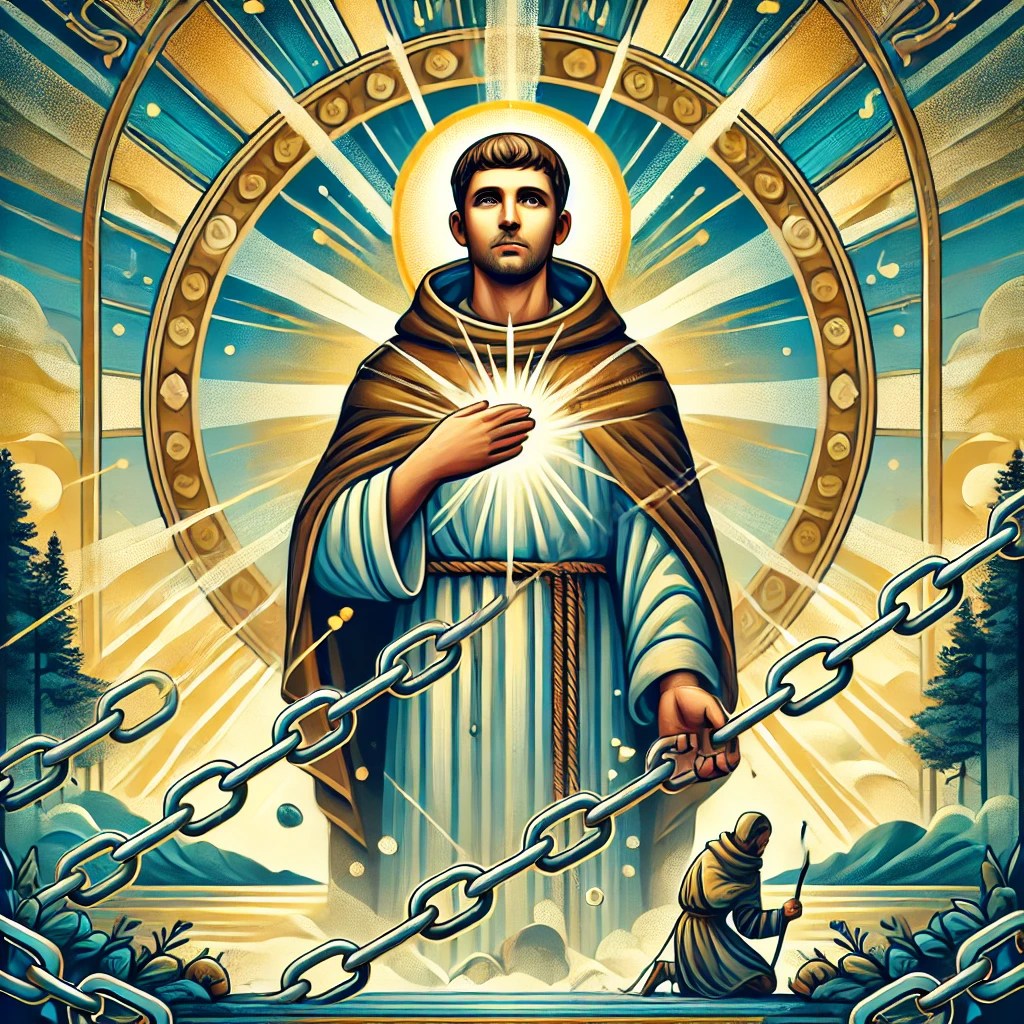
The Patron of Prisoners and Miracles of Mercy
Saint Leonard of Noblac, whose feast is celebrated on November 6, is one of the lesser-known saints of the early medieval Church but a profoundly significant figure in Christian tradition. Known as the “Patron of Prisoners,” Saint Leonard dedicated his life to advocating for the physical and spiritual freedom of those who were marginalized and oppressed. His life exemplifies boundless mercy, humility, and a deep commitment to living out the Gospel message of compassion. In his dedication to prisoners, Saint Leonard not only symbolized Christian charity and forgiveness but also the Church’s advocacy for those unjustly deprived of liberty. Today, he is celebrated as a powerful intercessor for those in need of freedom—whether physical, emotional, or spiritual. His legacy, marked by miracles both during and after his life, offers a timeless witness to the transformative and liberating power of God’s love.
A Noble Beginning and Radical Calling
Saint Leonard was born around the late 5th century in the region of Gaul, near present-day Limoges, France, during a time when the Church was gaining a stronghold in Europe. He came from an aristocratic family close to the Merovingian King Clovis I, whose reign marked the spread of Christianity among the Frankish people. Leonard’s upbringing would have exposed him to both the privileges of noble life and the responsibilities of societal leadership. However, Leonard’s life took a decisive turn under the guidance of Saint Remigius, Bishop of Reims, who had played a pivotal role in Clovis’s conversion and baptism, thus influencing the religious orientation of the Frankish Kingdom. Saint Remigius, known for his holiness and wisdom, became a spiritual mentor to Leonard and inspired him to live a life devoted to Christ.
Leonard’s conversion was less about abandoning paganism—common among the Franks of his day—and more about turning away from the allure of power and wealth. Inspired by Saint Remigius’s example, Leonard decided to renounce his noble rights and inheritance, choosing a path of humility and service instead. He dedicated his life to acts of mercy, especially for the poor and imprisoned, who were often overlooked by society. This commitment to service set Leonard apart as a beacon of Christian charity, sparking admiration and drawing people from all walks of life to seek his counsel and prayers.
Freeing the Imprisoned and Offering Hope
Saint Leonard became known as a miraculous intercessor during his lifetime, particularly for his work in securing freedom for prisoners. Through his prayers and intercessions, many prisoners were released, sometimes through direct royal intervention and other times through miraculous occurrences. Leonard would often visit prisoners to console them and pray with them, earning him a reputation as an advocate for their release. His deep compassion and empathy toward the suffering resonated powerfully, and those who encountered him witnessed the profound peace he brought to those in despair.
One of the most remarkable miracles attributed to him involved a prisoner shackled in heavy chains who, after Leonard’s fervent prayer, found the chains miraculously falling from his wrists and ankles, allowing him to walk free. News of such miracles spread rapidly, and Leonard’s name was invoked by prisoners across Gaul and beyond. His interventions extended beyond simple liberation; he also worked for the spiritual freedom of prisoners, encouraging them to repent, pray, and seek the forgiveness of Christ. Leonard’s devotion to this mission of liberating the physically and spiritually oppressed reflects the Gospel’s message of redemption and reconciliation with God.
A Life of Self-Denial and Constant Prayer
Leonard’s life involved significant hardship and renunciation. He chose to live as a hermit in the forest near Limoges, adopting a life of prayer, fasting, and penance. This decision to withdraw from the comforts of nobility into solitude allowed him to deepen his relationship with God and intercede for those who were in need. Leonard’s hermitage became a refuge for the spiritually afflicted, a place where those struggling with sin, guilt, or oppression could find healing and peace.
Living in isolation and practicing severe austerities, Leonard encountered the spiritual hardships that accompany a life dedicated to prayer. He was tested by spiritual trials, yet remained steadfast, offering all his sacrifices for the salvation of souls. His renunciation of wealth and power demonstrated his commitment to living out the teachings of Christ fully. His hermitage eventually attracted pilgrims, who traveled great distances to seek his intercession. Despite his desire for solitude, Leonard offered guidance, healing, and counsel to all who sought him. In a world often devoid of mercy, his life was a powerful witness to Christian charity, self-denial, and intercessory prayer.
A Legacy of Healing, Liberation, and Pilgrimage
After Saint Leonard’s death, his legacy continued to grow as numerous miracles were attributed to his intercession. His tomb, located in Noblac—later renamed Saint-Léonard-de-Noblat in his honor—became a center of pilgrimage, where countless people reported being freed from various afflictions. The relics of Saint Leonard were venerated as sources of healing and liberation, particularly for those suffering from physical and spiritual bondage. Stories of chained prisoners who experienced miraculous liberation after invoking Saint Leonard’s name were widely documented, reinforcing his patronage of prisoners and those seeking freedom.
Over the centuries, the Basilica of Saint Leonard in Noblac has become a renowned pilgrimage site, attracting visitors from across Europe who seek healing and intercession. Medieval pilgrims, especially, would journey to his tomb, praying for their loved ones imprisoned by illness or despair. Even today, his shrine remains a place of profound reverence, where believers gather to ask for his aid in overcoming the struggles of life, whether they be addictions, fears, or literal imprisonment. Through the veneration of his relics, Saint Leonard’s legacy of compassion and healing endures, offering hope and a reminder of God’s mercy.
Embracing Mercy, Freedom, and Humility in Christ
The life of Saint Leonard of Noblac presents us with a powerful example of Christian mercy and humility. His commitment to freeing the imprisoned, both physically and spiritually, reflects the Gospel call to be instruments of God’s liberation in the world. Saint Leonard’s life urges us to see beyond external judgments and extend God’s mercy to those in need of hope, compassion, and forgiveness.
- Practice Compassionate Service: Consider volunteering with organizations that serve marginalized populations, such as prison ministries, homeless shelters, or addiction recovery programs, bringing hope to those who may feel abandoned.
- Pray for the Oppressed: Include specific intentions in your daily prayers for those unjustly imprisoned, burdened by fear, or struggling with addictions. Invoke Saint Leonard’s intercession, asking for their freedom and healing.
- Live Simply and Give Generously: Reflect on ways to simplify your life and share resources with those in need, emulating Saint Leonard’s spirit of detachment and service.
Engage with Us!
We invite you to share your reflections on Saint Leonard and how his story has impacted you.
Reflection Questions:
- In what ways can I “free” those around me who may feel trapped by their circumstances, emotions, or sins?
- How can I imitate Saint Leonard’s humility and dedication to serving others, even when unnoticed?
- Where might God be calling me to bring His love and mercy to people who feel isolated or abandoned?
Join our community in celebrating the example of Saint Leonard by sharing how we can extend compassion and mercy to others. Together, let’s follow Christ’s call to love one another with the same boundless mercy and compassion that Saint Leonard embodied.
Saint Leonard, pray for us!
Follow us on Instagram and Facebook for more insights and reflections on living a faith-filled life.

 Holy Manna!
Leave a comment