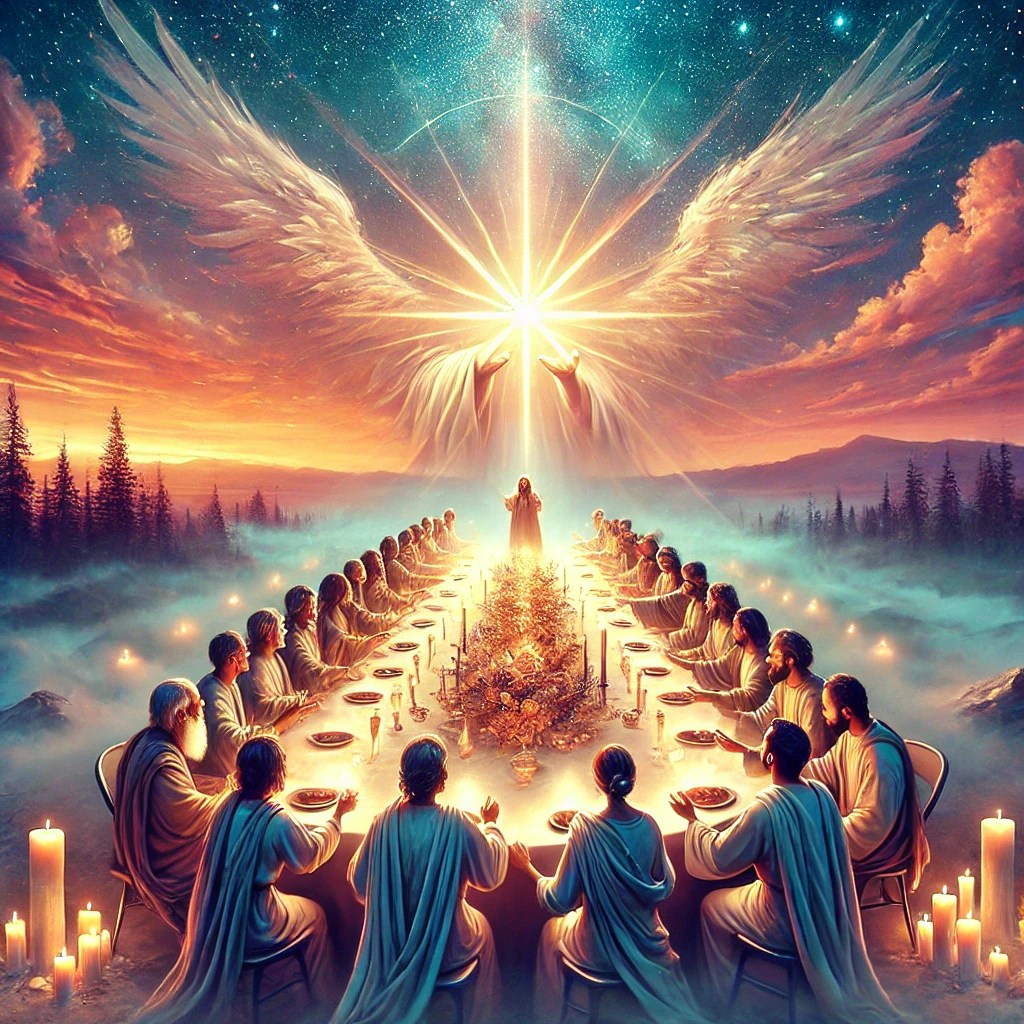
Called to Humility, Faith, and Feast
Today’s Mass readings guide us into a profound understanding of God’s invitation to embrace humility, acknowledge His sovereignty, and say “yes” to His call for a deeper communion with Him. These themes are at the heart of today’s Scripture, challenging us to examine our priorities, trust in God’s promises, and renew our commitment to the Kingdom.
In Philippians, St. Paul highlights Jesus’ radical humility and self-sacrifice, which turns conventional ideas of power and glory upside down. In a world influenced by Greco-Roman ideals of self-promotion and status, Paul’s words remind us that Christ’s exaltation came through His total surrender. Psalm 22, traditionally a lament, transitions to hope and praise as it speaks to God’s enduring promise to gather all nations under His reign. For ancient Israelites, this psalm would have symbolized trust in God’s covenant, even amid hardship, reflecting an anticipation of a kingdom that transcends earthly struggles. Finally, in Luke’s Gospel, Jesus offers the parable of the Great Dinner, a story that draws us into the eternal invitation God extends to each of us. This parable challenges our tendency to place worldly matters above our faith journey, urging us instead to respond fully to God’s call.
Together, these readings form a tapestry that reveals God’s relentless pursuit of us, inviting us to surrender, trust, and accept His invitation to His feast—a feast symbolizing the fullness of life in Him. Today, we are encouraged to reexamine our lives, to embrace humility and faith, and to prioritize God’s call above all else.
First Reading – Philippians 2:5-11
Adopt the Mind of Christ
St. Paul’s Letter to the Philippians was written during his imprisonment, a time when he faced great suffering but also intense spiritual clarity. Philippi was a Roman colony known for its status-driven society, where loyalty to the emperor and cultural norms of pride and power were valued. In this setting, Paul’s teachings about humility and self-sacrifice presented a countercultural message, challenging both believers and non-believers alike.
Philippians 2:5-11
New Revised Standard Version Catholic Edition
5 Let the same mind be in you that was in Christ Jesus,
6 who, though he was in the form of God,
did not regard equality with God
as something to be exploited,
7 but emptied himself,
taking the form of a slave,
being born in human likeness.
And being found in human form,
8 he humbled himself
and became obedient to the point of death—
even death on a cross.
9 Therefore God also highly exalted him
and gave him the name
that is above every name,
10 so that at the name of Jesus
every knee should bend,
in heaven and on earth and under the earth,
11 and every tongue should confess
that Jesus Christ is Lord,
to the glory of God the Father.
Detailed Exegesis
Verse 5: “Let the same mind be in you that was in Christ Jesus.”
Here, Paul calls on the community to model their thoughts and actions on Jesus, urging them to adopt a mindset of humility and self-giving love. This “mind of Christ” extends beyond simple imitation; it’s a transformative call to unity with Christ’s heart and purpose. This exhortation sets a foundation for understanding how each of us is called to live.
Verse 6: “Who, though he was in the form of God, did not regard equality with God as something to be exploited.”
The term “form of God” (Greek: morphē theou) points to Jesus’ divine nature, yet He didn’t cling to His rights or privileges. Instead, He chose to relinquish them. St. Ambrose of Milan noted that this verse exemplifies “Christ’s boundless love and humility,” demonstrating that power is most beautiful when held with gentleness and restraint.
Verse 7: “But emptied himself, taking the form of a slave, being born in human likeness.”
The Greek word kenosis, or “self-emptying,” describes Christ’s voluntary limitation of His divine attributes. In becoming human, He embraced human vulnerability. The Catechism reminds us that in the Incarnation, Christ “emptied himself to assume our humanity” (CCC 461), embodying divine love in human weakness. This total self-giving is an invitation for us to let go of pride and embrace humility.
Verse 8: “He humbled himself and became obedient to the point of death—even death on a cross.”
Christ’s obedience to the Father led Him to the Cross, a form of execution meant to shame and degrade. The significance here is profound: God Himself entered into the depths of human suffering and humiliation out of love for us. St. Thomas Aquinas emphasized that “obedience to God’s will is the highest act of love,” and Christ’s Cross is the ultimate testament to this love.
Verse 9-11: “Therefore God also highly exalted him and gave him the name that is above every name…that Jesus Christ is Lord.”
Because of His humility, Jesus is exalted by the Father, demonstrating that God’s kingdom operates on a paradoxical principle: true greatness is achieved through self-giving. The Catechism echoes this, noting that Christ’s lordship “manifests the Father’s desire that all people should honor Him” (CCC 449).
Teachings and References
St. Paul’s message to the Philippians aligns with the Church’s teaching on humility, particularly the call to die to self in order to fully live for God. The Catechism states that “Christ humbled Himself, making Himself obedient even to death on a Cross” (CCC 532), emphasizing the need for self-renunciation in the Christian life.
Reflection
In what ways can we practice this radical humility? We might start by examining our motives—are we seeking recognition, comfort, or security? Let us pray for the grace to let go of worldly pursuits and open our hearts to God’s call. Am I willing to surrender my own ambitions and embrace humility, following Christ’s example of self-emptying love?
Responsorial Psalm – Psalm 22:26-31
The Universal Reach of God’s Dominion
Psalm 22 begins with a cry of anguish (“My God, my God, why have you forsaken me?”) but later turns to hope and trust in God’s deliverance. Jesus Himself echoed this psalm on the Cross, showing that even in moments of intense suffering, God’s faithfulness endures. For the people of Israel, this psalm was a reminder that, despite their trials, God’s dominion would ultimately triumph, encompassing all nations.
Psalm 22:26-31
New Revised Standard Version Catholic Edition
26 The poor shall eat and be satisfied;
those who seek him shall praise the Lord.
May your hearts live forever!
27 All the ends of the earth shall remember
and turn to the Lord;
and all the families of the nations
shall worship before him.
28 For dominion belongs to the Lord,
and he rules over the nations.
29 To him, indeed, shall all who sleep in the earth bow down;
before him shall bow all who go down to the dust,
and I shall live for him.
30 Posterity will serve him;
future generations will be told about the Lord,
31 and proclaim his deliverance to a people yet unborn,
saying that he has done it.
Detailed Exegesis
Verse 26: “The poor shall eat and be satisfied; those who seek him shall praise the Lord.”
In a world that often overlooks the poor, this verse underscores God’s concern for the marginalized. This is a promise that God Himself will satisfy those who hunger, both physically and spiritually. The Catechism teaches that “the preferential option for the poor is an essential element of Christian life” (CCC 2448), reflecting God’s boundless generosity.
Verse 27: “All the ends of the earth shall remember and turn to the Lord; and all the families of the nations shall worship before him.”
This verse anticipates the Church’s mission to spread the Gospel to every corner of the world, fulfilling Jesus’ command to “make disciples of all nations” (Matthew 28:19). The psalmist envisions a time when every nation will recognize and worship God, symbolizing the universality of His kingdom.
Verse 28: “For dominion belongs to the Lord, and he rules over the nations.”
Acknowledging God’s dominion affirms that earthly powers are temporary. St. Augustine commented on this verse, noting that “true peace can only be found in the kingdom where God reigns.” When we remember that all things are under God’s authority, we find the courage to trust Him, even in uncertain times.
Verse 29-31: “To him, indeed, shall all who sleep in the earth bow down…Posterity will serve him; future generations will be told about the Lord.”
These verses affirm that God’s covenant endures beyond any one generation. The psalmist reminds us that our faith is a gift meant to be passed on, reaching even those “yet unborn.” Our lives, in this way, become testimonies of God’s work for future generations.
Teachings and References
The theme of God’s universal reign in Psalm 22 resonates with the Church’s teaching on the universality of salvation. The Catechism teaches that “the Church is catholic because it is sent to all people” (CCC 831), echoing the psalmist’s vision of all nations worshiping God.
Reflection
How do we recognize God’s dominion in our daily lives? One way is by entrusting our worries to Him and making a conscious effort to place our hope in His promises. Am I willing to let go of control and place my life in God’s hands, trusting in His sovereignty?
Holy Gospel – Luke 14:15-24
The Invitation to the Great Feast
In Luke’s Gospel, Jesus tells the parable of the Great Dinner to highlight the nature of God’s invitation to His kingdom. In the cultural setting of first-century Israel, banquets were social events where attendance carried a moral obligation. The excuses made by the invited guests, therefore, would have been both surprising and offensive to the host. Jesus’ parable reveals that God’s kingdom is open to all, yet it requires a wholehearted response.
Luke 14:15-24
New Revised Standard Version Catholic Edition
The Parable of the Great Dinner
15 One of the dinner guests, on hearing this, said to him, “Blessed is anyone who will eat bread in the kingdom of God!” 16 Then Jesus said to him, “Someone gave a great dinner and invited many. 17 At the time for the dinner he sent his slave to say to those who had been invited, ‘Come; for everything is ready now.’ 18 But they all alike began to make excuses. The first said to him, ‘I have bought a piece of land, and I must go out and see it; please accept my regrets.’ 19 Another said, ‘I have bought five yoke of oxen, and I am going to try them out; please accept my regrets.’ 20 Another said, ‘I have just been married, and therefore I cannot come.’ 21 So the slave returned and reported this to his master. Then the owner of the house became angry and said to his slave, ‘Go out at once into the streets and lanes of the town and bring in the poor, the crippled, the blind, and the lame.’ 22 And the slave said, ‘Sir, what you ordered has been done, and there is still room.’ 23 Then the master said to the slave, ‘Go out into the roads and lanes, and compel people to come in, so that my house may be filled. 24 For I tell you, none of those who were invited will taste my dinner.’”
Detailed Exegesis
Verse 15: “Blessed is anyone who will eat bread in the kingdom of God!”
This statement from one of the guests reflects a common Jewish hope in the coming Messianic banquet, a symbol of salvation. However, Jesus uses this moment to reveal a deeper truth about God’s invitation and what it takes to be a true part of His kingdom.
Verse 16-17: “Someone gave a great dinner and invited many…‘Come; for everything is ready now.’”
In ancient Jewish culture, a dinner invitation was not only an honor but also a summons. The “great dinner” represents God’s kingdom, and the invitation is His call to salvation. All has been prepared; our part is to respond.
Verse 18-20: “But they all alike began to make excuses…”
The excuses given by the invited guests are varied—one bought land, another has livestock, and another is newly married. These are not sins but legitimate concerns that, nonetheless, reflect misplaced priorities. St. Gregory the Great commented that “the earthly concerns, when given priority over God, become obstacles to salvation.”
Verse 21: “Go out at once…bring in the poor, the crippled, the blind, and the lame.”
The invitation now extends to those often marginalized in society, symbolizing God’s inclusive love. This act underscores the Church’s mission to care for those on the peripheries, as Christ Himself reached out to the marginalized.
Verse 24: “For I tell you, none of those who were invited will taste my dinner.”
This verse is a solemn warning: repeated refusals to accept God’s invitation may eventually lead to separation from Him. St. John Chrysostom taught that “to ignore God’s invitation is to turn one’s back on the very source of life and joy.”
Teachings and References
The parable aligns with the Church’s teaching on the universality of God’s invitation. The Catechism teaches that “the Church…works so that all people may enter into the feast of the kingdom” (CCC 543). It calls us to see God’s call as an opportunity not to be missed.
Reflection
Today, let’s consider what may be keeping us from responding to God’s call. Whether it’s work, family, or social obligations, we can ask God for the grace to make space for Him. Are there distractions in my life that keep me from saying “yes” to God’s invitation?
Embracing Our Invitation to God’s Feast
Today’s readings extend a timeless invitation: to live a life of humility, faith, and wholehearted response to God’s call. By adopting the “mind of Christ,” we follow a path that leads to divine exaltation through humility. Philippians reminds us that our journey is not about asserting ourselves but about emptying ourselves in service to God and others. Psalm 22 gives us the assurance that God’s kingdom endures, and that He reigns over all nations. It reminds us to place our hope not in earthly power but in the Lord who “rules over the nations.”
Finally, Luke’s Gospel invites us to examine our own response to God’s invitation. The parable challenges us to ask: are we putting God first, or are we letting worldly matters take precedence? The choice is ours. By saying “yes” to God’s call, we join in the banquet of the Kingdom—a feast that fulfills all our deepest desires and draws us into communion with Him.
May we, inspired by today’s readings, embrace a life that reflects the humility of Christ, a heart open to God’s authority, and a spirit ready to respond joyfully to His invitation. Together, let us walk this path with open hearts, ready to celebrate the fullness of life in God’s eternal feast.
Engage with Us!
We invite you to share your reflections on today’s readings in the comments below. Each perspective adds richness to our community, so let your voice be heard!
Reflection Questions
- Philippians 2:5-11: What area in my life needs more humility? How can I better imitate Christ’s example of self-emptying love?
- Psalm 22:26-31: Am I able to entrust my life to God’s authority? What steps can I take to place my hope fully in Him?
- Luke 14:15-24: Are there distractions that keep me from fully embracing God’s invitation? How can I prioritize my relationship with Him?
May these reflections draw us each closer to living fully in God’s grace and love, embracing His call with open hearts and joyful spirits.
Follow us on Instagram and Facebook for more insights and reflections on living a faith-filled life.

 Holy Manna!
Leave a comment