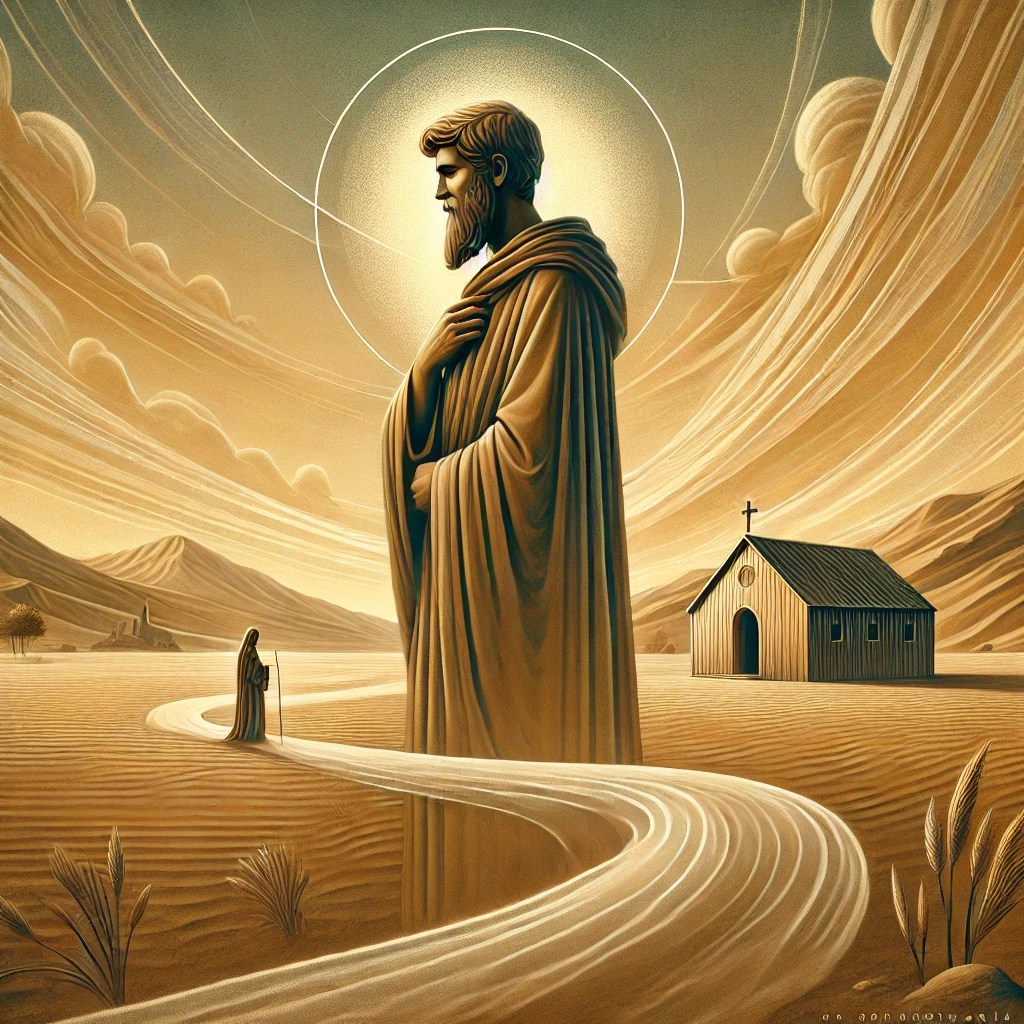
The Hermit of Humility and Love
Saint Abraham Kidunaia, also known as Saint Abraham the Hermit, is a figure who exemplifies the Christian virtues of humility, love, and profound devotion to God. His life serves as a testament to the transformative power of faith and prayer. Living in 4th-century Mesopotamia, Abraham chose a path of radical asceticism, retreating from the world to lead a life entirely centered on God. While living as a hermit, Abraham impacted countless lives through his tireless evangelization efforts, miraculous acts, and pastoral care.
Saint Abraham is particularly remembered for his unwavering love for his niece, Saint Mary of Edessa, whom he guided back to the faith after she had fallen into a life of sin. His deep compassion and spiritual authority made him not only a man of God but also a mentor to those lost in spiritual darkness.
Through his ascetic life, his powerful conversion of pagans, and the miracles that followed, Abraham’s life continues to inspire Christians today to live with deeper devotion to God, displaying both humility and boundless love.
From Wealth to Wilderness
Abraham was born into a wealthy and noble Christian family in Mesopotamia (modern-day Iraq) around the late 3rd to early 4th century. From his early years, he displayed a remarkable sense of piety and devotion to God. However, as the custom of the time dictated, Abraham’s family arranged a marriage for him, despite his clear preference for a life devoted to spiritual matters.
On the day of his wedding, Abraham made a radical decision that would shape the rest of his life. Rather than going through with the marriage, he fled to the desert, choosing to live as a hermit. This was no easy decision, as it meant leaving behind wealth, family, and comfort to embrace a life of solitude, prayer, and extreme poverty. The desert, with its harsh conditions, became his spiritual battleground where he fought temptations and grew closer to God.
This dramatic act of renunciation was the beginning of a life lived entirely for God. Abraham’s rejection of worldly wealth and prestige reflects Christ’s teaching in the Gospel of Matthew: “Do not store up for yourselves treasures on earth, where moth and rust destroy, and where thieves break in and steal. But store up for yourselves treasures in heaven” (Matthew 6:19-20). In choosing the desert, Abraham embraced a life of complete surrender to divine providence.
The Power of Intercession and Faith
Though Saint Abraham Kidunaia sought a life of solitude, his holiness became widely known, and he was often called upon to assist the Church in various missions. One of the most significant events in his life occurred when a bishop requested him to preach to a pagan village that had resisted conversion to Christianity. Although Abraham initially hesitated, reluctant to leave his hermitage, he submitted to the bishop’s request out of obedience and charity.
Upon arriving in the village, Abraham was met with great hostility. The people were deeply entrenched in their pagan practices and rejected his efforts to preach the Gospel. However, Abraham was not discouraged. He spent three years living among the villagers, praying for them constantly and showing them kindness. His patience and deep trust in God’s power eventually led to a miraculous conversion of the entire village. Even the most hardened hearts were softened by the love and divine power evident in Abraham’s ministry. A church was built in the village, and Abraham, satisfied that his mission was complete, returned humbly to his desert hermitage.
Another well-known episode in Abraham’s life was the spiritual rescue of his niece, Mary of Edessa. Mary, who had been raised in a Christian home, fell into a sinful life of prostitution after being seduced by the allure of the world. When Abraham learned of her situation, he was heartbroken but did not abandon her. In a display of boundless love and mercy, he went to great lengths to bring her back to the faith. Disguising himself as a traveler, he entered the brothel where she lived and, through a deeply moving conversation, convinced her of God’s love and her need for repentance. Mary’s conversion was complete, and she went on to lead a life of deep repentance, eventually becoming a saint in her own right.
These miracles—both the conversion of the pagan village and the rescue of his niece—illustrate the power of God working through Abraham’s humble intercession. His compassion and perseverance remind us of Jesus’ words in Matthew 18:12-14, where He speaks of the Good Shepherd seeking out the lost sheep until it is found. Abraham’s life was a living testament to this kind of relentless love.
Faith That Withstood All Trials
Saint Abraham Kidunaia’s life was marked by many personal sacrifices and hardships, which he bore with humility and grace. Living in complete solitude in the desert, he battled temptations, hunger, and the natural desire for companionship. Yet, he viewed these hardships as opportunities to grow closer to God, often fasting for long periods and spending hours in prayer.
Beyond the physical and spiritual trials of the desert, Abraham faced another kind of challenge—leaving behind his beloved solitude to fulfill the mission God had for him. Though he desired to remain in prayerful isolation, he responded with obedience whenever he was called to minister to others. His greatest spiritual trial likely came when he learned of his niece Mary’s fall into sin. The pain of knowing that someone so dear had turned away from God would have been excruciating, yet Abraham did not let despair overcome him. Instead, he turned to prayer and eventually took action to bring her back to the light.
In every hardship, Abraham trusted in God’s grace to sustain him. His life reminds us of the call to remain faithful in the face of trials, as Saint Paul exhorts in Romans 12:12: “Be joyful in hope, patient in affliction, faithful in prayer.” Abraham lived out this command with his whole heart, never letting difficulties weaken his faith.
A Legacy of Holiness and Healing
The miracles associated with Saint Abraham did not cease with his death. In fact, many more stories of miraculous healings and divine interventions have been attributed to his intercession after he passed away. Abraham died peacefully in the desert, but his tomb soon became a site of pilgrimage. The faithful who visited his relics often reported miraculous healings, particularly of those who were sick or suffering from spiritual afflictions.
The small hermitage where Abraham spent much of his life was transformed into a place of veneration. Pilgrims came from far and wide to seek his intercession, knowing that the holy man’s prayers before God were powerful. Abraham’s legacy spread throughout Mesopotamia and beyond, with stories of healing, protection from danger, and conversions continuing for centuries after his death.
Many of these stories reflect the power of prayer and the love of God working through His saints. In the Catholic Church, the veneration of saints like Abraham serves as a reminder that the faithful who have gone before us continue to intercede on our behalf. The Catechism of the Catholic Church teaches that “the witnesses who have preceded us into the kingdom, especially those whom the Church recognizes as saints, share in the living tradition of prayer by the example of their lives, the transmission of their writings, and their prayer today” (CCC 2683). Saint Abraham’s intercession continues to inspire devotion and faith in God’s power.
Lessons from the Life of Saint Abraham Kidunaia
The life of Saint Abraham Kidunaia provides us with numerous lessons on humility, perseverance, and compassionate love. His willingness to give up everything for the sake of Christ challenges us to reconsider what is most important in our own lives. Are we too attached to material wealth or the comforts of this world? Abraham shows us that true fulfillment comes not from worldly possessions, but from a life entirely devoted to God.
His perseverance in prayer and mission, even in the face of great opposition, teaches us that no heart is beyond the reach of God’s grace. Whether it was the conversion of a pagan village or the redemption of his niece, Abraham trusted completely in God’s ability to transform lives. This is a powerful reminder for us not to give up on our loved ones who may be far from the faith. We, too, can be instruments of God’s grace through prayer, patience, and unwavering love.
In practical terms, here are some ways we can imitate Saint Abraham in our daily lives:
- Practice humility: Seek to serve others without expecting anything in return. Offer your talents and time for the good of others and the glory of God.
- Be faithful in prayer: Like Abraham, spend time each day in prayer, especially when faced with challenges or temptations. Trust in God’s providence and His perfect timing.
- Show compassion and forgiveness: Do not hesitate to reach out to those in need, especially those who have fallen into sin. Remember Abraham’s example of unconditional love toward his niece, and be a source of mercy and hope for others.
Engage with Us!
We’d love to hear your thoughts and reflections on the life of Saint Abraham Kidunaia! How does his story inspire you in your faith journey? What lessons from his life can you apply to your own?
Reflection Questions:
- What are some areas in your life where you can practice greater humility and self-denial?
- How can you better persevere in prayer, especially during difficult times?
- Are there people in your life who need your compassion and forgiveness, just as Saint Abraham showed his niece?
Share your responses in the comments below, and let’s support one another as we strive to grow in faith and holiness. As Saint Paul reminds us in Colossians 3:17, “Whatever you do, in word or deed, do it all in the name of the Lord Jesus, giving thanks to God the Father through Him.” May we, like Saint Abraham, live every day in service to God and His people.
Saint Abraham Kidunaia, pray for us!
Follow us on Instagram and Facebook for more insights and reflections on living a faith-filled life.

 Holy Manna!
Leave a comment