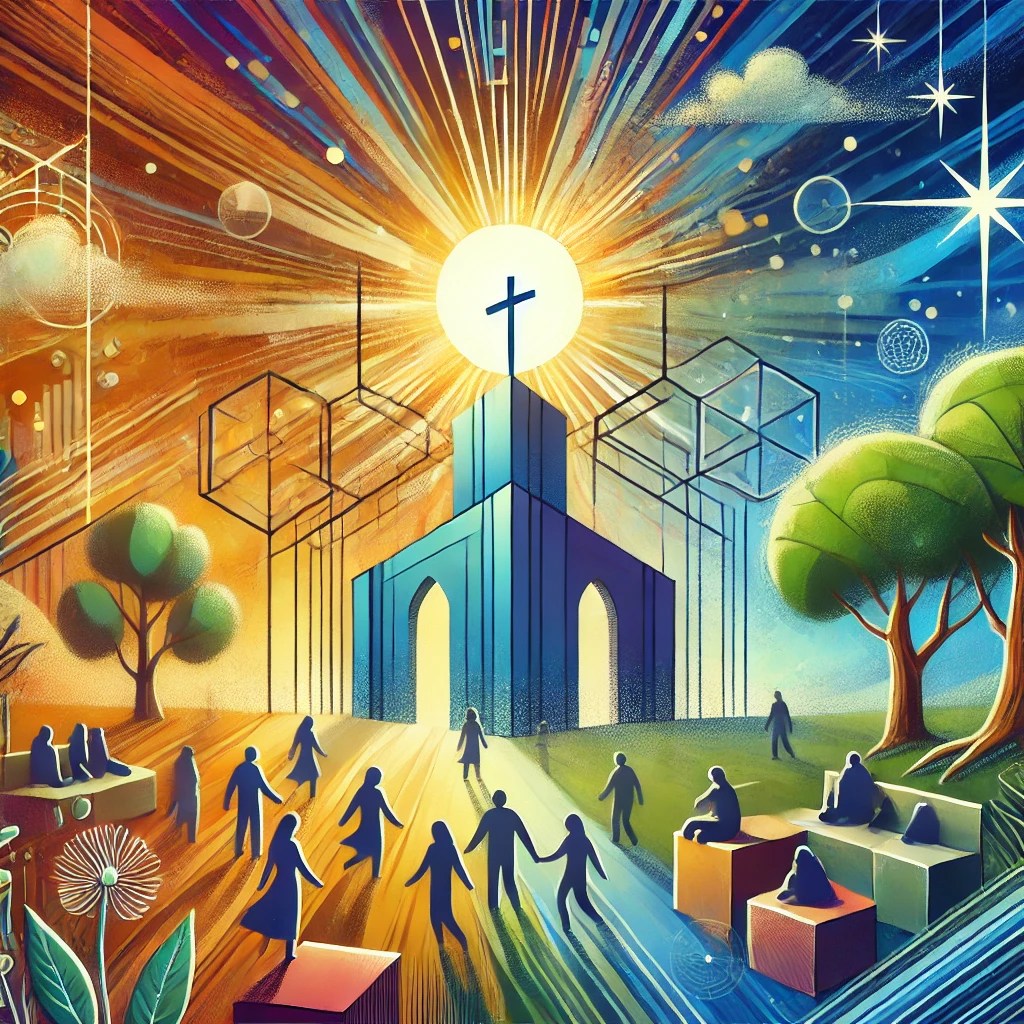
The Call to Build God’s Kingdom
In today’s Mass readings, we encounter a profound message of unity, identity, and mission. St. Paul tells us that we are no longer strangers or outsiders; we are citizens of God’s Kingdom, built into a spiritual dwelling with Christ as the cornerstone. The Psalmist reminds us that God’s glory is revealed in creation, as the heavens declare His majesty without words. Finally, the Gospel of Luke recounts Jesus’ night of prayer and His selection of the twelve apostles, ordinary men called to an extraordinary mission.
These readings, while diverse in content, are deeply connected by a central theme: God’s ongoing plan to build His Kingdom and our role in that plan. Each passage emphasizes a different aspect of this calling. St. Paul speaks of our identity in Christ and how we are built into God’s household, the Psalmist points to the grandeur of creation proclaiming the Creator, and the Gospel highlights Jesus’ discernment in prayer as He chooses the apostles to lead His Church.
First Reading – Ephesians 2:19-22
No Longer Strangers: Built into God’s Household
St. Paul’s Letter to the Ephesians addresses a community of believers in a culturally diverse city. Ephesus was a major center of trade and religion in the Roman Empire, and the Church there was made up of both Jewish and Gentile converts. This posed a unique challenge, as these groups came from very different backgrounds. Paul’s message in this letter was to break down the walls of division, emphasizing that through Christ, all are united. In today’s passage, Paul focuses on the unity of believers, describing how we are no longer strangers or outsiders but members of God’s household.
For early Christians, the concept of citizenship was significant. The Roman Empire granted citizenship to certain individuals, giving them rights and privileges. Paul uses this imagery to explain that through Christ, we all have “citizenship” in heaven. This was a radical message, especially for the Gentiles, who had previously been seen as outsiders to God’s covenant with Israel.
Ephesians 2:19-22
New Revised Standard Version Catholic Edition
19 So then you are no longer strangers and aliens, but you are citizens with the saints and also members of the household of God, 20 built upon the foundation of the apostles and prophets, with Christ Jesus himself as the cornerstone. 21 In him the whole structure is joined together and grows into a holy temple in the Lord; 22 in whom you also are built together spiritually into a dwelling place for God.
Detailed Exegesis:
Verse 19:
“So then you are no longer strangers and aliens, but you are citizens with the saints and also members of the household of God.”
Paul starts with a powerful declaration: we are no longer strangers or aliens. This echoes the Old Testament, where Gentiles were often referred to as foreigners. Now, through Christ, all believers—both Jew and Gentile—are fully included in God’s family. The phrase “citizens with the saints” emphasizes that we share the same spiritual privileges as the saints who have gone before us. This is a beautiful reflection of the communion of saints, a key teaching in the Church, which unites us with the faithful across all time and space (CCC 946).
Verse 20:
“Built upon the foundation of the apostles and prophets, with Christ Jesus himself as the cornerstone.”
Paul uses the metaphor of a building to describe the Church. The apostles and prophets laid the foundation through their witness and teachings, but Christ is the cornerstone—the essential part that holds the structure together. This image reminds us of the importance of apostolic tradition. The Church is not a random collection of believers; it is a structured, living temple, with Christ as the source of unity and strength. In Lumen Gentium (19), the Second Vatican Council describes the apostles as the foundation of the Church, charged with the mission to “continue Christ’s work“ on earth.
Verse 21:
“In him the whole structure is joined together and grows into a holy temple in the Lord.”
Here, Paul explains that the Church is not a static institution but a growing, living reality. As believers, we are all part of this “holy temple,“ constantly being built up in faith and love. This idea of the Church as a living temple reflects St. Peter’s description in 1 Peter 2:5: “like living stones, let yourselves be built into a spiritual house.“ The Church Fathers often referred to the community of believers as the “new Israel,“ continuing the work of God’s covenant through the Church.
Verse 22:
“In whom you also are built together spiritually into a dwelling place for God.”
Paul concludes by personalizing this message. The Ephesians, and by extension all believers, are “built together“ into a dwelling place for God. This is a profound truth: through the Holy Spirit, God dwells within us. The Church is not just an external institution; it is the spiritual home where God resides. The Catechism teaches that each of us, as members of the Church, “constitutes the temple of the Holy Spirit“ (CCC 797). We are called to be living witnesses of God’s presence in the world.
Teachings and References:
The theme of unity in Christ is echoed throughout Church teaching. The Catechism (CCC 1267) emphasizes that baptism makes us members of Christ’s body, the Church. St. Augustine, in his writings, often reflected on the idea of the Church as a “city of God,“ a place where all believers find their home in God’s eternal Kingdom.
Reflection:
This passage challenges us to reflect on our own sense of belonging in the Church. Do we see ourselves as active members of God’s household, or do we feel like outsiders? Paul’s message reminds us that we are all part of God’s family, called to work together in building His Kingdom. We can ask ourselves: How am I contributing to the growth of this “holy temple“? How do I see myself as a citizen of heaven?
Responsorial Psalm – Psalm 19:2-5
Creation’s Silent Proclamation: Revealing God’s Glory
Psalm 19 is a beautiful hymn that celebrates two forms of God’s revelation: through creation (verses 1-6) and through His law (verses 7-14). Today’s selection focuses on the first part, where the psalmist reflects on how the heavens declare God’s glory without using words. In the ancient world, especially among the Israelites, creation was seen as a reflection of God’s majesty. The stars, the sun, and the natural world were not gods to be worshipped, as they were in pagan cultures, but signs pointing to the Creator.
Psalm 19:2-5
New Revised Standard Version Catholic Edition
2 Day to day pours forth speech,
and night to night declares knowledge.
3 There is no speech, nor are there words;
their voice is not heard;
4 yet their voice goes out through all the earth,
and their words to the end of the world.
In the heavens he has set a tent for the sun,
5 which comes out like a bridegroom from his wedding canopy,
and like a strong man runs its course with joy.
Detailed Exegesis:
Verse 2:
“Day to day pours forth speech, and night to night declares knowledge.”
The psalmist begins by describing the continuous proclamation of God’s glory by creation. Each day and night reveal more of God’s majesty and wisdom. The idea of creation “pouring forth speech“ suggests an unending flow of praise to God. Although nature does not speak in human words, it reveals knowledge of the Creator in a way that all can perceive.
Verse 4:
“Yet their voice goes out through all the earth, and their words to the end of the world.”
Despite the lack of literal words, the message of creation reaches everyone, everywhere. This universal reach reflects the universality of God’s revelation. No one is excluded from hearing the message that creation declares. In Romans 1:20, St. Paul affirms that God’s “invisible attributes“ are clearly perceived in the things He has made, leaving humanity without excuse.
Verse 3:
“There is no speech, nor are there words; their voice is not heard;”
Even though creation does not use words, it still communicates God’s presence. This echoes the idea that God can be known through the “book of nature.“ St. Bonaventure, in his Itinerarium Mentis in Deum (Journey of the Mind to God), spoke of how creation is like a “mirror“ reflecting the Creator’s goodness. This verse invites us to consider how we perceive God in the world around us.
Verse 5:
“In the heavens he has set a tent for the sun, which comes out like a bridegroom from his wedding canopy, and like a strong man runs its course with joy.”
The image of the sun as a bridegroom and a strong man is powerful. The bridegroom imagery conveys joy, celebration, and love, while the strong man represents energy and purpose. The sun, a symbol of God’s faithfulness, rises and sets each day with joy and consistency. This speaks to the order and purpose in God’s creation.
Teachings and References:
The Church teaches that creation reveals the Creator. The Catechism (CCC 32) states that “the world, starting from movement, becoming, contingency, and the world’s order and beauty, one can come to a knowledge of God.“ St. Thomas Aquinas wrote extensively about how we can come to know God through the natural world, calling it a “first step“ toward understanding divine truths.
Reflection:
God is always communicating with us, even in the silence of creation. How often do we take time to stop and listen? In the busyness of daily life, we might forget that God is revealing Himself to us through the beauty of the world around us. Take a moment today to reflect on how you experience God in creation. What can you learn about God from the world He has made?
Gospel Reading – Luke 6:12-16
Called and Chosen: The Twelve Apostles
In the Gospel of Luke, we see Jesus often retreating to pray before significant moments in His ministry. In this passage, we find Him on a mountain, spending an entire night in prayer before choosing His twelve apostles. These men, ordinary in many ways, would become the foundation of the Church, sent out to preach the Gospel and carry on Jesus’ mission after His resurrection. The number twelve is significant, symbolizing the twelve tribes of Israel and the continuity between the old and new covenants.
This moment is pivotal not only for Jesus’ ministry but for the history of the Church. The apostles, through their witness, would become the first bishops, with Peter as the leader of the early Church. The decisions made on this night would shape the future of Christianity.
Luke 6:12-16
New Revised Standard Version Catholic Edition
Jesus Chooses the Twelve Apostles
12 Now during those days he went out to the mountain to pray; and he spent the night in prayer to God. 13 And when day came, he called his disciples and chose twelve of them, whom he also named apostles: 14 Simon, whom he named Peter, and his brother Andrew, and James, and John, and Philip, and Bartholomew, 15 and Matthew, and Thomas, and James son of Alphaeus, and Simon, who was called the Zealot, 16 and Judas son of James, and Judas Iscariot, who became a traitor.
Detailed Exegesis:
Verse 12:
“Now during those days he went out to the mountain to pray; and he spent the night in prayer to God.”
Jesus’ decision to spend the entire night in prayer before choosing His apostles reveals the importance of this moment. Prayer is central to Jesus’ ministry, and He models for us the necessity of seeking God’s guidance before making major decisions. The Catechism teaches that prayer is “a vital necessity“ (CCC 2744), and this passage shows us how even Jesus relied on prayer to align His will with the Father’s.
Verse 13:
“And when day came, he called his disciples and chose twelve of them, whom he also named apostles.”
Jesus had many disciples, but He chose twelve to be His apostles, those whom He would send out to carry on His mission. The term “apostle“ means “one who is sent.“ This verse highlights the intentionality of Jesus’ choice, as well as the unique role the apostles would play in the Church. The number twelve is symbolic of the twelve tribes of Israel, signifying the new covenant community that Jesus was forming.
Verses 14-16:
“Simon, whom he named Peter, and his brother Andrew, and James, and John, and Philip, and Bartholomew, and Matthew, and Thomas, and James son of Alphaeus, and Simon, who was called the Zealot, and Judas son of James, and Judas Iscariot, who became a traitor.”
The naming of the twelve apostles is significant because each of these men, despite their weaknesses, would be chosen by God for a special mission. Simon, named Peter (meaning “rock“), would become the leader of the apostles and the first pope. Even Judas Iscariot, who would later betray Jesus, is chosen, reminding us that God’s plans often involve human freedom and the mystery of divine providence.
Teachings and References:
The choice of the apostles is central to the Church’s apostolic foundation. The Catechism (CCC 857) states that the Church “is apostolic because she is founded on the apostles.“ Jesus’ selection of these twelve men is a testament to the continuity of God’s plan, from the Old Covenant with Israel to the New Covenant through Christ. St. Peter, as the first among the apostles, holds a special place in the Church, as seen in his role as the first pope.
Reflection:
Jesus spent time in prayer before choosing His apostles, reminding us of the importance of seeking God’s guidance in our own lives. How often do we take time to pray before making important decisions? Jesus chose ordinary men to carry out His extraordinary mission, showing us that God calls each of us, no matter our background or abilities, to serve His Kingdom. Are you listening to God’s call in your life? How might you respond to His invitation to serve?
Called to Build God’s Kingdom: A Mission for Us All
The readings today emphasize the power of identity, prayer, and calling. St. Paul reminds us that we are no longer strangers; we belong to God’s household. The psalmist shows us how creation itself declares the glory of God, inviting us to see His majesty in all things. And in the Gospel, Jesus spends the night in prayer before calling the twelve apostles to be the foundation of His Church. Each passage carries a message of invitation: we are all part of God’s divine plan, called to build His Kingdom here on earth.
But what does that look like in our daily lives? It means recognizing our identity as members of the Church and embracing our mission to serve others. It means taking time to pray, asking God for guidance in the choices we make. And it means being open to God’s call, even if we feel unworthy or unprepared. God does not call the equipped; He equips the called. Like the apostles, we may be ordinary people, but through Christ, we are invited to do extraordinary things for the glory of God.
As we reflect on these readings, let us remember that we are not passive participants in God’s plan. We are active builders of His Kingdom, called to be witnesses of His love and truth in a world that so desperately needs it. Today, take a moment to reflect on how God is calling you to contribute to His Church. Whether through service, prayer, or simply living out your faith in everyday interactions, you are an essential part of the Body of Christ.
Engage with Us!
How do today’s readings speak to your heart? We invite you to share your thoughts and reflections in the comments below. Let’s continue to grow together in faith and understanding as we walk this journey with Christ.
Reflection Questions:
- In what ways do you see yourself as a citizen of God’s Kingdom? How does this shape your daily life?
- How can you make more time to listen to God’s voice in creation? What might He be saying to you through the beauty of the world around you?
- Is there a decision in your life right now that needs more prayer and discernment? How can you follow Jesus’ example of seeking God’s guidance before making important choices?
Let’s support each other in striving to live out the virtues of courage, faith, and compassion. Remember, we are all called to do everything with love, as our Lord Jesus Christ taught us.
Follow us on Instagram and Facebook for more insights and reflections on living a faith-filled life.

 Holy Manna!
Leave a comment