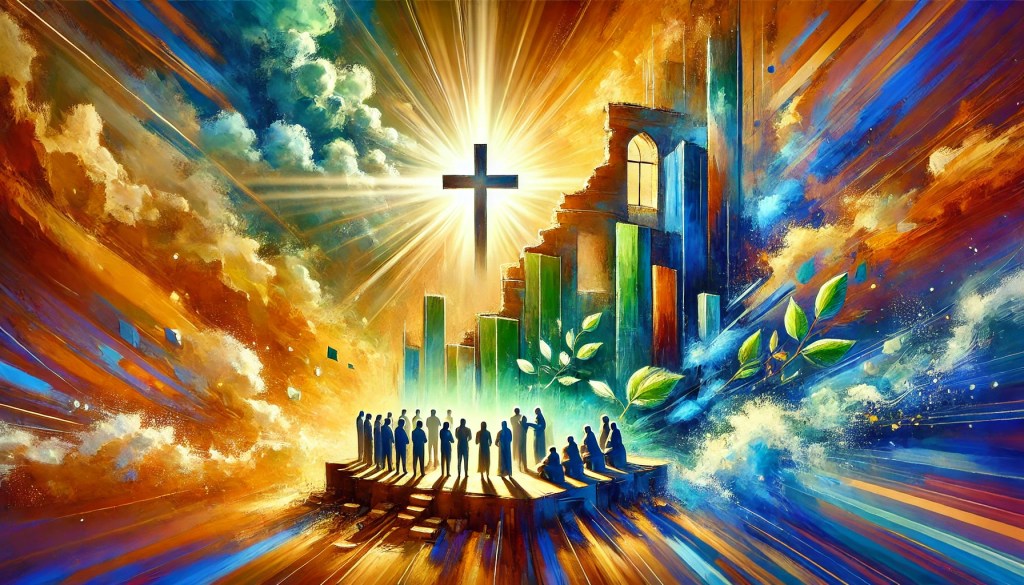
Breaking Down Walls and Staying Watchful
In today’s Mass readings, we are invited to reflect on the profound themes of unity, peace, and vigilance. These themes are not only central to our faith but are crucial in how we live out our Christian call in daily life. Through Ephesians, Psalm 85, and the Gospel of Luke, we are reminded of God’s redemptive work in breaking down the walls that divide us, both within ourselves and between communities. At the same time, the readings challenge us to remain spiritually alert, prepared for Christ’s return, and actively working to bring about His Kingdom on earth.
The first reading from Ephesians speaks directly to the unity that Christ’s sacrifice achieved, bringing together Jews and Gentiles into one body, the Church. St. Paul emphasizes that in Christ, all divisions are abolished, and we are reconciled to God as one people. The hostility that once kept people apart is now destroyed, and in its place, we are called to build a spiritual temple, united in the Spirit.
This message is beautifully echoed in Psalm 85, which paints a poetic picture of God’s justice and mercy coming together in harmony. The psalmist expresses the hope that God’s righteousness will descend upon the earth, and His peace will flourish in the hearts of the faithful. It is a vision of a world restored by God’s grace, where salvation is near, and God’s goodness blesses the land.
Finally, in the Gospel of Luke, Jesus calls us to be watchful servants, ever ready for the Master’s return. He uses the imagery of servants waiting for their master to return from a wedding banquet, teaching us about the importance of spiritual readiness. It is not enough to passively wait; we must be active, keeping our “lamps lit” and staying dressed for action. In a world filled with distractions, this call to vigilance is more relevant than ever.
Through these readings, we are given a powerful blueprint for Christian living: We are called to live in unity, to seek God’s peace, and to stay vigilant in our faith. The Kingdom of God is both a present reality and a future hope, and as Christians, we are called to participate in building it here on earth while keeping our eyes fixed on the eternal promise of Christ’s return.
First Reading – Ephesians 2:12-22
Breaking Down Walls and Rebuilding in Christ
The passage from Ephesians is part of a larger section in which St. Paul addresses the unity of the Church. This letter was likely written during Paul’s imprisonment in Rome (around 60-62 AD) and sent to the Christians in Ephesus, a major city in Asia Minor (modern-day Turkey). At the time, the early Church was facing tension between Jewish and Gentile Christians. The Jews, as God’s chosen people, had been living according to the Mosaic Law, while the Gentiles, who came from pagan backgrounds, were unfamiliar with these laws and customs. This cultural and religious divide was significant, leading to feelings of exclusion and division within the early Christian communities.
Paul’s message in this passage is revolutionary: through the blood of Christ, these two groups are no longer separated but brought together as one body. This unity is not based on cultural or legal conformity but on the sacrificial love of Christ. His death and resurrection break down the “dividing wall” of hostility, and in its place, He creates a new humanity—one that transcends old boundaries and is rooted in the peace of Christ.
Ephesians 2:12-22
New Revised Standard Version Catholic Edition
12 remember that you were at that time without Christ, being aliens from the commonwealth of Israel, and strangers to the covenants of promise, having no hope and without God in the world. 13 But now in Christ Jesus you who once were far off have been brought near by the blood of Christ. 14 For he is our peace; in his flesh he has made both groups into one and has broken down the dividing wall, that is, the hostility between us. 15 He has abolished the law with its commandments and ordinances, that he might create in himself one new humanity in place of the two, thus making peace, 16 and might reconcile both groups to God in one body through the cross, thus putting to death that hostility through it. 17 So he came and proclaimed peace to you who were far off and peace to those who were near; 18 for through him both of us have access in one Spirit to the Father. 19 So then you are no longer strangers and aliens, but you are citizens with the saints and also members of the household of God, 20 built upon the foundation of the apostles and prophets, with Christ Jesus himself as the cornerstone. 21 In him the whole structure is joined together and grows into a holy temple in the Lord; 22 in whom you also are built together spiritually into a dwelling place for God.
Detailed Exegesis
Verse 12: “Remember that you were at that time without Christ, being aliens from the commonwealth of Israel, and strangers to the covenants of promise, having no hope and without God in the world.”
Paul begins by reminding the Gentile converts of their previous state before knowing Christ. They were “aliens” from the community of Israel, outsiders to God’s chosen people, and unfamiliar with the covenants that God had made with Israel throughout salvation history, from Abraham to Moses. The phrase “having no hope” underscores the spiritual desolation that comes from being separated from God. Without the promises of God, the Gentiles were living in spiritual darkness.
Verse 13: “But now in Christ Jesus you who once were far off have been brought near by the blood of Christ.”
This verse marks a significant turning point. Through the blood of Christ, those who were once “far off”—the Gentiles—have been “brought near” to God and His promises. The blood of Christ is the means of this reconciliation, symbolizing the sacrifice Jesus made on the cross to unite all people. The image of being “brought near” reflects the intimacy and closeness that Christ offers, drawing us into a new relationship with God and each other.
Verse 14: “For he is our peace; in his flesh he has made both groups into one and has broken down the dividing wall, that is, the hostility between us.”
Paul declares that Christ Himself is “our peace.” Peace, in this context, is more than just the absence of conflict; it is the active reconciliation between formerly estranged groups—Jews and Gentiles. The “dividing wall” may refer to the literal wall in the Temple in Jerusalem that separated the Court of the Gentiles from the inner courts reserved for Jews. Spiritually, it represents the barriers of hostility and separation that existed between the two groups. In Christ’s flesh—through His incarnation and crucifixion—this wall is broken down, and the two groups are made one.
Verse 15: “He has abolished the law with its commandments and ordinances, that he might create in himself one new humanity in place of the two, thus making peace.”
Here, Paul refers to the Mosaic Law, which had previously been a source of division between Jews and Gentiles. By fulfilling the law, Christ has abolished the ceremonial and legalistic aspects that separated the two groups. In doing so, He creates “one new humanity,” uniting them under the new covenant. This new humanity is defined not by ethnic or cultural distinctions but by the peace that comes from being in Christ.
Verse 16: “And might reconcile both groups to God in one body through the cross, thus putting to death that hostility through it.”
Reconciliation is at the heart of this verse. Through His death on the cross, Christ reconciles both Jews and Gentiles to God, making them one body, the Church. The cross, which once symbolized death and separation, now becomes the means of unity and peace. The “hostility” that once existed between the two groups is put to death with Christ.
Verse 17: “So he came and proclaimed peace to you who were far off and peace to those who were near;”
Christ’s mission is universal. He proclaimed peace not only to the Jews (“those who were near”) but also to the Gentiles (“those who were far off”). This peace is a reconciliation with God and with each other, breaking down all barriers of division.
Verse 18: “For through him both of us have access in one Spirit to the Father.”
This verse highlights the role of the Holy Spirit in the process of reconciliation. Through Christ, both Jews and Gentiles have “access” to God the Father, not as separate groups but as one body, united by the Spirit. This access is a gift of grace, allowing all believers to enter into a personal relationship with God.
Verse 19: “So then you are no longer strangers and aliens, but you are citizens with the saints and also members of the household of God,”
Paul concludes with a powerful statement of identity. Gentile believers are no longer “strangers” or “aliens” to God’s promises; they are now “citizens” of God’s Kingdom, alongside the saints of Israel. They are also “members of the household of God,” part of the family of faith. This verse speaks to the inclusive nature of the Church, where all are welcomed as brothers and sisters in Christ.
Verse 20: “Built upon the foundation of the apostles and prophets, with Christ Jesus himself as the cornerstone.”
The Church is described as a spiritual building, with the apostles and prophets forming the foundation. These apostles and prophets refer to those who proclaimed the Gospel, laying the groundwork for the Church. Christ is the “cornerstone,” the most important part of the building, holding everything together. Without Christ, the entire structure would collapse.
Verses 21-22: “In him the whole structure is joined together and grows into a holy temple in the Lord; in whom you also are built together spiritually into a dwelling place for God.”
Paul concludes with the image of the Church as a “holy temple,” with each believer forming part of this spiritual structure. The temple grows as more believers are added, and it becomes a dwelling place for God through the Holy Spirit. This image reinforces the communal nature of the Church—we are not individual temples but are “built together” into one spiritual house for God.
Teachings and References
The Catechism of the Catholic Church (CCC) expands on this theme of unity in the Church, stating that “the Church is in the nature of sacrament—a sign and instrument, that is, of communion with God and of unity among all men” (CCC 775). The unity that Paul describes is a reflection of the deeper communion we have with God and with each other. This teaching echoes the prayer of Jesus in the Gospel of John, where He prays that “they may all be one” (John 17:21).
St. John Chrysostom, in his homilies on Ephesians, emphasizes the transformative power of Christ’s peace, writing: “He [Christ] has made the two into one, not merely that they should be in peace, but that they should be united.” This unity is not merely the cessation of conflict but the creation of a new, harmonious relationship in Christ.
Reflection
In a world that is increasingly divided along social, political, and cultural lines, Paul’s message of reconciliation is more relevant than ever. As Christians, we are called to break down the walls of hostility that separate us from others—whether those walls are built by prejudice, fear, or misunderstanding. Christ has already destroyed these barriers through His death and resurrection; our task is to live out that reality in our daily lives.
Are there divisions in your life that need healing? How can you be an instrument of Christ’s peace, both in your community and in your personal relationships?
Responsorial Psalm – Psalm 85:9-13
Righteousness and Peace Will Kiss
Psalm 85 is a beautiful prayer of restoration, written at a time when Israel had experienced God’s deliverance but was still longing for a fuller restoration. Scholars suggest that this psalm was composed after the Babylonian Exile, during the period when the Israelites had returned to their land but were still facing challenges in rebuilding their nation. The psalm reflects both gratitude for God’s past faithfulness and a hopeful anticipation of His future blessings.
At its core, Psalm 85 expresses the deep longing for peace and righteousness, which are seen as intertwined gifts from God. The psalmist imagines a time when God’s steadfast love and faithfulness will meet, and righteousness will flourish, bringing about a time of peace and prosperity. This vision speaks not only to the historical moment of Israel’s restoration but also to the ultimate fulfillment of God’s promises in Christ.
Psalm 85:9-13
New Revised Standard Version Catholic Edition
9 Surely his salvation is at hand for those who fear him,
that his glory may dwell in our land.
10 Steadfast love and faithfulness will meet;
righteousness and peace will kiss each other.
11 Faithfulness will spring up from the ground,
and righteousness will look down from the sky.
12 The Lord will give what is good,
and our land will yield its increase.
13 Righteousness will go before him,
and will make a path for his steps.
Detailed Exegesis
Verse 9: “Surely his salvation is at hand for those who fear him, that his glory may dwell in our land.”
The psalmist begins with a confident declaration of faith. God’s “salvation” is near, especially for those who live in reverent fear of Him. This fear is not terror but a deep respect and awe for God’s holiness. The phrase “that his glory may dwell in our land” reflects the hope that God’s presence will be with His people, bringing peace and prosperity. In biblical terms, “glory” often refers to God’s manifest presence, such as in the Tabernacle or the Temple. Here, the psalmist longs for God’s glory to return and dwell among His people, indicating a close and intimate relationship with God.
Verse 10: “Steadfast love and faithfulness will meet; righteousness and peace will kiss each other.”
This is one of the most poetic and theologically rich verses in the Psalms. The psalmist personifies God’s attributes—steadfast love (hesed), faithfulness (emet), righteousness (tsedeq), and peace (shalom)—and imagines them coming together in perfect harmony. The image of righteousness and peace “kissing” each other suggests a deep, intimate connection between these two qualities. In God’s Kingdom, justice and mercy are not in conflict but are perfectly united. This verse foreshadows the reconciliation brought by Christ, in whom justice and mercy meet on the cross.
Verse 11: “Faithfulness will spring up from the ground, and righteousness will look down from the sky.”
Here, the psalmist uses the imagery of agriculture to describe the flourishing of God’s faithfulness and righteousness. Faithfulness “springs up” from the earth, while righteousness “looks down” from the heavens. This suggests a divine interaction between heaven and earth, where God’s righteousness blesses the earth and causes faithfulness to grow among His people. It also echoes the biblical theme of God’s provision, both spiritually and physically.
Verse 12: “The Lord will give what is good, and our land will yield its increase.”
This verse continues the agricultural metaphor, emphasizing God’s generosity. The “good” that the Lord gives refers to His blessings—both spiritual and material. When the people walk in God’s ways, the land will be fruitful, yielding an abundant harvest. This reflects the covenant relationship between God and Israel, where obedience to God’s law results in blessings for the community.
Verse 13: “Righteousness will go before him, and will make a path for his steps.”
In this final verse, righteousness is portrayed as leading the way for God, preparing a path for His coming. This echoes the prophetic tradition of preparing the way for the Lord, as seen in Isaiah and later in the ministry of John the Baptist. When God’s righteousness goes before Him, it clears the way for His justice and peace to follow.
Teachings and References
The Catechism speaks of the harmony between God’s justice and mercy: “God’s justice is His fidelity to His covenant and His will to establish order in accordance with His law” (CCC 217). In Psalm 85, we see this balance of justice and mercy, where God’s righteousness leads to peace and prosperity for His people.
St. Ambrose, reflecting on this psalm, wrote that “righteousness and peace must first meet in our hearts, so that the Kingdom of God may reign within us.” This interior harmony between justice and peace is essential for the Christian life. We are called to live in a way that reflects God’s righteousness, pursuing justice while also seeking peace.
Reflection
The imagery of “righteousness and peace” meeting challenges us to examine our own lives. Are we people who pursue both justice and peace, or do we prioritize one at the expense of the other? In a world where justice and peace often seem to be in conflict, we are called to model the harmony that God desires.
How can you cultivate both righteousness and peace in your life? Are there areas where you need to seek justice for others, or extend peace and mercy in relationships?
Holy Gospel – Luke 12:35-38
Stay Watchful: The Master is Coming
In this passage from the Gospel of Luke, Jesus continues His teaching on the importance of vigilance. Throughout this chapter, He has been addressing His disciples about the need to remain faithful and ready for the coming of the Kingdom of God. The metaphor of watchful servants waiting for their master’s return is a powerful reminder of the Christian call to spiritual readiness.
This teaching would have resonated deeply with the early Christian community, who lived in constant expectation of Christ’s return. For them, the urgency to stay vigilant was not a distant theological concept but a daily reality. The image of the wedding banquet, a common cultural event in Jesus’ time, adds richness to the metaphor. The servants are not waiting in dread but in joyful anticipation, ready to welcome their master as he returns from a celebration.
Luke 12:35-38
New Revised Standard Version Catholic Edition
Watchful Slaves
35 “Be dressed for action and have your lamps lit; 36 be like those who are waiting for their master to return from the wedding banquet, so that they may open the door for him as soon as he comes and knocks. 37 Blessed are those slaves whom the master finds alert when he comes; truly I tell you, he will fasten his belt and have them sit down to eat, and he will come and serve them. 38 If he comes during the middle of the night, or near dawn, and finds them so, blessed are those slaves.
Detailed Exegesis
Verse 35: “Be dressed for action and have your lamps lit;”
Jesus begins with a command to be “dressed for action.” In the ancient world, servants would tuck their long garments into their belts when they were preparing for work or travel. This imagery suggests that Christians must always be ready to act, not becoming complacent or distracted. The “lamps lit” further emphasizes the need for vigilance. In the dark of night, lamps were necessary for seeing clearly, and spiritually, they represent the light of faith that must always be burning.
Verse 36: “Be like those who are waiting for their master to return from the wedding banquet, so that they may open the door for him as soon as he comes and knocks.”
The wedding banquet imagery evokes a time of joy and celebration. The servants are eagerly waiting for the return of their master, ready to open the door immediately when he arrives. This speaks to the attitude of readiness that Jesus calls His disciples to embody. There is no room for laziness or delay; the servants are watchful and prepared to act the moment the master knocks.
Verse 37: “Blessed are those slaves whom the master finds alert when he comes; truly I tell you, he will fasten his belt and have them sit down to eat, and he will come and serve them.”
In this verse, Jesus turns the expected roles upside down. Normally, the master would return home and be served by his slaves. But here, the master (a representation of Christ) does something extraordinary: He fastens His belt, has the servants sit down, and serves them. This reversal points to the humility of Christ, who came not to be served but to serve (Mark 10:45). It is a foretaste of the heavenly banquet, where those who have been faithful and watchful will be blessed by being served by Christ Himself.
Verse 38: “If he comes during the middle of the night, or near dawn, and finds them so, blessed are those slaves.”
Jesus highlights the unpredictability of the master’s return. Whether it is in the middle of the night or near dawn, the servants must remain ready. This reinforces the idea that we cannot predict when Christ will return; therefore, we must live in a constant state of readiness. The “blessed” status of the servants who are found ready speaks to the reward that awaits those who are faithful.
Teachings and References
The Catechism reminds us of the importance of living in expectation of Christ’s return: “The Church knows that the Lord is coming, but she does not know the hour. Vigilance and prudence are required” (CCC 1040). This vigilance is not just about waiting for the end of the world; it is about living each day as if Christ could return at any moment. We are called to be spiritually prepared, keeping our lamps of faith burning brightly.
St. Gregory the Great reflects on this passage, saying: “He who keeps watch with Christ will also reign with Christ.” This watchfulness is not passive but active, involving constant prayer, service, and a heart attuned to the will of God.
Reflection
Jesus’ call to vigilance challenges us to reflect on our own spiritual readiness. Are we living in such a way that, if Christ were to return today, we would be prepared to meet Him? This doesn’t mean living in fear but living with purpose and intention. Every day is an opportunity to serve God and others, to keep our lamps lit and our hearts open.
What does it mean for you to “keep your lamp lit” in your daily life? Are there areas where you have become spiritually complacent or distracted? How can you cultivate a spirit of watchfulness and readiness?
A Call to Unity, Peace, and Vigilance
As we reflect on today’s readings, we are called to embrace three essential Christian virtues: unity, peace, and vigilance. In Ephesians, St. Paul reminds us that Christ has broken down the walls of division, reconciling us to God and each other. We are no longer strangers but members of God’s household, called to build a spiritual temple where God’s presence dwells. This unity is a gift of grace, and we are invited to live out this reality in our daily interactions, fostering reconciliation and peace in our communities.
Psalm 85 paints a vision of a world where righteousness and peace meet, where God’s justice and mercy are in perfect harmony. This is the world we are called to help bring about, both in our hearts and in the world around us. As followers of Christ, we are tasked with pursuing justice while extending mercy, living in a way that reflects God’s love and faithfulness.
Finally, the Gospel of Luke challenges us to stay vigilant, ever ready for the return of our Master. We are called to live each day with the awareness that Christ could return at any moment, and this awareness should inspire us to live with purpose, devotion, and readiness. Our lamps must remain lit, our hearts open to His coming, and our lives aligned with His will.
The call to unity, peace, and vigilance is not just a theoretical ideal; it is a practical guide for Christian living. We are called to be peacemakers in a divided world, builders of unity in fractured relationships, and faithful servants, always ready to welcome Christ when He comes again.
Engage with Us!
We’d love to hear your thoughts on today’s readings! How do you see God working in your life to break down walls and bring peace? What does spiritual readiness look like for you? Share your reflections in the comments below.
Reflection Questions:
- In what areas of your life are you called to build unity and break down walls? How can you be an agent of peace in your relationships?
- What are some practical ways you can stay spiritually ready and vigilant in your daily life?
- Where do you see righteousness and peace coming together in the world around you?
Let’s continue this journey of faith together as we build God’s Kingdom!
Follow us on Instagram and Facebook for more insights and reflections on living a faith-filled life.

 Holy Manna!
Leave a comment