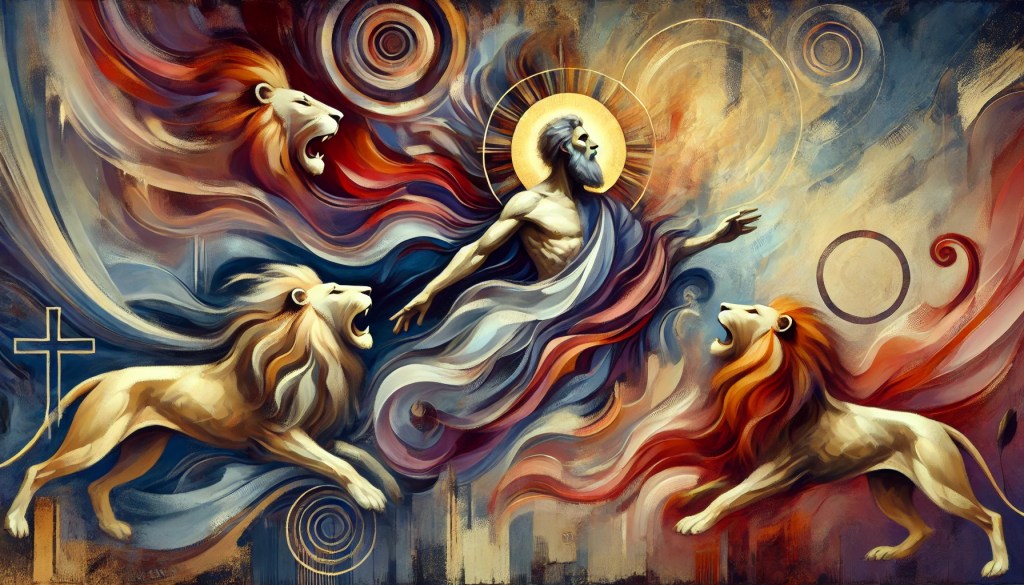
Fire in His Bones, Love in His Letters
Saint Ignatius of Antioch stands as a luminous witness of the early Church, a bishop whose chains became a pulpit and whose martyrdom became a catechesis. On the way to his execution in Rome, he wrote seven letters that have shaped Catholic teaching on the Eucharist, the episcopate, and the unity of the Church. In his Letter to the Romans he pleaded, “Allow me to become food for the wild beasts, through whom I may attain to God. I am the wheat of God, and let me be ground by the teeth of the wild beasts, that I may be found the pure bread of Christ.” Celebrated in the West on October 17, Ignatius is revered as a principal voice among the Apostolic Fathers, a successor of the apostles whose words still burn with paschal boldness.
From Antioch to Rome
Ignatius, who often called himself “Theophorus” or God bearer, served as the second successor of Saint Peter in the ancient See of Antioch, following Evodius. Antioch was a cradle of the faith where the disciples were first called Christians, and it formed the heart of Ignatius’s pastoral identity. Tradition remembers him as a disciple of the Apostle John and a father to many communities across Syria and Asia Minor. Arrested during the reign of Emperor Trajan, he was ordered to Rome for execution. Along the way, he met delegations from the churches of Asia Minor and wrote seven letters that became a treasury for Catholic life: to the Ephesians, Magnesians, Trallians, Romans, Philadelphians, Smyrnaeans, and to Saint Polycarp. In these pages he gave enduring witness to the threefold ministry of bishop, presbyters, and deacons, to the reality of the Incarnation, and to the Eucharist as the sacrament of unity.
The Eucharist Makes the Church
Ignatius wrote at a time when some denied that the Son of God truly took flesh. He opposed this with a ferocious tenderness for the Eucharist and a concrete love for the visible Church. His most famous line about the Church’s universality remains unforgettable: “Wherever Jesus Christ is, there is the Catholic Church.” He described the sacrament with language that still stirs the heart: “Breaking one and the same bread which is the medicine of immortality, the antidote that we should not die but live forever in Jesus Christ.” He also warned that separation from the bishop meant separation from the fullness of the Eucharistic life, urging believers to remain “in harmony” with their pastors: “Be eager to do everything in godly harmony with the bishop presiding in the place of God and the presbyters in the place of the council of the apostles.” Against the error that reduced the Eucharist to a mere sign, he wrote with clarity that still guides Catholic faith: “They abstain from the Eucharist and from prayer because they do not confess the Eucharist to be the flesh of our Savior Jesus Christ.” The heart of Ignatius’s teaching rings true in every age. The Eucharist is not simply a symbol. It is Christ Himself who makes us one Body.
Courage in Chains
Condemned in Antioch, Ignatius was escorted by soldiers across Asia Minor to Rome. His chains did not silence him. They magnified his voice. In city after city he strengthened the faithful, and in letter after letter he urged unity, humility, and hope. He begged the Roman Christians not to interfere with his martyrdom, because he desired to imitate Christ completely: “Fire and cross and packs of wild beasts, hacking and mangling, wrenching of bones, the cutting of limbs, the crush of the whole body, cruel tortures of the devil let them come upon me, only that I may attain to Jesus Christ.” His logic is profoundly Eucharistic. The disciple who receives the Body of Christ longs to become Christlike even to the shedding of blood. The Catechism of the Catholic Church calls martyrdom the supreme witness to the truth of the faith. Ignatius gave that witness with serenity and joy.
Songs of Heaven on Earth
Ancient Christian memory preserves a beloved tradition that Ignatius saw a vision of angels praising the Trinity in alternating choirs and introduced antiphonal singing to the Church in Antioch. Whether this unfolded exactly as remembered, it captures something true about the man. He was a pastor who taught his people how to pray, how to listen, and how to answer one another in charity. His letters glow with practical holiness. He urges Christians to flee rivalry, to shun empty talk, and to let their lives be a hymn to Christ: “It is better to be silent and to be, than to talk and not to be.” He pressed his communities to make the bishop, presbyters, and deacons a point of unity so that charity would be credible to a watching world. He called believers to one altar and one Eucharist, so that the Church would breathe with one heart.
Grain Sown in Blood
Once in Rome, Ignatius bore witness by the shedding of his blood in the arena, likely around the year 107. He had asked to be left to the beasts in order to follow Christ even unto death. The image of wheat and bread that runs through his letters becomes the key to his martyrdom. He saw suffering not as an end in itself but as a participation in the Paschal Mystery. He understood martyrdom as a liturgy of love. His very body, like the bread of the altar, would be offered to the Father through the Son in the Holy Spirit. He asked his friends to pray not for his rescue but for perseverance, so that the Church would be strengthened and Christ would be glorified.
After the Arena
The faithful quickly honored Ignatius’s remains. Early accounts relate that his bones were cherished first in Rome and then brought back to Antioch, where the Church celebrated their translation with solemnity. In later centuries portions of his relics were returned to Rome, where they are venerated at the Basilica of San Clemente. East and West commemorate him with deep affection. The Roman Rite keeps his memory on October 17, while Eastern Christians remember him in December and mark the translation of his relics with festal hymns. Over the centuries many have sought his intercession for courage, unity, and fidelity to the Eucharist. Reports of favors and healings accompany his cult, but the most enduring sign is the same as during his life. Where Ignatius is loved, the Eucharist is loved. Where his teaching is taken to heart, parish life becomes visibly one.
Lessons for a Divided Age
Ignatius reminds us that Catholic life is not an abstract idea but a concrete communion in Christ. His letters urge us to gather faithfully at the Eucharist, to honor and pray for our bishops, and to cling to the truth about Jesus’s real humanity and divinity. He teaches us to prefer unity over self promotion and to place worship at the center of discipleship. He shows how pastoral authority and sacramental life belong together for the salvation of the world. His words are as timely as ever: “Do nothing without the bishop, keep your bodies as temples of God, love unity, flee divisions.” If we receive the Body of Christ in faith, then by grace we must become the Body of Christ for our neighbors.
Engage with Us!
I would love to hear your insights in the comments. How does Saint Ignatius challenge your understanding of the Eucharist, the Church, and courageous witness today?
- How does Ignatius’s line “Wherever Jesus Christ is, there is the Catholic Church” invite you to see your parish in a new light?
- What concrete step will help you prepare for Mass with deeper faith in the Real Presence this week, in harmony with the Catechism?*
- In what ways can you support your bishop and pastors so that parish unity becomes a visible sign of Christ’s love?
- Where do you need the Holy Spirit’s fortitude to bear witness to the truth, inspired by the Church’s teaching on martyrdom?
Go forth encouraged. Live your faith with the love and mercy that Jesus taught us, nourished by the Eucharist, steadfast in truth, and joyful in unity, just as Saint Ignatius of Antioch lived and died.
Saint Ignatius of Antioch, pray for us!
Follow us on Instagram and Facebook for more insights and reflections on living a faith-filled life.

 Holy Manna!
Leave a comment