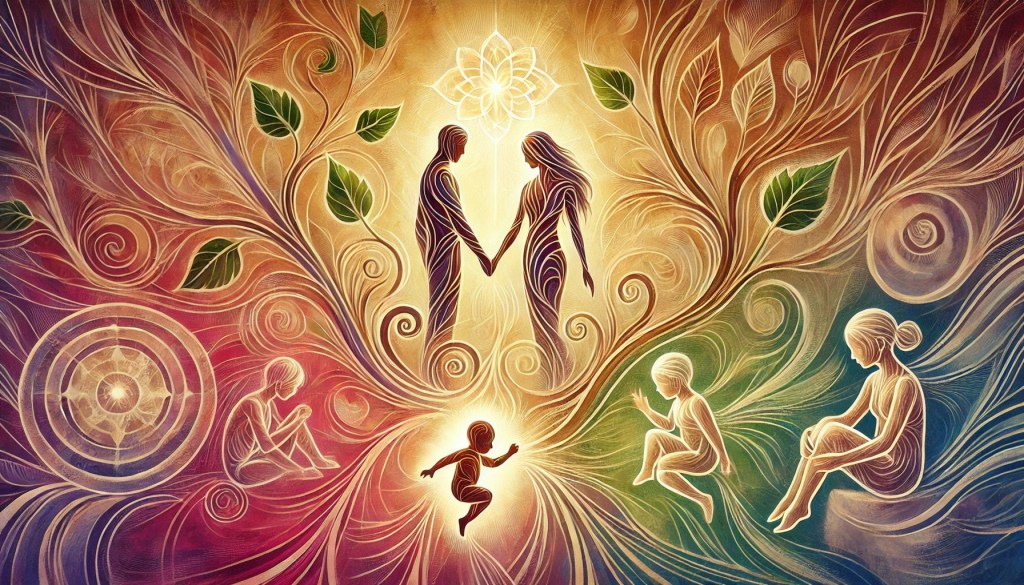
The Beauty of God’s Plan for Relationships
Today’s readings weave a beautiful tapestry of God’s vision for human relationships. From the foundational creation of man and woman in Genesis, to the blessings of a faithful household in Psalm 128, to Christ’s humility and shared glory in Hebrews, and finally to Jesus’ teachings on marriage and the innocence of children in Mark’s Gospel, we are invited to reflect on the deep interconnectedness of our relationships with God and one another.
At the core of these readings is the idea that relationships are sacred. Marriage, family life, and even our relationship with God are all bound together by love, unity, and trust. These bonds reflect the divine order established from the very beginning of creation. In our broken world, where individualism and division often take precedence, today’s readings remind us of God’s original design: harmony in love. Let’s now explore each reading, uncovering the deep truths they contain, and how they challenge us to live out our faith more authentically in our daily lives.
First Reading – Genesis 2:18-24
The Sacred Creation of Marriage
The book of Genesis offers us the first glimpse into the nature of human relationships, particularly the relationship between man and woman. Written in the context of the ancient Near East, Genesis addresses many of the theological and philosophical questions of its time—most notably, what it means to be human. In a world where creation myths were often filled with violence and chaos, the creation narrative in Genesis offers something radically different: a peaceful and purposeful creation ordered by a loving God.
Today’s passage details the formation of woman and the institution of marriage. This is not just a tale of origins but a divine revelation about the nature of human relationships. It introduces the idea that man and woman are not meant to live in isolation but in communion, as partners who share in God’s creation and reflect His love. The very fact that God says, “It is not good that the man should be alone” (Genesis 2:18) reveals the importance of companionship and unity as essential aspects of human existence.
Genesis 2:18-24
New Revised Standard Version Catholic Edition
18 Then the Lord God said, “It is not good that the man should be alone; I will make him a helper as his partner.” 19 So out of the ground the Lord God formed every animal of the field and every bird of the air, and brought them to the man to see what he would call them; and whatever the man called every living creature, that was its name. 20 The man gave names to all cattle, and to the birds of the air, and to every animal of the field; but for the man there was not found a helper as his partner. 21 So the Lord God caused a deep sleep to fall upon the man, and he slept; then he took one of his ribs and closed up its place with flesh. 22 And the rib that the Lord God had taken from the man he made into a woman and brought her to the man. 23 Then the man said,
“This at last is bone of my bones
and flesh of my flesh;
this one shall be called Woman,
for out of Man this one was taken.”
24 Therefore a man leaves his father and his mother and clings to his wife, and they become one flesh.
Detailed Exegesis
“Then the Lord God said, ‘It is not good that the man should be alone; I will make him a helper as his partner.’” (Genesis 2:18)
For the first time in the creation narrative, God declares something “not good.” Man, though surrounded by the beauty of creation and given dominion over it, is still incomplete without a companion. The word “helper” here (ezer in Hebrew) often gets misunderstood as implying subordination. However, in other parts of Scripture, ezer refers to God as our helper (see Psalm 54:4). Therefore, this term signifies strength, partnership, and support—not inferiority. Woman is created to stand alongside man as an equal, a partner in God’s ongoing creation.
“So out of the ground the Lord God formed every animal of the field and every bird of the air, and brought them to the man to see what he would call them…” (Genesis 2:19-20)
Adam names all the animals, exercising his dominion over them, but still, no creature is found to be a suitable companion for him. This verse shows that man is unique among creation, made not just for dominion but for relationship. In recognizing the absence of a suitable partner, Adam also comes to understand his own need for companionship. This sets the stage for the creation of woman, who will fulfill this relational need in a way no other creature could.
“So the Lord God caused a deep sleep to fall upon the man… then he took one of his ribs… made into a woman…” (Genesis 2:21-22)
The act of God creating woman from Adam’s rib symbolizes the deep and intimate bond between man and woman. St. John Chrysostom reflects on this moment, noting that just as Eve was formed from Adam’s side, so the Church is born from the side of Christ on the cross, when blood and water flowed from His pierced side (John 19:34). Woman is not created from man’s head to rule over him, nor from his feet to be dominated by him, but from his side to be an equal partner.
“Therefore a man leaves his father and his mother and clings to his wife, and they become one flesh.” (Genesis 2:24)
Marriage is portrayed here not just as a social arrangement, but as a spiritual and physical union. The phrase “one flesh” signifies a total, lifelong commitment where two individuals become a single entity in love, purpose, and life. The Catechism of the Catholic Church (CCC 1605) echoes this teaching, reminding us that marriage is part of God’s original plan: “God who created man out of love also calls him to love—the fundamental and innate vocation of every human being.” In marriage, we reflect God’s own love for humanity—self-giving, faithful, and unbreakable.
Teachings and Reflection
The creation of woman and the institution of marriage reveal profound truths about the nature of human relationships. We are made for communion, for companionship, and for love. This reading calls us to view marriage not just as a personal or societal arrangement, but as a reflection of God’s covenant with His people. The unity and equality between man and woman challenge us to examine how we approach our relationships. Do we treat our partners, friends, and family with the same love and respect God shows us?
In our culture, where marriage is sometimes viewed as temporary or transactional, this passage calls us back to the sacredness of the marital covenant. Just as God’s love for us is permanent and unconditional, so too is the love that should exist between husband and wife.
Reflection Questions:
- In what ways do I reflect God’s love in my relationships, especially in marriage or family life?
- How can I view my relationships as sacred partnerships, not just functional or transactional?
- How can I better honor the sacredness of marriage in my community?
Responsorial Psalm – Psalm 128
Joyful Blessings for Those Who Fear the Lord
Psalm 128 is one of the Songs of Ascents, sung by pilgrims as they made their way to Jerusalem for worship. This psalm paints a picture of a faithful, God-fearing home, blessed by the Lord with prosperity, fruitfulness, and peace. It serves as a reminder that happiness and true blessing flow from a life lived in fear of the Lord—meaning, in deep reverence, awe, and obedience to Him. In the context of today’s readings, Psalm 128 reinforces the idea that relationships grounded in faith and reverence for God bring forth abundant blessings, not only in our homes but in our wider communities.
Psalm 128
New Revised Standard Version Catholic Edition
The Happy Home of the Faithful
A Song of Ascents
1 Happy is everyone who fears the Lord,
who walks in his ways.
2 You shall eat the fruit of the labor of your hands;
you shall be happy, and it shall go well with you.
3 Your wife will be like a fruitful vine
within your house;
your children will be like olive shoots
around your table.
4 Thus shall the man be blessed
who fears the Lord.
5 The Lord bless you from Zion.
May you see the prosperity of Jerusalem
all the days of your life.
6 May you see your children’s children.
Peace be upon Israel!
Detailed Exegesis
“Happy is everyone who fears the Lord, who walks in his ways.” (Psalm 128:1)
True happiness, the psalmist tells us, comes from fearing the Lord and walking in His ways. The fear of the Lord is not about being scared of God but living with a profound respect and reverence for His commandments. Walking in His ways means living in accordance with His will and seeking to please Him in all that we do. This verse reminds us that happiness and blessings come from a life oriented toward God, not from material wealth or worldly success.
“You shall eat the fruit of the labor of your hands; you shall be happy, and it shall go well with you.” (Psalm 128:2)
This verse reflects the biblical principle that hard work, when done in the context of a God-fearing life, leads to contentment and satisfaction. It reinforces the idea that blessings come from living a life that is pleasing to God. The Catechism teaches that work is part of our participation in God’s creative action (CCC 2427), and when we approach our labor with the right heart and mindset, it leads to true fulfillment.
“Your wife will be like a fruitful vine within your house; your children will be like olive shoots around your table.” (Psalm 128:3)
This imagery of the fruitful vine and olive shoots speaks of life, abundance, and continuity. A faithful marriage and a home centered on God will naturally bear fruit—not just in terms of children, but in spiritual fruits like love, peace, and joy. The vine is often used in Scripture to symbolize fruitfulness and growth, while olive trees are known for their longevity and resilience. This verse encourages us to cultivate relationships that are fruitful, not just for ourselves, but for the generations to come.
“The Lord bless you from Zion. May you see the prosperity of Jerusalem all the days of your life.” (Psalm 128:5)
Zion represents the dwelling place of God, and Jerusalem symbolizes the community of believers. This blessing is not just for the individual or the family but extends to the whole community of God’s people. The psalmist reminds us that the blessings of a faithful life flow outward, impacting the larger society. When we live in alignment with God’s will, we not only experience personal blessings but also contribute to the flourishing of the Church and the wider world.
Teachings and Reflection
Psalm 128 is a call to build homes rooted in the fear of the Lord. It shows us that true prosperity is not measured by wealth or status but by faithfulness to God’s commandments and a life lived in reverence for Him. In our modern society, where success is often equated with material gain, this psalm reminds us that the greatest blessings come from a faithful heart and a God-centered home.
We are also reminded that our personal faith has communal implications. A faithful home can influence not just our immediate family but the entire community. This psalm challenges us to think about how we contribute to the spiritual prosperity of those around us, starting with our own household.
Reflection Questions:
- How can I bring God’s presence into my home and family life?
- In what ways can I contribute to the spiritual prosperity of my community?
- Do I measure success by worldly standards, or by faithfulness to God?
Second Reading – Hebrews 2:9-11
The Humility and Glory of Christ
In this passage from Hebrews, the author reflects on the mystery of the Incarnation—how Jesus, though divine, chose to humble Himself and take on our human nature. Through His suffering and death, He became the pioneer of our salvation, bringing us to glory through His sacrifice. This reading emphasizes both the humility and the exaltation of Christ, showing us that true glory comes through self-sacrifice and obedience to God’s will. It also highlights the intimate relationship we share with Christ, who calls us His brothers and sisters.
Hebrews 2:9-11
New Revised Standard Version Catholic Edition
9 but we do see Jesus, who for a little while was made lower than the angels, now crowned with glory and honor because of the suffering of death, so that by the grace of God he might taste death for everyone.
10 It was fitting that God, for whom and through whom all things exist, in bringing many children to glory, should make the pioneer of their salvation perfect through sufferings. 11 For the one who sanctifies and those who are sanctified all have one Father. For this reason Jesus is not ashamed to call them brothers and sisters,
Detailed Exegesis
“But we do see Jesus, who for a little while was made lower than the angels…” (Hebrews 2:9)
The “lowering” of Jesus refers to His Incarnation, when the Son of God took on human flesh. Although He is divine, for a time He was made lower than the angels, sharing in our humanity. This act of humility is at the heart of the Christian faith. As St. Paul writes in Philippians 2:7, Jesus “emptied himself, taking the form of a servant, being born in the likeness of men.” The humility of Christ shows us that true greatness lies in service and self-giving, not in power or status.
“… now crowned with glory and honor because of the suffering of death…” (Hebrews 2:9)
Through His suffering and death, Jesus was exalted and crowned with glory. His crown of thorns became a crown of victory, as He conquered sin and death through His sacrifice. This verse reminds us that suffering, when united with Christ, can lead to glory. The Catechism teaches that “Christ’s death is both the Paschal sacrifice that accomplishes the definitive redemption of men, through ‘the Lamb of God, who takes away the sin of the world,’ and the sacrifice of the New Covenant, which restores man to communion with God” (CCC 613).
“For the one who sanctifies and those who are sanctified all have one Father.” (Hebrews 2:11)
This verse speaks of the profound unity we share with Christ. He is the one who sanctifies us—making us holy through His sacrifice—and we, in turn, are adopted into the family of God. Jesus is not ashamed to call us His brothers and sisters, emphasizing the deep bond we share with Him through our baptism. As St. John Paul II once said, “By his Incarnation, the Son of God has united himself in some fashion with every man” (Gaudium et Spes, 22). This familial relationship is a source of immense dignity and hope for us as believers.
Teachings and Reflection
This passage from Hebrews invites us to reflect on the humility and glory of Christ. Jesus’ willingness to lower Himself for our sake is a model for how we are called to live—serving others, embracing humility, and trusting in God’s will. At the same time, we are reminded that our suffering, when united with Christ, can lead to sanctification and glory.
We are also called to recognize our identity as children of God, sanctified through Jesus. This is a profound reality that gives meaning and purpose to our lives. In a world that often values status, power, and success, this reading reminds us that our true worth comes from our relationship with Christ, who calls us His brothers and sisters.
Reflection Questions:
- How can I view my own sufferings as a means of drawing closer to Christ?
- In what ways do I recognize my identity as a child of God, sanctified through Jesus?
- How can I follow Christ’s example of humility and self-sacrifice in my daily life?
Holy Gospel – Mark 10:2-16
Jesus’ Teaching on Marriage and Childlike Faith
In today’s Gospel, the Pharisees approach Jesus with a question about divorce, hoping to test Him. Jesus responds by reaffirming the original plan for marriage as a permanent, indissoluble union established by God. He emphasizes that what God has joined together, no one should separate. In the second part of the Gospel, Jesus blesses the little children, highlighting the importance of receiving the kingdom of God with the innocence and trust of a child. These two teachings—on marriage and childlike faith—are deeply connected, as they both call us to a radical openness to God’s will.
Mark 10:2-16
New Revised Standard Version Catholic Edition
2 Some Pharisees came, and to test him they asked, “Is it lawful for a man to divorce his wife?” 3 He answered them, “What did Moses command you?” 4 They said, “Moses allowed a man to write a certificate of dismissal and to divorce her.” 5 But Jesus said to them, “Because of your hardness of heart he wrote this commandment for you. 6 But from the beginning of creation, ‘God made them male and female.’ 7 ‘For this reason a man shall leave his father and mother and be joined to his wife, 8 and the two shall become one flesh.’ So they are no longer two, but one flesh. 9 Therefore what God has joined together, let no one separate.”
10 Then in the house the disciples asked him again about this matter. 11 He said to them, “Whoever divorces his wife and marries another commits adultery against her; 12 and if she divorces her husband and marries another, she commits adultery.”
Jesus Blesses Little Children
13 People were bringing little children to him in order that he might touch them; and the disciples spoke sternly to them. 14 But when Jesus saw this, he was indignant and said to them, “Let the little children come to me; do not stop them; for it is to such as these that the kingdom of God belongs. 15 Truly I tell you, whoever does not receive the kingdom of God as a little child will never enter it.” 16 And he took them up in his arms, laid his hands on them, and blessed them.
Detailed Exegesis
“Because of your hardness of heart he wrote this commandment for you.” (Mark 10:5)
Jesus explains that Moses allowed divorce because of the hardness of people’s hearts. However, this was never part of God’s original plan. Jesus points us back to Genesis, where marriage is described as a union between man and woman, established by God. The hardness of heart refers to the stubbornness and selfishness that often prevent us from living out God’s will fully. This reminds us that God’s commandments are not meant to restrict us but to guide us toward the fullness of life and love.
“What God has joined together, let no one separate.” (Mark 10:9)
Jesus reaffirms the sanctity and permanence of marriage, emphasizing that it is God who joins man and woman together. This teaching echoes the covenantal nature of marriage, which reflects God’s unbreakable covenant with His people. The Church upholds this teaching, viewing marriage as a sacrament that reflects Christ’s love for the Church. In a culture where marriage is often viewed as temporary or conditional, Jesus challenges us to see marriage as a lifelong commitment, rooted in God’s love.
“Let the little children come to me… for it is to such as these that the kingdom of God belongs.” (Mark 10:14)
Jesus’ blessing of the children reveals His love for the humble and innocent. In the ancient world, children were often seen as insignificant, but Jesus elevates their status, using them as models for how we should approach God. The qualities of a child—trust, dependence, openness—are essential for entering the kingdom of God. We are called to approach God with the same humility and trust, recognizing that we are dependent on His grace for everything.
“Whoever does not receive the kingdom of God as a little child will never enter it.” (Mark 10:15)
Jesus’ words challenge us to let go of our pride, self-reliance, and cynicism. Just as children are open to receiving love and guidance, we too must be open to receiving God’s grace with humility. The kingdom of God is not something we can earn through our own efforts; it is a gift that we must receive with the heart of a child—trusting, humble, and full of faith.
Teachings and Reflection
Jesus’ teachings on marriage and childlike faith offer us two profound lessons. First, marriage is a sacred covenant that reflects God’s unbreakable love for His people. In a world that often promotes individualism and self-fulfillment, this Gospel challenges us to view marriage as a call to self-giving love, unity, and lifelong commitment.
Second, Jesus calls us to cultivate a childlike faith—one that is humble, trusting, and open to God’s grace. In our adult lives, it can be easy to become hardened by pride, self-reliance, or the demands of the world. But Jesus reminds us that the kingdom of God is for those who approach Him with the simplicity and trust of a child.
Reflection Questions:
- How can I foster childlike trust in my relationship with God?
- In what ways can I honor the sacredness of marriage in my life or community?
- How can I cultivate humility and openness to God’s will in my daily life?
The Call to Deeper Love and Faith
Today’s readings call us to embrace God’s design for relationships, both human and divine. We are reminded of the sanctity of marriage, the blessings of a faithful home, the humility of Christ’s sacrifice, and the importance of childlike trust in God. Each reading challenges us to live out our faith in practical ways—by honoring our relationships, fostering humility, and trusting in God’s will.
Engage with Us!
We’d love to hear your thoughts! How did these readings speak to you today? Share your reflections in the comments below!
Reflection Questions:
- In my relationships, how can I better reflect the love and faithfulness of God?
- How can I cultivate a spirit of humility and childlike trust in my daily life?
- What steps can I take to bring God’s blessings into my home and community?
As we go forward in our daily lives, let us take to heart the call to deeper love and faith. Whether we are married or single, young or old, God invites us to live in a way that reflects His love and faithfulness. Let us strive to cultivate homes, communities, and hearts that are rooted in God’s will, trusting that He will bless us and lead us to eternal life!
Follow us on Instagram and Facebook for more insights and reflections on living a faith-filled life.

 Holy Manna!
Leave a comment