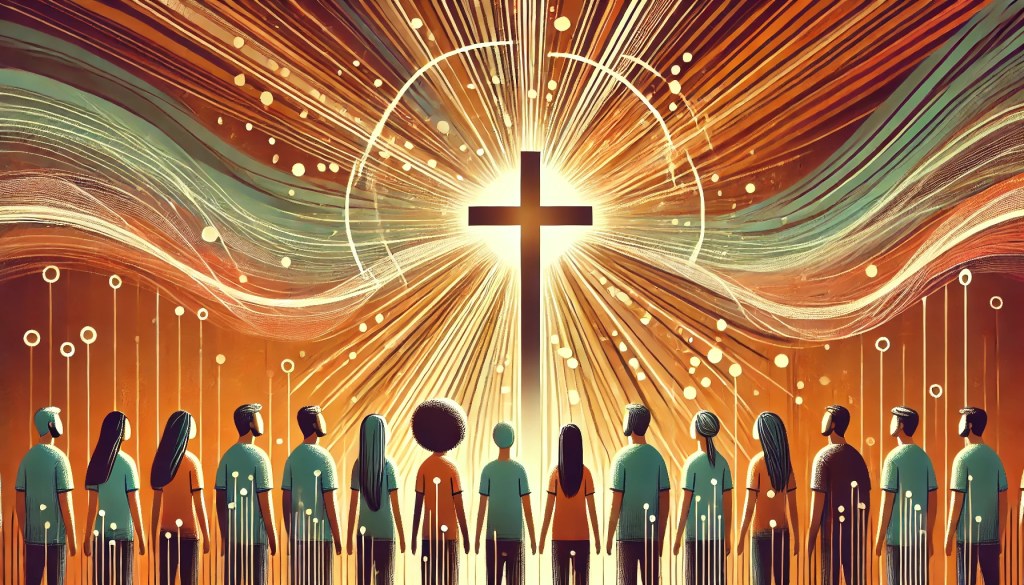
United in Faith
In today’s readings, we find a profound theme of unity, compassion, and the transformative power of God’s love. From Paul’s message to the Corinthians about the diversity and unity of the Body of Christ, to the psalmist’s exuberant call to worship and thanksgiving, and finally, to Jesus’ miraculous act of raising the widow’s son at Nain, these passages invite us into a deeper understanding of how God calls us into communion with one another and with Him. As we delve into these readings, we will explore how they intersect, illuminate our lives, and call us to live out our faith with greater intentionality and love.
First Reading – 1 Corinthians 12:12-14, 27-31
One Body, Many Gifts
The First Reading from 1 Corinthians emphasizes the unity and diversity of the Body of Christ. Paul’s letter was written to address several issues within the early Christian community in Corinth, a bustling city known for its wealth, cultural diversity, and moral challenges. The Corinthians struggled with divisions and competition among themselves, leading to a fractured community where people valued certain gifts and roles over others. Paul’s analogy of the Church as the Body of Christ is a direct response to this division, urging them—and us today—to embrace unity in diversity. By focusing on this imagery, Paul teaches that every member, regardless of their role, is vital to the health and mission of the Church. This message remains relevant as we navigate our own communities, which are often marked by differing opinions, backgrounds, and talents.
1 Corinthians 12:12-14, 27-31
New Revised Standard Version Catholic Edition
One Body with Many Members
12 For just as the body is one and has many members, and all the members of the body, though many, are one body, so it is with Christ. 13 For in the one Spirit we were all baptized into one body—Jews or Greeks, slaves or free—and we were all made to drink of one Spirit.
14 Indeed, the body does not consist of one member but of many.
27 Now you are the body of Christ and individually members of it. 28 And God has appointed in the church first apostles, second prophets, third teachers; then deeds of power, then gifts of healing, forms of assistance, forms of leadership, various kinds of tongues. 29 Are all apostles? Are all prophets? Are all teachers? Do all work miracles? 30 Do all possess gifts of healing? Do all speak in tongues? Do all interpret? 31 But strive for the greater gifts. And I will show you a still more excellent way.
Detailed Exegesis
Verse 12: “For just as the body is one and has many members, and all the members of the body, though many, are one body, so it is with Christ.”
Paul uses the human body as an analogy for the Church, illustrating that just as the body is a single unit made up of many parts, so too is the Body of Christ composed of diverse individuals united in faith. This verse emphasizes that unity does not mean uniformity; rather, our differences contribute to the strength and functionality of the whole. Each person, with their unique gifts and abilities, plays an essential role in the life of the Church, reminding us that no one is insignificant or unimportant.
Verse 13: “For in the one Spirit we were all baptized into one body—Jews or Greeks, slaves or free—and we were all made to drink of one Spirit.”
Paul underscores the radical inclusivity of the Church. By saying “Jews or Greeks, slaves or free,” he breaks down societal barriers of ethnicity, class, and status, reminding us that through baptism, we are all made equal in the Spirit. This verse reflects the universal nature of the Church, which transcends human divisions and unites us in a common faith and purpose. It is a powerful reminder that our identity in Christ supersedes all other identities.
Verse 14: “Indeed, the body does not consist of one member but of many.”
Paul reiterates that the Church is not made up of a single kind of person or gift but a multitude of diverse members, each bringing unique strengths and contributions. This verse challenges any notion of exclusivity or superiority within the Church, encouraging us to value every member’s contribution.
Verses 27-31: “Now you are the body of Christ and individually members of it. And God has appointed in the church first apostles, second prophets, third teachers; then deeds of power, then gifts of healing, forms of assistance, forms of leadership, various kinds of tongues. Are all apostles? Are all prophets? Are all teachers? Do all work miracles? Do all possess gifts of healing? Do all speak in tongues? Do all interpret? But strive for the greater gifts. And I will show you a still more excellent way.”
In these verses, Paul clarifies that while God has appointed different roles and gifts within the Church, no single role or gift is superior; all are necessary for the Church to function effectively. The rhetorical questions (“Are all apostles? Are all prophets?”) emphasize that not everyone will have the same gifts, but this diversity is intentional and beneficial. Paul ends with an encouragement to “strive for the greater gifts,” which he goes on to describe in the following chapter as gifts motivated by love, suggesting that love is the most excellent way and the highest gift of all.
Teachings and References: The Church’s Teaching on Unity and Diversity
The Catechism of the Catholic Church teaches that “The Church is the Body of Christ. Through the Spirit and his action in the sacraments, above all the Eucharist, Christ, who once was dead and is now risen, establishes the community of believers as his own Body” (CCC 805). This underscores the importance of each member’s role within the Body of Christ, affirming that every person’s unique gifts contribute to the Church’s mission. Furthermore, it highlights that our unity is rooted in the Eucharist, which nourishes us and binds us together as one.
Saint John Chrysostom emphasized that the unity of the Church is a reflection of the unity of the Trinity: “Just as the body and the soul form a man, so the Church and the Spirit form a whole.” This reminds us that our differences should not divide us but rather reflect the richness of God’s creation. The diverse gifts within the Church are a manifestation of the Holy Spirit’s work, designed to foster growth, service, and the common good.
Reflection: Embracing Our Unique Gifts
In our daily lives, it’s easy to compare ourselves to others or to feel that our contributions are insignificant, especially in a world that often measures worth by productivity, status, or popularity. Today’s reading challenges us to recognize the value of our unique gifts and to appreciate the diversity within our communities. God has given each of us specific talents and roles not for our glory, but for the building up of His Church and the serving of others. How can you use your gifts to serve others? In what ways can you embrace the gifts of those around you, especially when they differ from your own? Reflect on how you can be a source of unity and encouragement in your community, knowing that every act of service, no matter how small, contributes to the greater good. Consider volunteering in your parish, supporting a ministry, or simply offering a kind word to someone who may need encouragement today.
Responsorial Psalm – Psalm 100
A Joyful Noise to the Lord
Psalm 100 is a vibrant hymn of thanksgiving, inviting all of creation to rejoice in the Lord’s goodness. This psalm is part of a collection known as the “Royal Psalms,” which celebrate God as King. It reflects the joy and gratitude of the Israelites as they worshipped in the temple, recognizing God’s sovereignty and steadfast love. The setting of this psalm likely involves the liturgical procession of the people into the temple courts, a symbolic act of entering into God’s presence. The psalm not only calls the Israelites to worship but extends this invitation to all nations, highlighting the universal call to acknowledge and praise the Lord. This openness to all reflects the broader biblical vision of a future where all peoples worship the one true God.
Psalm 100
New Revised Standard Version Catholic Edition
All Lands Summoned to Praise God
A Psalm of thanksgiving.
1 Make a joyful noise to the Lord, all the earth.
2 Worship the Lord with gladness;
come into his presence with singing.
3 Know that the Lord is God.
It is he that made us, and we are his;
we are his people, and the sheep of his pasture.
4 Enter his gates with thanksgiving,
and his courts with praise.
Give thanks to him, bless his name.
5 For the Lord is good;
his steadfast love endures forever,
and his faithfulness to all generations.
Detailed Exegesis
Verse 1: “Make a joyful noise to the Lord, all the earth.”
The psalmist begins with a universal call to praise, extending beyond the Israelites to encompass all nations and peoples. This verse emphasizes that worship is not limited to a particular group; it is a response to God’s greatness that transcends cultural and geographical boundaries. It serves as a reminder that God’s love and dominion are for everyone, inviting us to join in the joyful recognition of His sovereignty.
Verse 2: “Worship the Lord with gladness; come into his presence with singing.”
Worship is not meant to be a burdensome obligation but a joyful expression of our relationship with God. The psalmist encourages us to approach God with gladness and song, reflecting the joy that comes from being in His presence. This verse challenges the often solemn or routine approach we might take to worship, reminding us that it should be marked by enthusiasm and heartfelt joy.
Verse 3: “Know that the Lord is God. It is he that made us, and we are his; we are his people, and the sheep of his pasture.”
This verse is a reminder of our identity as God’s creation and His people. We belong to Him not only by virtue of being made by Him but also through His loving care as our Shepherd. This imagery evokes a sense of safety, guidance, and belonging, likening us to sheep who are under the constant, caring watch of a shepherd. It calls us to trust in God’s providence and to find comfort in our relationship with Him.
Verse 4: “Enter his gates with thanksgiving, and his courts with praise. Give thanks to him, bless his name.”
The psalmist calls us to approach God with a heart of gratitude. Entering God’s presence with thanksgiving is not just a ceremonial act but a spiritual posture that acknowledges His goodness and faithfulness. This verse challenges us to reflect on our own attitude when we come to worship, whether it be in the Mass, prayer, or personal devotion. Are we truly entering His presence with a thankful heart, recognizing the many blessings He has bestowed upon us?
Verse 5: “For the Lord is good; his steadfast love endures forever, and his faithfulness to all generations.”
The psalm concludes with a powerful declaration of God’s enduring nature. His goodness, love, and faithfulness are constants that span all generations, reassuring us that He remains unchanging in a world of uncertainty. This verse is a comforting reminder that God’s love is not fleeting or dependent on our actions; it is a steadfast and eternal truth that we can rely on.
Teachings and References: The Importance of Worship and Gratitude
The Catechism of the Catholic Church states, “The Eucharist contains and expresses all forms of prayer: it is ‘the pure offering’ of the whole Body of Christ to the glory of God’s name and, according to the traditions of East and West, it is the ‘sacrifice of praise’” (CCC 2643). This highlights that our acts of worship, especially in the Mass, are a continuation of the psalmist’s call to praise God joyfully. The Eucharist, as the source and summit of our faith, is the highest form of thanksgiving and worship, uniting us with Christ’s perfect sacrifice and the heavenly liturgy.
Saint Augustine reflected on worship as a way of aligning our hearts with God’s will: “He who sings prays twice.” Singing and rejoicing in the Lord are not just acts of worship but are transformative experiences that deepen our relationship with God. This perspective invites us to consider the role of music and joy in our own spiritual practices, recognizing that these things expressions of praise can draw us closer to the divine.
Reflection: Living a Life of Thanksgiving
In a world filled with distractions and challenges, it’s easy to forget to express gratitude. Today’s psalm reminds us that worship and thanksgiving are not confined to church services—they are a way of life. How often do you pause to thank God for His blessings? In what ways can you cultivate a habit of gratitude, even amid difficulties? Consider keeping a gratitude journal, setting aside time each day to thank God for His faithfulness, or integrating thanksgiving into your prayer life. By focusing on God’s goodness and His enduring love, we can find peace and joy even in the midst of trials. Let’s strive to be a people whose lives are marked by continuous praise and thanksgiving, reflecting the joy of the psalmist in all that we do.
Holy Gospel – Luke 7:11-17
The Compassion of Christ
In today’s Gospel, we witness one of Jesus’ profound miracles—raising the only son of a widow in the town of Nain. This passage from Luke illustrates not only Jesus’ power over death but also His deep compassion for those who suffer. In the cultural context of first-century Judea, a widow without a son was among the most vulnerable individuals in society. Without a husband or son, she had no financial support, social standing, or protection, making Jesus’ miracle not just an act of healing but also an act of restoring hope and dignity. This event takes place early in Jesus’ ministry and is unique to the Gospel of Luke, emphasizing themes of mercy, compassion, and the breaking of social and religious barriers.
Luke 7:11-17
New Revised Standard Version Catholic Edition
Jesus Raises the Widow’s Son at Nain
11 Soon afterwards he went to a town called Nain, and his disciples and a large crowd went with him. 12 As he approached the gate of the town, a man who had died was being carried out. He was his mother’s only son, and she was a widow; and with her was a large crowd from the town. 13 When the Lord saw her, he had compassion for her and said to her, “Do not weep.” 14 Then he came forward and touched the bier, and the bearers stood still. And he said, “Young man, I say to you, rise!” 15 The dead man sat up and began to speak, and Jesus gave him to his mother. 16 Fear seized all of them; and they glorified God, saying, “A great prophet has risen among us!” and “God has looked favorably on his people!” 17 This word about him spread throughout Judea and all the surrounding country.
Detailed Exegesis
Verse 11: “Soon afterwards he went to a town called Nain, and his disciples and a large crowd went with him.”
Jesus’ journey to Nain shows His willingness to go to places often overlooked. Nain was a small, insignificant town, yet Jesus chose to go there, demonstrating that His ministry was not limited to large cities or prominent places. The presence of a large crowd highlights the growing interest and intrigue surrounding Jesus, setting the stage for a public revelation of His divine authority.
Verse 12: “As he approached the gate of the town, a man who had died was being carried out. He was his mother’s only son, and she was a widow; and with her was a large crowd from the town.”
The situation is dire: a widow, already marginalized by society, has now lost her only son, her last source of security and support. The large crowd accompanying her underscores the communal aspect of mourning and the shared sorrow of the community. This verse vividly portrays the depth of her grief and the hopelessness of her situation, setting up a poignant contrast with the miracle that is about to unfold.
Verse 13: “When the Lord saw her, he had compassion for her and said to her, ‘Do not weep.’”
Jesus’ compassion is immediate and profound. His words, “Do not weep,” are not just comforting but are a precursor to the miracle He is about to perform. This moment shows Jesus’ deep empathy and His readiness to intervene in human suffering. Unlike other healings where people actively sought out Jesus, here it is Jesus who initiates the encounter, moved purely by compassion and love. This reminds us that God often meets us in our moments of deepest need, even when we have no words to express our pain.
Verse 14: “Then he came forward and touched the bier, and the bearers stood still. And he said, ‘Young man, I say to you, rise!’”
By touching the bier, Jesus breaks cultural taboos, as contact with the dead rendered one ritually unclean according to Jewish law. This act underscores that no societal barrier or ritual impurity can prevent Jesus from bringing life and hope. His command, “Young man, I say to you, rise!” demonstrates His authority over death and foreshadows His own resurrection. Jesus’ actions reveal that He is not bound by human laws but acts with divine authority to bring life where there was death.
Verse 15: “The dead man sat up and began to speak, and Jesus gave him to his mother.”
This miracle is not just about restoring physical life but also about restoring relationships and social standing. By giving the son back to his mother, Jesus not only revives a life but also restores her source of support and her place in the community. This act of restoration is a powerful demonstration of Jesus’ mission to bring healing and wholeness to every aspect of human life, not just the physical.
Verses 16-17: “Fear seized all of them; and they glorified God, saying, ‘A great prophet has risen among us!’ and ‘God has looked favorably on his people!’ This word about him spread throughout Judea and all the surrounding country.”
The crowd’s reaction is a mixture of awe and recognition of God’s presence. They see Jesus as a prophet, a sign that God is actively involved in their lives, echoing the prophetic tradition of Elijah and Elisha who also raised the dead. This miracle spreads hope and the good news of God’s favor, showing that in Jesus, God’s mercy is made manifest. The people’s declaration, “God has looked favorably on his people,” captures the essence of the Incarnation—God’s willingness to enter into human suffering and bring redemption.
Teachings and References: The Compassionate Heart of Christ
The Catechism of the Catholic Church reminds us that Jesus’ miracles are signs of the coming Kingdom of God: “By freeing some individuals from the earthly evils of hunger, injustice, illness, and death, Jesus performed messianic signs” (CCC 547). This miracle at Nain is a powerful testament to Christ’s mission to bring not just physical but also spiritual restoration. It prefigures the ultimate victory over death that Jesus would achieve through His own death and resurrection, offering hope that transcends the immediate circumstances.
Saint Gregory of Nyssa spoke of the resurrection as the ultimate hope for humanity, reminding us that Jesus’ miracles on earth foreshadow the final resurrection, where all sorrows will be turned to joy. This miracle invites us to look beyond our present sufferings and to trust in the promise of eternal life with God.
Reflection: Responding to Suffering with Compassion
Jesus’ actions in today’s Gospel invite us to respond to the suffering around us with compassion and action. Who in your life is in need of a touch of God’s mercy? How can you be a source of comfort and hope to those who are grieving or struggling? Reflect on how you can embody Christ’s compassion in your interactions, offering not just words of comfort but also tangible support. Consider volunteering your time to visit the sick, offering a listening ear to someone in distress, or simply being present with those who are mourning. Let us be mindful that, like Jesus, our acts of kindness and mercy can be powerful signs of God’s love in the world.
A Call to Action: Living as One Body in Christ
Today’s readings challenge us to embrace unity, express gratitude, and respond with compassion. As members of the Body of Christ, we are called to use our diverse gifts to serve one another and build up the Church. Let us strive to live with hearts full of thanksgiving, knowing that our worship and acts of kindness are pleasing to God. Jesus’ compassion for the widow of Nain reminds us that no act of love is too small and that God is always near to those who suffer.
Let us go forth today with a renewed commitment to be the hands and feet of Christ in the world, offering hope, healing, and unity in His name. Reflect on how you can use your unique gifts to serve within your parish or community, and make an effort this week to reach out to someone in need. Through our collective actions, we can make a significant impact, mirroring the unity and love that we are called to as the Body of Christ.
Engage with Us!
We would love to hear your reflections on today’s readings! Share your thoughts in the comments below and let’s continue this journey of faith together. Your insights, experiences, and prayers are valuable to our community and help us all grow closer to God.
Reflection Questions:
- How can you use your unique gifts to serve others within your community or parish?
- In what ways can you incorporate gratitude and praise into your daily routine?
- How can you show compassion to someone in need this week? What practical steps can you take to be a source of hope and encouragement?
Let’s support and uplift one another as we strive to grow closer to God and live out our faith authentically every day. Together, we can build a vibrant and supportive community rooted in Christ’s love.
Follow us on Instagram and Facebook for more insights and reflections on living a faith-filled life.

 Holy Manna!
Leave a comment