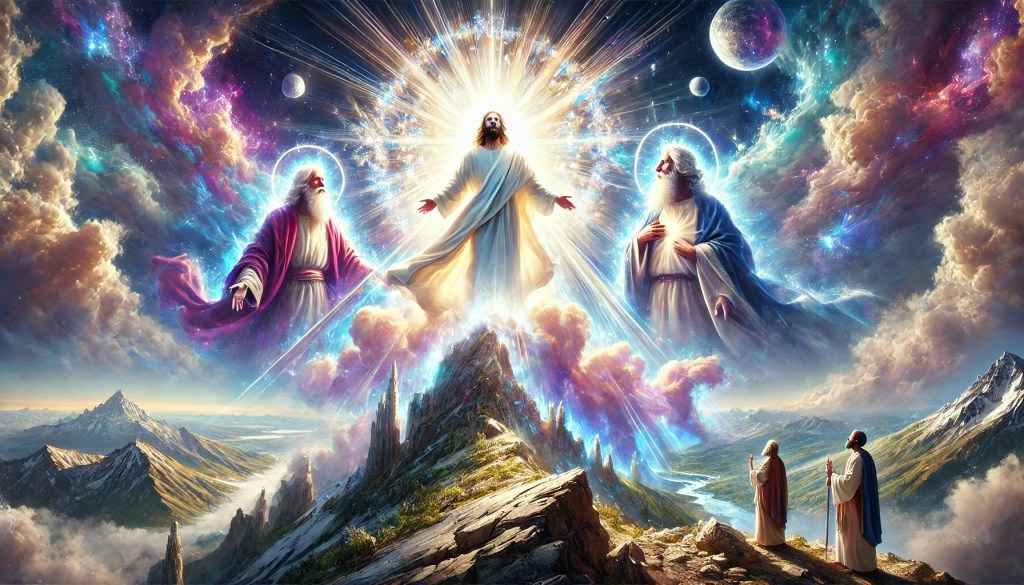
A Glimpse of Heaven: The Transfiguration Unveiled
The Feast of the Transfiguration of the Lord is one of the most profound moments in the liturgical year, inviting us to step into the mystery of Christ’s divine nature and the promise of our own transformation in Him. On this day, we are given a glimpse of heaven, where Jesus, the Son of God, reveals his divine glory to his closest disciples—Peter, James, and John. This revelation is not just a dramatic event in the Gospel narrative but a theophany, a divine manifestation that speaks to the heart of our Christian faith.
The Transfiguration is a moment where the veil between heaven and earth is lifted, and we are allowed to see the radiant light of Christ that transcends the boundaries of our human understanding. This feast does not stand alone but is deeply connected to the larger narrative of salvation history. It is situated within the context of Jesus’ journey to the cross, offering the disciples—and us—a foretaste of the resurrection glory that awaits beyond the suffering of the Passion.
Today’s readings all converge on this central theme of divine revelation and glory. The first reading from the Book of Daniel provides an apocalyptic vision of the Ancient One and the Son of Man, setting the stage for understanding Christ’s eternal kingship. The responsorial psalm, Psalm 97, calls us to rejoice in God’s majestic reign, affirming His righteousness and justice as the foundation of all creation. In the second reading, Peter’s testimony in his epistle emphasizes the eyewitness account of the Transfiguration, reinforcing the truth of the Gospel and the hope it offers. Finally, the Gospel of Mark presents the Transfiguration itself, a moment of divine encounter that left the disciples in awe and uncertainty, yet filled with a deeper understanding of who Jesus truly is.
As we reflect on these readings, we are invited to journey up the mountain with Jesus, to witness his glory, and to be transformed by the experience. The Transfiguration is not just an event to be remembered; it is a call to deepen our faith, to see beyond the immediate trials of life, and to embrace the hope of our own transfiguration in Christ. Let us open our hearts to the divine light that shines through today’s scriptures, illuminating our path and drawing us closer to the fullness of life in God’s presence.
First Reading – Daniel 7:9-10, 13-14
The Ancient One and the Everlasting Kingdom: A Vision of Divine Authority
The Book of Daniel is a remarkable text within the Old Testament, blending narrative and apocalyptic visions to offer a message of hope and divine sovereignty during a time of persecution and exile. Written during the Babylonian exile in the 6th century BC, Daniel addresses a community that is living under foreign rule, struggling to maintain its identity and faith in the midst of oppression.
The passage we read today, Daniel 7:9-10, 13-14, is part of a larger vision that Daniel experiences. The book shifts in this chapter from historical narratives to apocalyptic visions, filled with symbolic imagery that conveys deeper theological truths. This chapter is particularly important because it introduces the vision of the four beasts, representing oppressive kingdoms, and culminates in the enthronement of the “Ancient One” and the “one like a human being,” often identified as the Son of Man, a messianic figure who comes with divine authority.
This vision was meant to offer hope to the Jewish people, assuring them that despite the dominance of earthly powers, God’s kingdom would ultimately prevail. For Christians, this passage takes on additional significance, as it is seen as a prophecy of Christ’s eternal reign, pointing towards the ultimate victory of God over all evil and the establishment of a kingdom that will never end.
Daniel 7:9-10, 13-14 – New Revised Standard Version Catholic Edition
Judgment before the Ancient One
9 As I watched,
thrones were set in place,
and an Ancient One took his throne,
his clothing was white as snow,
and the hair of his head like pure wool;
his throne was fiery flames,
and its wheels were burning fire.
10 A stream of fire issued
and flowed out from his presence.
A thousand thousands served him,
and ten thousand times ten thousand stood attending him.
The court sat in judgment,
and the books were opened.
13 As I watched in the night visions,
I saw one like a human being
coming with the clouds of heaven.
And he came to the Ancient One
and was presented before him.
14 To him was given dominion
and glory and kingship,
that all peoples, nations, and languages
should serve him.
His dominion is an everlasting dominion
that shall not pass away,
and his kingship is one
that shall never be destroyed.
Detailed Exegesis
Verse 9: “As I watched, thrones were set in place, and an Ancient One took his throne, his clothing was white as snow, and the hair of his head like pure wool; his throne was fiery flames, and its wheels were burning fire.”
This verse vividly portrays the Ancient One, a figure of immense authority and purity. The imagery of white clothing and wool-like hair suggests holiness and eternal wisdom. The fiery throne symbolizes judgment and the purifying power of God. The wheels of fire recall the vision of Ezekiel, emphasizing the omnipresence and dynamic movement of God’s justice.
Verse 10: “A stream of fire issued and flowed out from his presence. A thousand thousands served him, and ten thousand times ten thousand stood attending him. The court sat in judgment, and the books were opened.”
The stream of fire emanating from God’s presence underscores His overwhelming holiness and the purifying power of His presence. The multitudes serving Him highlight the grandeur of God’s heavenly court, filled with countless angels and saints who stand ready to execute His will. The “court” here refers to the divine council where judgment is rendered, and the “books” being opened signify the record of deeds and the final judgment where each person’s life is reviewed and assessed.
Verse 13: “As I watched in the night visions, I saw one like a human being coming with the clouds of heaven. And he came to the Ancient One and was presented before him.”
This verse introduces the enigmatic figure “like a human being,” also translated as “one like a son of man.” This figure’s arrival “with the clouds of heaven” is significant because clouds are often associated with divine presence and authority in biblical imagery. The phrase “son of man” would later be used by Jesus to refer to himself, linking this vision directly to the New Testament understanding of Christ’s messianic role. The presentation before the Ancient One signifies the bestowal of authority, indicating that this figure is not just human but is also divinely appointed to reign.
Verse 14: “To him was given dominion and glory and kingship, that all peoples, nations, and languages should serve him. His dominion is an everlasting dominion that shall not pass away, and his kingship is one that shall never be destroyed.”
This verse prophesies the eternal kingship of Christ, whose dominion is universal and unending. It reflects the ultimate fulfillment of God’s promise to establish a kingdom of righteousness, where Christ reigns as King of kings.
Insights from the Church
The Catechism of the Catholic Church (CCC) teaches that Christ’s kingship is both spiritual and eternal, rooted in his Paschal Mystery (CCC 664). This passage from Daniel reflects the messianic hope that is fulfilled in Jesus, who reveals the full extent of God’s plan for humanity. The Church Fathers, such as St. Jerome, also see in this vision the prefiguration of Christ’s second coming, where he will judge the living and the dead.
St. Augustine, in his writings, sees this vision as a foreshadowing of Christ’s final judgment, where he will return in glory to judge the living and the dead. He connects the imagery of the Ancient One and the Son of Man to the divine economy of salvation, where Christ, as the Son of Man, takes on human nature to redeem it and bring it into the fullness of God’s kingdom.
The connection between Daniel’s vision and the Transfiguration is also significant. The Transfiguration is a moment where Jesus is revealed in his divine glory, similar to the vision of the “one like a human being” receiving divine authority. This connection highlights the continuity of God’s plan of salvation, as revealed in both the Old and New Testaments.
Embracing Christ’s Kingship in Our Lives
This passage from Daniel invites us to reflect on the reality of Christ’s eternal kingship and what it means for our daily lives. The vision of the Ancient One and the Son of Man serves as a powerful reminder that, despite the tumult and trials we face in the world, God’s kingdom is unshakable and everlasting. We are called to align our lives with this reality, recognizing Christ as the ultimate authority in every aspect of our lives.
In practical terms, embracing Christ’s kingship means living according to the values of His kingdom—justice, mercy, humility, and love. It challenges us to examine the areas of our lives where we may resist God’s reign, whether through sin, complacency, or fear. As we contemplate this vision, we can ask ourselves: How can I more fully submit to Christ’s authority in my decisions, relationships, and actions? How does the knowledge of His eternal kingdom give me hope in the face of life’s challenges?
This reading also encourages us to look forward with hope to the fulfillment of God’s promises. The vision of the Son of Man’s eternal reign assures us that God’s justice will prevail, and His kingdom will be established forever. This hope should inspire us to live with courage and faith, knowing that we are citizens of a kingdom that will never pass away.
In our prayer and meditation, let us invite Christ to reign more fully in our hearts, trusting in His wisdom and surrendering to His will. As we journey through life, may we keep our eyes fixed on the vision of God’s eternal kingdom, allowing it to shape our values, choices, and ultimate goals.
Responsorial Psalm – Psalm 97:1-2, 5-6, 9
The Majesty of God: Rejoice, for the Lord Reigns!
Psalm 97 is a majestic hymn of praise that celebrates the reign of God over all the earth. This psalm is part of a collection often referred to as the “Enthronement Psalms” (Psalms 93, 95-99), which proclaim God as King and highlight His sovereign power, justice, and righteousness. These psalms were likely used in liturgical settings during religious festivals, possibly during the Feast of Tabernacles, which celebrated God’s protection and provision.
The historical context of Psalm 97 places it within the broader narrative of Israel’s understanding of God as the ultimate ruler, not just of Israel, but of the entire universe. This psalm reflects the Jewish belief that Yahweh, the God of Israel, is the true King, whose reign is characterized by righteousness and justice—values that starkly contrast with the often oppressive and corrupt rulers of the ancient Near Eastern world.
In the Christian liturgical tradition, Psalm 97 is often associated with the themes of Christ’s kingship and the coming of God’s kingdom. It is a psalm that encourages the faithful to rejoice in the Lord’s reign, acknowledging His supremacy over all creation and His unassailable righteousness. By proclaiming God as the King over all the earth, this psalm sets the tone for reflecting on the majesty and holiness of God, preparing the heart to receive the revelation of His glory in the readings that follow.
Psalm 97:1-2, 5-6, 9 – New Revised Standard Version Catholic Edition
The Glory of God’s Reign
1 The Lord is king! Let the earth rejoice;
let the many coastlands be glad!
2 Clouds and thick darkness are all around him;
righteousness and justice are the foundation of his throne.
5 The mountains melt like wax before the Lord,
before the Lord of all the earth.
6 The heavens proclaim his righteousness;
and all the peoples behold his glory.
9 For you, O Lord, are most high over all the earth;
you are exalted far above all gods.
Detailed Exegesis
Verse 1: “The Lord is king! Let the earth rejoice; let the many coastlands be glad!”
This opening verse is a bold declaration of God’s kingship, an affirmation that Yahweh reigns supreme over all creation. The imperative to “rejoice” and “be glad” is directed not only to Israel but to the whole earth, including the “many coastlands,” which represent distant lands and peoples. This inclusivity emphasizes the universal scope of God’s reign, inviting all nations to recognize His authority and to find joy in His righteous rule. The call to rejoice is a response to the reality that God’s reign brings justice, peace, and blessing to the world.
Verse 2: “Clouds and thick darkness are all around him; righteousness and justice are the foundation of his throne.”
The imagery of clouds and thick darkness evokes the theophany at Mount Sinai, where God’s presence was manifested to the Israelites in a dramatic display of power and mystery (Exodus 19:16-19). This description emphasizes the transcendence and majesty of God, whose presence is both awe-inspiring and beyond human comprehension. Yet, despite this divine mystery, the foundation of God’s throne is clear: it is built on righteousness and justice. These twin pillars reflect God’s moral perfection and His commitment to upholding what is right and just in the world. This verse reassures the faithful that God’s reign is not arbitrary but is rooted in unwavering principles of truth and fairness.
Verse 5: “The mountains melt like wax before the Lord, before the Lord of all the earth.”
This verse uses vivid imagery to convey the overwhelming power of God. Mountains, which are often symbols of stability and permanence, are depicted as melting like wax before the Lord. This metaphor illustrates the irresistible force of God’s presence, which dissolves even the most formidable obstacles. The phrase “before the Lord of all the earth” reiterates the universal dominion of God, emphasizing that no part of creation can stand against His will. This verse serves as a reminder of God’s omnipotence and the transient nature of earthly powers in comparison to His eternal reign.
Verse 6: “The heavens proclaim his righteousness; and all the peoples behold his glory.”
Here, the psalmist declares that the very heavens—understood as the skies and the cosmic order—bear witness to God’s righteousness. This cosmic testimony is visible to all peoples, revealing God’s glory in a way that transcends human boundaries and divisions. The use of the word “proclaim” suggests an active declaration, as if the heavens themselves are shouting forth the truth of God’s righteous character. The reference to “all the peoples” emphasizes the universal revelation of God’s glory, which is not confined to Israel but is accessible to all humanity.
Verse 9: “For you, O Lord, are most high over all the earth; you are exalted far above all gods.”
The psalm culminates in this declaration of God’s supreme exaltation. The phrase “most high over all the earth” acknowledges God’s unparalleled sovereignty, while “exalted far above all gods” serves as a polemic against the pagan deities of the surrounding nations. This verse underscores the monotheistic faith of Israel, which holds that Yahweh alone is the true God, superior to all other so-called gods. This affirmation of God’s ultimate authority challenges the believer to reject idolatry in all its forms and to worship God alone.
Theological Insights from the Church
Psalm 97, with its emphasis on God’s kingship, righteousness, and justice, resonates deeply with Catholic teaching. The Catechism reflects on God’s kingship by emphasizing that His reign is established in righteousness and justice (CCC 210). This psalm serves as a reminder of God’s transcendence and immanence—He is both the sovereign ruler of the universe and the just judge who is intimately involved in the affairs of humanity.
The Church Fathers, such as St. Athanasius, saw in this psalm a prophetic anticipation of Christ’s coming and the establishment of His kingdom. St. Augustine, in his Expositions on the Psalms, interpreted the “heavens proclaiming his righteousness” as the apostles and evangelists spreading the Gospel throughout the world, revealing the glory of Christ to all peoples.
Moreover, the themes of righteousness and justice in Psalm 97 align with Catholic social teaching, which calls for the faithful to live out these virtues in their personal and communal lives. The Church teaches that our participation in God’s kingdom involves striving for justice and righteousness in our societies, reflecting the foundations of God’s throne in our actions and policies (CCC 1928-1942).
The imagery of the mountains melting like wax and the universal call to rejoice echoes the eschatological hope of the Church, where all creation will be renewed and God’s glory will be fully revealed (CCC 1042-1050). This psalm, therefore, not only reflects on the present reign of God but also points forward to the ultimate fulfillment of His kingdom.
Rejoicing in God’s Sovereignty
Psalm 97 invites us to rejoice in the knowledge that God reigns as the supreme King over all the earth. This assurance of God’s sovereignty should bring comfort and joy to our hearts, especially in times of uncertainty and turmoil. The psalm reminds us that, regardless of the chaos and injustice we may witness in the world, God’s throne is founded on righteousness and justice. These qualities are not only attributes of God but are also the standards by which He governs the world.
In our daily lives, this psalm challenges us to reflect on how we acknowledge and participate in God’s reign. Do we trust in God’s righteous rule, even when circumstances seem overwhelming? How do we embody the values of God’s kingdom—righteousness and justice—in our interactions with others and in our societal roles? This reflection calls us to align our lives more closely with God’s will, seeking to reflect His justice and righteousness in our actions.
The imagery of mountains melting like wax before the Lord invites us to consider the transient nature of earthly power and the enduring nature of God’s kingdom. It reminds us to place our trust not in worldly institutions or achievements but in God alone, whose reign is eternal and unshakeable.
Finally, the universal call to rejoice, extended to all the earth and its coastlands, encourages us to share the good news of God’s reign with others. This is not just a personal call to joy but a communal one, inviting us to spread the message of God’s justice and righteousness to those around us. Let us ask ourselves: How can I be a witness to God’s reign in my community? How can I help others to see the glory of God, as proclaimed by the heavens and witnessed by all peoples?
In prayer, we can ask God to deepen our trust in His sovereign rule and to help us live out the values of His kingdom in our daily lives. As we meditate on Psalm 97, let us rejoice in the knowledge that our God is King, His throne is secure, and His justice will ultimately prevail.
Second Reading – 2 Peter 1:16-19
Eyewitnesses of Glory: The Power and Promise of the Transfiguration
The Second Reading, from 2 Peter 1:16-19, is a powerful testimony from the Apostle Peter, emphasizing the authenticity of the Gospel message and the profound experience of witnessing Christ’s divine glory during the Transfiguration. The Second Epistle of Peter is often considered a farewell speech, written to strengthen the faith of the early Christian community and to refute false teachings that were beginning to spread. Scholars generally agree that this letter was written toward the end of Peter’s life, possibly during his imprisonment in Rome before his martyrdom around AD 64-68.
In this passage, Peter addresses early Christians who were facing persecution and doubts about the return of Christ and the truth of the Gospel. By asserting that the apostles were eyewitnesses of Christ’s majesty, Peter refutes the accusations that the Christian message was based on “cleverly devised myths.” Instead, he underscores the concrete reality of the events they proclaimed, particularly the Transfiguration, which he presents as a critical moment of divine revelation and confirmation of Christ’s identity as the Son of God.
This letter was likely written to a community that was experiencing confusion and division due to the rise of false teachers who were distorting the Gospel message. By recalling his firsthand experience of Christ’s glory, Peter aims to reassure the believers of the truth of the apostolic witness and to encourage them to remain steadfast in their faith.
2 Peter 1:16-19 – New Revised Standard Version Catholic Edition
Eyewitnesses of Christ’s Glory
16 For we did not follow cleverly devised myths when we made known to you the power and coming of our Lord Jesus Christ, but we had been eyewitnesses of his majesty. 17 For he received honor and glory from God the Father when that voice was conveyed to him by the Majestic Glory, saying, “This is my Son, my Beloved, with whom I am well pleased.” 18 We ourselves heard this voice come from heaven, while we were with him on the holy mountain.
19 So we have the prophetic message more fully confirmed. You will do well to be attentive to this as to a lamp shining in a dark place, until the day dawns and the morning star rises in your hearts.
Detailed Exegesis
Verse 16: “For we did not follow cleverly devised myths when we made known to you the power and coming of our Lord Jesus Christ, but we had been eyewitnesses of his majesty.”
Peter begins by distinguishing the Gospel from the myths and fables common in the Greco-Roman world. The phrase “cleverly devised myths” refers to the false stories and legends that were often used to explain religious or moral truths in pagan cultures. By contrast, Peter asserts that the apostles’ message about Jesus Christ is based on their direct experience as “eyewitnesses of his majesty.” This phrase points specifically to the Transfiguration, where Peter, along with James and John, saw Jesus in His glorified state. The term “majesty” here is significant, as it highlights the divine glory and authority of Christ, which the apostles witnessed firsthand. This verse establishes the credibility and reliability of the apostolic testimony, grounding the Christian faith in historical events rather than abstract myths.
Verse 17: “For he received honor and glory from God the Father when that voice was conveyed to him by the Majestic Glory, saying, ‘This is my Son, my Beloved, with whom I am well pleased.’”
In this verse, Peter recalls the divine affirmation that occurred during the Transfiguration. The “honor and glory” received by Christ refers to the visible manifestation of His divine nature and the acknowledgment of His unique relationship with the Father. The voice from the “Majestic Glory,” a term that underscores God’s overwhelming presence, echoes the words spoken at Jesus’ baptism (Matthew 3:17), confirming Jesus as the Son of God and the chosen one to fulfill God’s salvific plan. This moment of divine approval is crucial because it not only reveals Jesus’ true identity to the apostles but also serves as a testimony to the truth of His mission. For Peter, this declaration from the Father solidifies the foundation of the Christian faith, which is built on the recognition of Jesus as the beloved Son of God.
Verse 18: “We ourselves heard this voice come from heaven, while we were with him on the holy mountain.”
Peter emphasizes the personal and direct nature of his experience, stating that he and the other apostles “heard this voice” themselves. The “holy mountain” refers to the site of the Transfiguration, traditionally identified as Mount Tabor, though some traditions also suggest Mount Hermon. The term “holy” indicates that this mountain became a place of divine encounter and revelation, much like Mount Sinai in the Old Testament. By highlighting that they were with Jesus on this mountain, Peter reinforces the authenticity and authority of the apostolic witness. This verse also serves to remind the believers that the apostles’ testimony is not secondhand or theoretical but rooted in their tangible experiences with the divine.
Verse 19: “So we have the prophetic message more fully confirmed. You will do well to be attentive to this as to a lamp shining in a dark place, until the day dawns and the morning star rises in your hearts.”
In this verse, Peter connects the Transfiguration to the broader context of biblical prophecy. He asserts that the prophetic message—likely referring to the messianic prophecies of the Old Testament—is now “more fully confirmed” by the apostles’ experience of Christ’s glory. The imagery of a “lamp shining in a dark place” evokes the idea of the Gospel as a source of light and guidance in a world filled with spiritual darkness. Peter encourages the believers to remain attentive to this light, to hold fast to the truth of the Gospel, especially during times of trial and confusion. The reference to “the day” dawning and “the morning star” rising in their hearts is eschatological, pointing to the return of Christ (often symbolized as the morning star) and the full revelation of His glory. This verse calls Christians to live in hopeful anticipation of Christ’s second coming, allowing His light to guide their lives until the fullness of God’s kingdom is revealed.
Apostolic Witness and Tradition
The Catechism affirms the importance of the apostolic witness in the transmission of faith, stating that the Church is “apostolic because she is founded on the apostles, in three ways: she was and remains built on ‘the foundation of the Apostles,’… she keeps and hands on the teaching, she has heard from the Apostles… she continues to be taught, sanctified, and guided by the Apostles until Christ’s return, through their successors in pastoral office” (CCC 857). This teaching emphasizes that the faith we profess today is directly linked to the eyewitness accounts and teachings of the apostles, like Peter, who encountered Christ in His glory.
Saint Thomas Aquinas, in his commentary on this passage, explains that the Transfiguration served to strengthen the apostles’ faith by providing a foretaste of Christ’s divine glory, which would later be fully revealed in His resurrection and ascension. Aquinas sees this event as a critical moment that prepares the apostles for the trials ahead, especially the scandal of the cross. By witnessing Christ’s glory, the apostles were equipped to endure suffering and to bear witness to the truth of the Gospel, even unto death.
Furthermore, the Transfiguration is deeply connected to the Church’s understanding of the sacramental life. The Second Vatican Council, in Lumen Gentium, teaches that the sacraments, especially the Eucharist, allow believers to participate in the divine life of Christ, who is present with us just as He was revealed to the apostles on the mountain (LG 48). The light of Christ, which Peter speaks of as a lamp shining in the darkness, is made present to us through the sacraments, guiding and sanctifying us as we journey toward the fullness of God’s kingdom.
Living as Witnesses of Christ’s Glory
Peter’s testimony in this reading challenges us to consider the depth and authenticity of our own witness to Christ. Just as Peter and the apostles were eyewitnesses to the majesty of Jesus, we too are called to be witnesses of His glory in our own lives. This doesn’t mean that we have to see Christ physically, as the apostles did, but that we are invited to experience and share the transformative power of His presence through faith, the sacraments, and the life of the Church.
In a world that often doubts the truth of the Gospel, Peter’s words encourage us to hold fast to the faith that has been handed down to us, to remain attentive to the “lamp shining in a dark place.” This image of light calls us to be bearers of that light, illuminating the darkness around us with the truth and love of Christ. We are called to be steadfast in our faith, especially in challenging times, trusting that the prophetic message of the Gospel is true and reliable.
Reflecting on this passage, we might ask ourselves: How do I bear witness to Christ’s glory in my daily life? Am I attentive to the light of the Gospel, allowing it to guide my decisions and actions? How can I be a source of light for others, helping them to see the beauty and truth of Christ’s message?
Peter’s reference to the “morning star” rising in our hearts also invites us to consider our hope in Christ’s return. We live in the tension between the already and the not yet—the kingdom of God has been inaugurated in Christ, but it awaits its full realization. As we journey through life, we are called to keep our eyes fixed on the hope of Christ’s return, allowing this eschatological vision to shape our lives and inspire our actions.
In prayer, we can ask for the grace to be faithful witnesses of Christ’s glory, drawing strength from the apostolic testimony and the sacraments. Let us strive to be attentive to the light of the Gospel, living in such a way that others may come to know the truth and love of God through our witness. As we reflect on Peter’s words, may we be filled with the hope and joy of knowing that we, too, are called to share in the glory of Christ, both now and in the life to come.
Gospel Reading – Mark 9:2-10
Dazzling Glory: The Transfiguration of Jesus Revealed
The account of the Transfiguration in Mark 9:2-10 is a pivotal moment in the Gospel narrative, occurring at a critical juncture in Jesus’ ministry. The Gospel of Mark, widely regarded as the earliest of the four Gospels, is known for its brisk pace and emphasis on the actions of Jesus. Mark’s audience likely consisted of early Christians in Rome who were facing persecution, making the themes of suffering, discipleship, and the revelation of Jesus’ divine identity particularly relevant.
The Transfiguration takes place shortly after Peter’s confession of Jesus as the Messiah (Mark 8:29) and Jesus’ first prediction of His Passion (Mark 8:31). This event is strategically placed to provide a glimpse of the glory that lies beyond the suffering of the cross, both for Jesus and for His disciples. The Transfiguration serves as a divine confirmation of Jesus’ identity as the Son of God, offering the disciples—and through them, all believers—a foretaste of the resurrected glory that will follow the crucifixion.
The setting of the Transfiguration “on a high mountain” is significant, as mountains in biblical tradition are often places of divine encounter and revelation. The presence of Moses and Elijah, representing the Law and the Prophets, further emphasizes that Jesus is the fulfillment of God’s covenant with Israel and the ultimate revelation of God’s will.
Mark 9:2-10 – New Revised Standard Version Catholic Edition
The Transfiguration
2 Six days later, Jesus took with him Peter and James and John, and led them up a high mountain apart, by themselves. And he was transfigured before them, 3 and his clothes became dazzling white, such as no one on earth could bleach them. 4 And there appeared to them Elijah with Moses, who were talking with Jesus. 5 Then Peter said to Jesus, “Rabbi, it is good for us to be here; let us make three dwellings, one for you, one for Moses, and one for Elijah.” 6 He did not know what to say, for they were terrified. 7 Then a cloud overshadowed them, and from the cloud there came a voice, “This is my Son, the Beloved; listen to him!” 8 Suddenly when they looked around, they saw no one with them any more, but only Jesus.
The Coming of Elijah
9 As they were coming down the mountain, he ordered them to tell no one about what they had seen, until after the Son of Man had risen from the dead. 10 So they kept the matter to themselves, questioning what this rising from the dead could mean.
Detailed Exegesis
Verse 2: “Six days later, Jesus took with him Peter and James and John, and led them up a high mountain apart, by themselves. And he was transfigured before them,”
The mention of “six days later” connects this event to the preceding teachings of Jesus, particularly His prediction of His suffering and His call to discipleship, which involves taking up one’s cross (Mark 8:34-35). The inclusion of Peter, James, and John, the inner circle of disciples, highlights the importance of this revelation. These three had also witnessed the raising of Jairus’ daughter (Mark 5:37) and would later accompany Jesus during His agony in Gethsemane (Mark 14:33). The “high mountain” echoes the tradition of Mount Sinai, where Moses encountered God, suggesting that what is about to happen is a profound theophany. The term “transfigured” (from the Greek metamorphoo) indicates a complete transformation, not merely a change in appearance, but a revelation of Jesus’ divine nature. His physical form becomes radiant, signaling a departure from His ordinary, earthly existence and a manifestation of His divine glory.
Verse 3: “And his clothes became dazzling white, such as no one on earth could bleach them.”
The dazzling whiteness of Jesus’ clothes symbolizes purity, holiness, and the divine light. This description surpasses ordinary earthly whiteness, indicating something supernatural. In Jewish tradition, white garments were associated with heavenly beings and eschatological hope, as seen in Daniel 7:9, where the Ancient One is described with clothing “white as snow.” This verse visually conveys the divine glory that Jesus possesses, a glory that is usually veiled by His human nature but is momentarily revealed to the disciples. The brightness also prefigures the resurrected body of Christ and the glorified state that awaits all believers.
Verse 4: “And there appeared to them Elijah with Moses, who were talking with Jesus.”
The appearance of Elijah and Moses is rich in symbolic meaning. Moses represents the Law, while Elijah represents the Prophets, together encompassing the entirety of the Old Testament revelation. Their presence indicates that Jesus is the fulfillment of both the Law and the Prophets (Matthew 5:17). They are depicted as conversing with Jesus, which suggests a continuity and completion of God’s salvific plan through Christ. In Luke’s account of the Transfiguration, we learn that they were discussing Jesus’ “departure” (Luke 9:31), a reference to His impending Passion, death, and resurrection, underscoring the centrality of the cross in God’s plan of redemption.
Verse 5: “Then Peter said to Jesus, ‘Rabbi, it is good for us to be here; let us make three dwellings, one for you, one for Moses, and one for Elijah.’”
Peter’s reaction, while well-meaning, reveals his lack of full understanding. The suggestion to build three dwellings (or tents) reflects the Jewish Feast of Tabernacles (Sukkot), which commemorated God’s dwelling among His people in the wilderness (Leviticus 23:42-43). By proposing to build shelters, Peter may be attempting to prolong the moment of glory, perhaps thinking that this was the arrival of God’s kingdom in its fullness. However, Peter’s desire to freeze this moment misses the point that Jesus’ glory cannot be confined or controlled, and that His mission will lead not to immediate glory but through the suffering of the cross.
Verse 6: “He did not know what to say, for they were terrified.”
The disciples’ terror is a natural response to the overwhelming divine presence they are witnessing. This fear also reflects their confusion and awe, as they struggle to comprehend the significance of what is unfolding before them. The Transfiguration reveals the disciples’ limited understanding of Jesus’ mission and the nature of His messianic identity.
Verse 7: “Then a cloud overshadowed them, and from the cloud there came a voice, ‘This is my Son, the Beloved; listen to him!’”
The cloud is a common biblical symbol of God’s presence, recalling the cloud that guided the Israelites in the desert (Exodus 13:21) and the cloud that filled the Temple (1 Kings 8:10-11). The voice from the cloud is a direct affirmation from God the Father, echoing the words spoken at Jesus’ baptism (Mark 1:11). The command to “listen to him” emphasizes the importance of heeding Jesus’ teachings and following Him, especially as He prepares to undergo His Passion. This divine commandment highlights Jesus as the ultimate revelation of God, surpassing even the Law and the Prophets. The Father’s declaration confirms Jesus’ identity and mission, offering the disciples and all believers the assurance that Jesus is indeed the beloved Son of God.
Verse 8: “Suddenly when they looked around, they saw no one with them any more, but only Jesus.”
With the departure of Moses and Elijah, only Jesus remains, signifying that He alone is the mediator of the new covenant. The momentary vision of glory fades, and the disciples are left with Jesus, who is now revealed in His true identity as the Son of God. This verse underscores the centrality of Christ in the Christian faith—He is the fulfillment of the Law and the Prophets, and the one to whom all authority is given.
Verses 9-10: “As they were coming down the mountain, he ordered them to tell no one about what they had seen, until after the Son of Man had risen from the dead. So they kept the matter to themselves, questioning what this rising from the dead could mean.”
Jesus’ command to keep the event secret until after His resurrection points to the mystery of His mission and the need for the full revelation of His identity to unfold through the events of His Passion and Resurrection. The disciples’ questioning about the meaning of “rising from the dead” reveals their continued struggle to understand the nature of Jesus’ messianic mission. Their confusion reflects the broader Jewish expectation of a messiah who would conquer and reign, not one who would suffer and die. Jesus’ instruction highlights the importance of the Resurrection as the key to fully understanding His identity and mission. Only in the light of the Resurrection will the disciples be able to grasp the full significance of the Transfiguration and share it with others.
The Transfiguration and the Church
The Catechism offers rich insights into the significance of the Transfiguration. It teaches that this event is a foretaste of Christ’s glorious coming (CCC 556) and a revelation of His divine sonship. The Transfiguration is also presented as a preparation for the scandal of the cross, giving the apostles a glimpse of the glory that will follow the suffering. The Catechism further explains that “For a moment Jesus discloses his divine glory, confirming Peter’s confession. He also reveals that he will have to go by the way of the cross at Jerusalem in order to ‘enter into his glory’” (CCC 555). This understanding ties the Transfiguration to the Paschal Mystery, which includes Christ’s Passion, Death, Resurrection, and Ascension.
Saint Thomas Aquinas, in his Summa Theologica, reflects on the Transfiguration as a necessary event to strengthen the faith of the apostles. Aquinas argues that by witnessing Christ’s glory, the apostles were fortified to face the impending Passion with greater courage and understanding. The Transfiguration, according to Aquinas, serves to confirm the truth of Christ’s divinity and the hope of resurrection, both for Jesus and for all who follow Him.
In patristic writings, such as those of Saint Augustine, the Transfiguration is seen as a revelation of the unity of the Old and New Testaments. Augustine interprets the presence of Moses and Elijah as representing the Law and the Prophets, which are brought to fulfillment in Christ. This event, therefore, is not just about Jesus’ personal glorification, but a profound theological statement about the continuity and fulfillment of God’s covenant with humanity.
The Church also sees the Transfiguration as a model of Christian prayer and mysticism. The Catechism notes that this event “invites us to enter into the mystery of the cross, to share in the suffering of Christ in order to share in his glory” (CCC 556). In the Transfiguration, we see the pattern of Christian life: a journey through suffering and self-denial that leads to participation in divine glory. This event calls us to a deeper faith and trust in the promises of God, even when we face trials and suffering.
Being Transfigured in Christ
The Transfiguration is not just a historical event to be remembered; it is a spiritual reality that invites each of us to be transformed by Christ’s presence in our lives. This Gospel challenges us to reflect on our own experiences of encountering God’s glory, whether through moments of prayer, sacraments, or profound spiritual insight. Just as the disciples were called to listen to Jesus and to follow Him even to the cross, we too are called to be attentive to His voice in our lives.
In practical terms, being “transfigured” in Christ means allowing His light to shine through us in our everyday actions. It involves a continual conversion of heart, where we seek to align our lives more closely with the Gospel. This transformation is not merely external but begins within, as we allow the Holy Spirit to renew our minds and hearts, making us more like Christ.
The command to “listen to him” is a call to deeper discipleship. How often do we truly listen to the voice of Jesus in our lives? This may involve setting aside time for prayer and meditation, being attentive to the Word of God, and seeking His guidance in our decisions. It also means listening to Christ in the voices of the poor, the suffering, and the marginalized, and responding with compassion and justice.
The Transfiguration also reminds us of the hope that lies beyond the cross. In times of trial, when we face suffering or uncertainty, we can hold on to the vision of glory that the Transfiguration provides. It assures us that our journey with Christ, though it may involve suffering, will ultimately lead to the fullness of life and joy in God’s presence.
As we reflect on this Gospel, let us ask ourselves: How can I allow Christ’s light to shine more brightly in my life? In what ways is God calling me to be transfigured—to be transformed by His love and grace? How can I respond more fully to the call to “listen to him” in the daily circumstances of my life?
In prayer, let us invite Christ to transform our hearts and minds, asking for the grace to see His glory even in the midst of life’s challenges. May the vision of the Transfiguration inspire us to live with hope, courage, and a deepened commitment to following Christ, wherever He leads.
Beholding Christ’s Glory: A Call to Transformation
The Feast of the Transfiguration invites us into the mystery of Christ’s divine nature and the promise of our own transformation in Him. This event, recounted in today’s Gospel, is not just a moment in the past but a revelation that speaks powerfully to our present and future. Through the readings, we have journeyed up the mountain with Peter, James, and John, witnessing the unveiling of Christ’s glory and receiving a foretaste of the resurrected life that awaits us.
The readings collectively emphasize the themes of divine authority, the fulfillment of God’s promises, and the hope of eternal life. From the apocalyptic vision in Daniel, which reveals the eternal kingship of Christ, to the psalmist’s call to rejoice in the Lord’s sovereign reign, to Peter’s eyewitness testimony of Christ’s majesty, and finally to the Gospel account of the Transfiguration, we are reminded of the grandeur and mystery of God’s plan for salvation.
In Daniel’s vision, we see the Ancient One and the Son of Man, foreshadowing the eternal dominion that Christ will receive. This vision is not only a revelation of Christ’s kingship but also a promise to all who follow Him—an invitation to share in His glory. This is echoed in Psalm 97, where the heavens proclaim God’s righteousness and all the peoples behold His glory. This psalm calls us to rejoice in the knowledge that God reigns supreme, and His justice and righteousness will ultimately prevail.
Peter’s second letter reinforces the truth of the Gospel, reminding us that the apostles were not following myths but were eyewitnesses of Christ’s majesty. This testimony strengthens our faith, assuring us that the Gospel is grounded in historical reality and divine revelation. It challenges us to hold fast to the light of Christ, even in a world filled with darkness.
The Gospel of the Transfiguration itself brings all these themes into focus. Jesus, revealed in His divine glory, stands as the fulfillment of the Law and the Prophets, the one to whom we must listen and follow. The Transfiguration is a moment that transcends time, offering the disciples—and all of us—a glimpse of the glory that will come after the suffering of the cross. It is a powerful reminder that our journey with Christ, though marked by trials and challenges, leads ultimately to the fullness of life and eternal joy in God’s presence.
As we meditate on these readings, we are called to reflect on how the glory of Christ can transform our lives. The Transfiguration is a call to deeper faith, to see beyond the immediate trials of life, and to embrace the hope of our own transfiguration in Christ. It invites us to allow the light of Christ to shine through us, to be transformed by His love, and to live out the values of His kingdom in our daily lives.
This feast also challenges us to listen attentively to Jesus, to be open to His guidance, and to follow Him even when the path leads to the cross. Just as the disciples were commanded to “listen to him,” we too are called to heed His words and to let them shape our lives. This requires a commitment to discipleship, a willingness to be transformed, and a readiness to share in Christ’s mission.
Let us then, as we descend from the mountain of this feast, carry with us the vision of Christ’s glory. Let it inspire us to live with hope, courage, and a deepened commitment to our faith. In every aspect of our lives, let us strive to reflect the light of Christ, knowing that we are called to share in His eternal glory.
Engage with Us!
We invite you to share your thoughts and reflections on today’s readings. Leave your comments below and join the conversation!
Reflection Questions:
- In what areas of your life do you need to recognize Christ’s kingship more fully?
- How can you rejoice in God’s sovereignty, even in times of uncertainty?
- What does it mean to you to be a witness of Christ’s glory in today’s world?
- How can you experience and share the transfiguring light of Christ in your daily life?
Let us walk together in faith, encouraging one another to keep our eyes fixed on the glory that is to come, and to live out the reality of Christ’s transforming love in our everyday lives.
Follow us on Instagram and Facebook for more insights and reflections on living a faith-filled life.

 Holy Manna!
Leave a comment