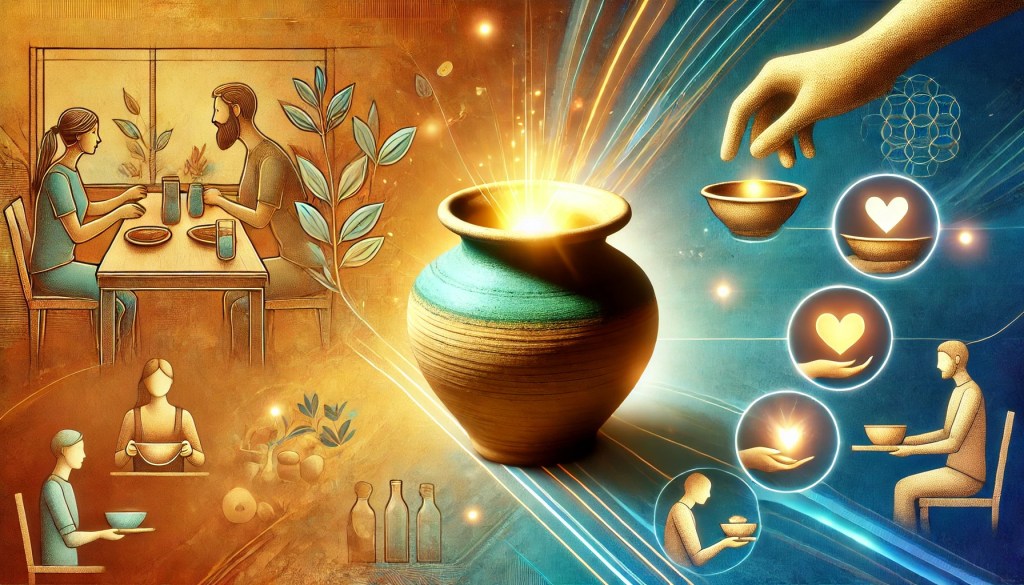
The Paradoxes of Faith – Strength, Trust, and Servanthood
Welcome to a journey through today’s Mass readings, where we will explore the profound messages that God has for us. These readings are a tapestry of divine wisdom, woven together to teach us about the paradoxes of Christian life: finding strength in weakness, trust in God’s protection, and greatness in humble service. In our modern world, where success is often measured by power, influence, and self-sufficiency, these passages offer a countercultural perspective that calls us to rely on God and serve others selflessly.
Let’s set the stage by understanding the broader context of these readings:
2 Corinthians 4:7-15: In this passage, St. Paul addresses the early Christian community in Corinth, a city known for its diversity and its challenges. Paul’s message to the Corinthians is one of hope and resilience. He uses the metaphor of “treasures in clay jars” to illustrate how God’s power is made perfect in our human frailty. This passage reminds us that in our struggles and sufferings, God’s grace shines through, turning our weaknesses into testimonies of His strength.
Psalm 71:1-6: This psalm is a heartfelt prayer for lifelong protection and help. It reflects the psalmist’s trust in God’s unfailing love and strength, drawing on a lifetime of experiencing God’s faithfulness. This psalm invites us to reflect on our own lives, recognizing how God has been our rock and fortress through every trial and tribulation.
Matthew 20:20-28: The Gospel reading presents a powerful lesson on leadership and servanthood. The mother of James and John approaches Jesus with a request for her sons to have places of honor in His kingdom. Jesus uses this moment to teach His disciples about true greatness, which is found not in power and prestige but in humble service and sacrifice. This passage challenges us to rethink our ambitions and embrace a life of serving others as Jesus did.
Together, these readings offer a rich and transformative message. They call us to embrace the paradoxes of faith—finding strength in our weaknesses, trusting in God’s protection, and seeking greatness through servanthood. As we delve into each passage, let’s open our hearts to the lessons they hold and reflect on how they can guide us in our everyday lives.
First Reading – 2 Corinthians 4:7-15
Treasures in Clay Jars: Finding Strength in Our Weakness
The Second Letter to the Corinthians was written by St. Paul around AD 55-57, addressing the early Christian community in Corinth. Corinth was a bustling, cosmopolitan city, known for its wealth, commerce, and also for its immorality and religious pluralism. The Corinthian church, established by Paul during his second missionary journey, was struggling with internal divisions, moral issues, and confusion over Christian doctrine and leadership.
Paul’s relationship with the Corinthian believers was complex. They had questioned his authority and were influenced by false apostles who boasted about their own credentials and downplayed Paul’s apostolic authority. In this letter, Paul defends his apostleship and ministry, emphasizing that his authority and power come from God, not from human achievements or status.
In 2 Corinthians 4, Paul contrasts the transient nature of human life with the eternal glory of God’s work through Christ. He uses the metaphor of “treasures in clay jars” to illustrate the paradox of the Christian experience—our frailty and God’s powerful presence within us.
2 Corinthians 4:7-15 – New Revised Standard Version Catholic Edition
7 But we have this treasure in clay jars, so that it may be made clear that this extraordinary power belongs to God and does not come from us. 8 We are afflicted in every way, but not crushed; perplexed, but not driven to despair; 9 persecuted, but not forsaken; struck down, but not destroyed; 10 always carrying in the body the death of Jesus, so that the life of Jesus may also be made visible in our bodies. 11 For while we live, we are always being given up to death for Jesus’ sake, so that the life of Jesus may be made visible in our mortal flesh. 12 So death is at work in us, but life in you.
13 But just as we have the same spirit of faith that is in accordance with scripture—“I believed, and so I spoke”—we also believe, and so we speak, 14 because we know that the one who raised the Lord Jesus will raise us also with Jesus, and will bring us with you into his presence. 15 Yes, everything is for your sake, so that grace, as it extends to more and more people, may increase thanksgiving, to the glory of God.
Exegesis of 2 Corinthians 4:7-15
Verse 7: “But we have this treasure in clay jars, so that it may be made clear that this extraordinary power belongs to God and does not come from us.”
Paul likens human beings to clay jars—fragile, ordinary, and easily broken. The “treasure” refers to the Gospel of Jesus Christ and the knowledge of God’s glory. By using this metaphor, Paul emphasizes that the extraordinary power of the Gospel is from God, not from human vessels. This imagery highlights the contrast between human weakness and divine power.
Verses 8-9: “We are afflicted in every way, but not crushed; perplexed, but not driven to despair; persecuted, but not forsaken; struck down, but not destroyed.”
Here, Paul lists a series of hardships faced by Christians, yet he pairs each with a corresponding assurance of divine support. The afflictions and persecutions are real, but they do not lead to ultimate defeat. Instead, God’s sustaining power ensures that believers are not crushed, driven to despair, forsaken, or destroyed. This passage reflects the resilience of faith amidst trials.
Verses 10-11: “Always carrying in the body the death of Jesus, so that the life of Jesus may also be made visible in our bodies. For while we live, we are always being given up to death for Jesus’ sake, so that the life of Jesus may be made visible in our mortal flesh.”
Paul explains that the sufferings Christians endure are a participation in the death of Jesus. This continuous experience of dying with Christ is meant to reveal the life of Jesus in us. Our mortal bodies, subject to death and suffering, become instruments through which the resurrected life of Jesus is manifested. This profound union with Christ’s death and resurrection is central to Christian identity.
Verses 12-13: “So death is at work in us, but life in you. But just as we have the same spirit of faith that is in accordance with scripture—’I believed, and so I spoke’—we also believe, and so we speak.”
Paul emphasizes the communal aspect of faith. The apostles’ sufferings bring life to the community, and their faith prompts them to proclaim the Gospel boldly. He quotes Psalm 116:10 to reinforce the principle that faith compels us to speak and act. The spirit of faith drives the apostles to proclaim the Gospel despite their sufferings, affirming that their hardships contribute to the spiritual vitality of the community.
Verses 14-15: “Because we know that the one who raised the Lord Jesus will raise us also with Jesus, and will bring us with you into his presence. Yes, everything is for your sake, so that grace, as it extends to more and more people, may increase thanksgiving, to the glory of God.”
Paul’s confidence in the resurrection assures him that all believers will be raised with Christ. This hope of resurrection underpins his ministry and motivates his endurance. The goal of all apostolic work is the spread of grace, leading to increased thanksgiving and the glory of God. This eschatological hope (hope of the end times) binds the Christian community together in the promise of eternal life.
Teachings and References
The Catechism of the Catholic Church (CCC) highlights several key themes related to this passage:
- Human Weakness and Divine Power (CCC 268): “The Virgin Mary is the supreme model of this faith, for she believed that ‘nothing will be impossible with God,’ and was able to magnify the Lord: ‘For he who is mighty has done great things for me, and holy is his name.’”
- Participation in Christ’s Suffering (CCC 618): “The cross is the unique sacrifice of Christ, the ‘one mediator between God and men.’ But because in his incarnate divine person he has in some way united himself to every man, ‘the possibility of being made partners, in a way known to God, in the paschal mystery’ is offered to all men. He calls his disciples to ‘take up [their] cross and follow [him],’ for ‘Christ also suffered for [us], leaving [us] an example so that [we] should follow in his steps.’ In fact, Jesus desires to associate with his redeeming sacrifice those who were to be its first beneficiaries.”
St. Augustine, in his Confessions, reflects on the paradox of human weakness and divine strength, noting that God’s power is most evident in our humility and dependence on Him (Confessions, Book 7). Similarly, St. John Chrysostom, in his Homilies on the Epistles of Paul to the Corinthians, expounds on how Paul’s sufferings and endurance are a testament to the transformative power of God’s grace working through human fragility.
Reflection
In our daily struggles, do we recognize God’s power at work within us? How can we, like Paul, embrace our weaknesses and allow God’s grace to shine through? Reflecting on our own lives, we might consider the challenges we face—whether they be personal, professional, or spiritual. These “clay jar” moments are opportunities to witness God’s extraordinary power. When we are tempted to despair or feel overwhelmed, let us remember Paul’s words and find hope in the resurrection promise that sustains us.
As we navigate through life’s afflictions, let us ask ourselves:
- How can I offer my struggles to God, trusting that He will transform them for His glory?
- In what ways can I support and encourage others who are experiencing their own “clay jar” moments?
- How can I deepen my faith and reliance on God’s strength in times of weakness?
By reflecting on these questions, we open ourselves to a deeper experience of God’s grace and a greater witness to His glory in our lives.
Responsorial Psalm – Psalm 126
A Harvest of Joy: From Tears to Triumph
Psalm 126 is one of the fifteen “Songs of Ascents” (Psalms 120-134) that were sung by the Israelites as they ascended to Jerusalem for the annual feasts. It reflects on a period of restoration and renewal, likely following the Babylonian Exile, when the people of Israel returned to their homeland and experienced a profound sense of joy and gratitude. This psalm captures the collective memory of deliverance and the hopeful anticipation of future blessings.
The historical context of the Babylonian Exile was a time of profound loss and suffering for the Israelites. Being taken captive and exiled from their homeland was a traumatic experience that lasted for about seventy years. The return from exile, therefore, was a moment of great joy and celebration, akin to waking from a long, painful dream.
Psalm 126 – New Revised Standard Version Catholic Edition
A Harvest of Joy
A Song of Ascents
1 When the Lord restored the fortunes of Zion,
we were like those who dream.
2 Then our mouth was filled with laughter,
and our tongue with shouts of joy;
then it was said among the nations,
“The Lord has done great things for them.”
3 The Lord has done great things for us,
and we rejoiced.
4 Restore our fortunes, O Lord,
like the watercourses in the Negeb.
5 May those who sow in tears
reap with shouts of joy.
6 Those who go out weeping,
bearing the seed for sowing,
shall come home with shouts of joy,
carrying their sheaves.
Exegesis of Psalm 126
Verse 1: “When the Lord restored the fortunes of Zion, we were like those who dream.”
The psalm opens with a vivid image of astonishment and joy. The restoration of Zion, a reference to Jerusalem and the broader return of the people to their land, felt surreal to the Israelites, as if they were dreaming. This reflects the overwhelming sense of relief and happiness that accompanied their deliverance.
Verse 2: “Then our mouth was filled with laughter, and our tongue with shouts of joy; then it was said among the nations, ‘The Lord has done great things for them.’”
The psalmist describes the joyous reaction of the people. Their laughter and shouts of joy are expressions of their deep gratitude and happiness. The surrounding nations recognize God’s intervention and acknowledge His great works, highlighting the impact of God’s actions on both Israel and the wider world.
Verse 3: “The Lord has done great things for us, and we rejoiced.”
The people affirm the great deeds God has performed for them, and their response is one of rejoicing. This verse serves as a communal acknowledgment of God’s mercy and power, encouraging the community to remember and celebrate His goodness.
Verse 4: “Restore our fortunes, O Lord, like the watercourses in the Negeb.”
This verse transitions from a reflection on past joy to a prayer for continued restoration. The Negeb, a desert region in southern Israel, experiences sudden and dramatic transformations when seasonal rains create flowing streams. The psalmist uses this imagery to pray for a renewal that is as abundant and transformative as these watercourses.
Verses 5-6: “May those who sow in tears reap with shouts of joy. Those who go out weeping, bearing the seed for sowing, shall come home with shouts of joy, carrying their sheaves.”
These final verses offer a powerful promise of hope. The act of sowing in tears represents the hard work and sorrow that often precede a harvest. The psalmist reassures that this labor will not be in vain; those who endure hardships and sow faithfully will ultimately reap a joyful harvest. The imagery of returning home with shouts of joy and carrying sheaves symbolizes the fruitful outcome of their efforts.
Teachings and References
The Catechism provides insights into the themes of joy, restoration, and hope:
- Christian Joy (CCC 1829): “The fruits of charity are joy, peace, and mercy; charity demands beneficence and fraternal correction; it is benevolence; it fosters reciprocity and remains disinterested and generous; it is friendship and communion.”
- Hope in God’s Promises (CCC 1820): “Christian hope unfolds from the beginning of Jesus’ preaching in the proclamation of the beatitudes. The beatitudes raise our hope toward heaven as the new Promised Land; they trace the path that leads through the trials that await the disciples of Jesus.”
St. Augustine, in his Expositions on the Psalms, reflects on Psalm 126 as a celebration of God’s redemptive work and a reminder of His faithfulness. Augustine emphasizes that the joy experienced by the Israelites is a foretaste of the ultimate joy found in God’s eternal kingdom.
St. John Paul II, in his Encyclical Letter Redemptoris Missio, speaks of the transformative power of hope and the Christian call to sow seeds of faith even in difficult times, trusting in the eventual harvest of joy.
Reflection
Psalm 126 invites us to reflect on the moments of restoration and joy in our own lives. It encourages us to remember the times when God has delivered us from difficult situations and to trust in His continued faithfulness. This psalm also calls us to hold on to hope during challenging times, confident that our labor and tears will eventually yield a bountiful harvest.
Consider these reflection questions:
- When have you experienced a moment of restoration or renewal that felt like a dream come true?
- How can you cultivate a spirit of gratitude and joy in your daily life, even in the midst of challenges?
- In what ways can you sow seeds of faith and hope in your community, trusting in God’s promise of a joyful harvest?
- How does reflecting on God’s past faithfulness help you remain hopeful and steadfast in the present?
Reflecting on these questions helps us deepen our appreciation for God’s goodness and encourages us to trust in His promises. As we journey through life, may we always remember the great things the Lord has done for us and look forward to the joy that lies ahead.
Holy Gospel – Matthew 20:20-28
Greatness Redefined: The Path of Servant Leadership
The Gospel of Matthew is traditionally attributed to Matthew, one of Jesus’ twelve apostles. Written around AD 80-90, it primarily addresses a Jewish-Christian audience and emphasizes Jesus as the fulfillment of Old Testament prophecies. Matthew presents Jesus as the Messiah who inaugurates the Kingdom of Heaven and teaches about its values and principles.
In Matthew 20:20-28, we encounter a critical teaching moment in Jesus’ ministry. This passage takes place as Jesus is making His way to Jerusalem, where He will face His crucifixion. The context of this journey is crucial because it underscores the impending suffering and sacrifice that Jesus is about to endure. It is during this time that the mother of James and John, two of Jesus’ closest disciples, approaches Jesus with a bold request for her sons to have positions of honor in His kingdom.
Matthew 20:20-28 – New Revised Standard Version Catholic Edition
The Request of the Mother of James and John
20 Then the mother of the sons of Zebedee came to him with her sons, and kneeling before him, she asked a favor of him. 21 And he said to her, “What do you want?” She said to him, “Declare that these two sons of mine will sit, one at your right hand and one at your left, in your kingdom.” 22 But Jesus answered, “You do not know what you are asking. Are you able to drink the cup that I am about to drink?” They said to him, “We are able.” 23 He said to them, “You will indeed drink my cup, but to sit at my right hand and at my left, this is not mine to grant, but it is for those for whom it has been prepared by my Father.”
24 When the ten heard it, they were angry with the two brothers. 25 But Jesus called them to him and said, “You know that the rulers of the Gentiles lord it over them, and their great ones are tyrants over them. 26 It will not be so among you; but whoever wishes to be great among you must be your servant, 27 and whoever wishes to be first among you must be your slave; 28 just as the Son of Man came not to be served but to serve, and to give his life a ransom for many.”
Exegesis of Matthew 20:20-28
Verses 20-21: “Then the mother of the sons of Zebedee came to him with her sons, and kneeling before him, she asked a favor of him. And he said to her, ‘What do you want?’ She said to him, ‘Declare that these two sons of mine will sit, one at your right hand and one at your left, in your kingdom.’”
The request reflects a common misunderstanding of the nature of Jesus’ kingdom. The mother of James and John envisions an earthly kingdom with positions of power and prestige. Her request for her sons to sit at Jesus’ right and left hand reveals a desire for honor and authority.
Verse 22: “But Jesus answered, ‘You do not know what you are asking. Are you able to drink the cup that I am about to drink?’ They said to him, ‘We are able.’”
Jesus responds by highlighting the cost of true discipleship. The “cup” He refers to is a symbol of His impending suffering and sacrificial death. James and John, unaware of the full implications, affirm their willingness to share in this cup.
Verse 23: “He said to them, ‘You will indeed drink my cup, but to sit at my right hand and at my left, this is not mine to grant, but it is for those for whom it has been prepared by my Father.’”
Jesus acknowledges that James and John will indeed share in His sufferings, but the positions of honor they seek are determined by the Father. This statement emphasizes that divine authority, not human ambition, governs the Kingdom of Heaven.
Verses 24-25: “When the ten heard it, they were angry with the two brothers. But Jesus called them to him and said, ‘You know that the rulers of the Gentiles lord it over them, and their great ones are tyrants over them.’”
The other disciples’ anger reveals their own misunderstandings and desires for power. Jesus uses this moment to contrast worldly leadership, characterized by domination and tyranny, with the servant leadership He calls His followers to embody.
Verses 26-27: “It will not be so among you; but whoever wishes to be great among you must be your servant, and whoever wishes to be first among you must be your slave.”
Jesus redefines greatness in the Kingdom of Heaven. True greatness is found in humble service and self-sacrifice. The terms “servant” and “slave” underscore the radical nature of Christian discipleship, which calls for complete self-giving and humility.
Verse 28: “Just as the Son of Man came not to be served but to serve, and to give his life a ransom for many.”
Jesus presents Himself as the ultimate example of servant leadership. His mission is not to wield power but to serve others, even to the point of giving His life as a ransom. This sacrificial love is the foundation of Christian greatness.
Teachings and References
The Catechism provides profound insights into the themes of servanthood and leadership in this passage:
- Servant Leadership (CCC 786): “The People of God share in the royal office of Christ. They exercise it by a life in keeping with their vocation to serve with Christ.”
- Christ as Servant (CCC 608): “Christ’s whole life expresses his mission: ‘to serve, and to give his life as a ransom for many.’”
St. Ignatius of Loyola, in his Spiritual Exercises, emphasizes the importance of humility and service in following Christ. He calls for a “third degree of humility,” which involves the willingness to suffer and be regarded as insignificant for the sake of following Jesus and serving others.
St. Francis of Assisi, known for his radical embrace of poverty and service, lived out this teaching by dedicating his life to serving the poor and marginalized. His example of humility and self-sacrifice continues to inspire Christians to this day.
Reflection
The passage from Matthew challenges us to rethink our understanding of greatness and leadership. In a world that often values power, status, and self-promotion, Jesus calls us to a different path—one of humble service and sacrificial love. Reflecting on this teaching, we
can consider how we can embody servant leadership in our daily lives.
Consider these reflection questions:
- In what ways can we embody the servant leadership Jesus models?
- How can we shift our focus from seeking personal honor to serving others selflessly?
- Are there areas in our lives where we need to let go of ambitions for power and prestige to follow Jesus more closely?
- How can we support and encourage others in their journey of discipleship and service?
Reflecting on these questions helps us align our lives more closely with the example of Christ. As we seek to serve others with humility and love, we participate in the Kingdom of Heaven and witness to the transformative power of the Gospel. May we embrace this path of servant leadership, finding true greatness in following Jesus’ example.
Embrace the Paradox – Finding God in Our Everyday Lives
Today’s readings remind us of the profound paradoxes of Christian life: finding strength in weakness, joy after sorrow, and greatness in humble service. These themes are not just abstract theological concepts but practical guides for our daily living. As we reflect on the lessons from 2 Corinthians, Psalm 126, and Matthew, let’s delve deeper into how these insights can transform our lives.
Embracing Weakness as a Source of Strength
St. Paul’s message to the Corinthians teaches us that our human frailty is not a hindrance but an opportunity for God’s power to manifest. In a world that often glorifies self-sufficiency and personal strength, Paul’s metaphor of “treasures in clay jars” encourages us to embrace our vulnerabilities. Our weaknesses can become powerful testimonies of God’s grace when we allow His strength to work through us. This perspective shifts our focus from our limitations to God’s limitless power.
Experiencing Joy After Sorrow
Psalm 126 beautifully captures the journey from sorrow to joy. The psalm reflects on the Israelites’ return from exile, a moment of profound restoration and celebration. It encourages us to trust in God’s ability to transform our tears into joy. The imagery of sowing in tears and reaping with shouts of joy reminds us that our hardships are not in vain. God is faithful to bring about renewal and blessing, even when we endure difficult seasons.
Redefining Greatness Through Servant Leadership
Jesus’ teaching in Matthew 20:20-28 turns the worldly concept of greatness on its head. True greatness, according to Jesus, is found not in power and prestige but in serving others selflessly. This redefinition challenges us to examine our ambitions and motivations. Are we seeking recognition and status, or are we striving to serve others as Christ did? Jesus’ example of servant leadership calls us to a life of humility and sacrifice. By putting others’ needs before our own and serving with love, we participate in the Kingdom of Heaven and reflect the heart of Jesus to the world.
Living Out the Gospel
As we internalize the messages from today’s readings, let’s consider practical ways to apply these lessons in our everyday lives:
- Embrace Vulnerability: Acknowledge your weaknesses and invite God to work through them. Share your struggles with others to encourage and build up the community of faith.
- Trust in Renewal: Hold on to hope during challenging times, confident that God will bring about restoration and joy. Reflect on past experiences of God’s faithfulness to strengthen your trust in His ongoing work.
- Serve with Humility: Look for opportunities to serve others in your family, workplace, and community. Seek to uplift and support those around you, reflecting Jesus’ love and humility.
By embracing these actions, we allow the truths of Scripture to transform our lives and influence those around us. In doing so, we become living testimonies of God’s strength, protection, and love.
Engage with Us!
Share your thoughts and reflections in the comments below. Let us support each other in our faith journey, striving to do everything with the love our Lord Jesus exemplified.
- How does recognizing our human frailty help us rely more on God’s power?
- Can you recall a time when God transformed your sorrow into joy?
- How can we cultivate a spirit of servanthood in our daily interactions?
- What steps can we take to trust God’s plan, even when we face misunderstandings or challenges?
Let us continue to support each other in our faith journey, doing everything with love as our Lord Jesus did.
Follow us on Instagram and Facebook for more insights and reflections on living a faith-filled life.

 Holy Manna!
Leave a comment