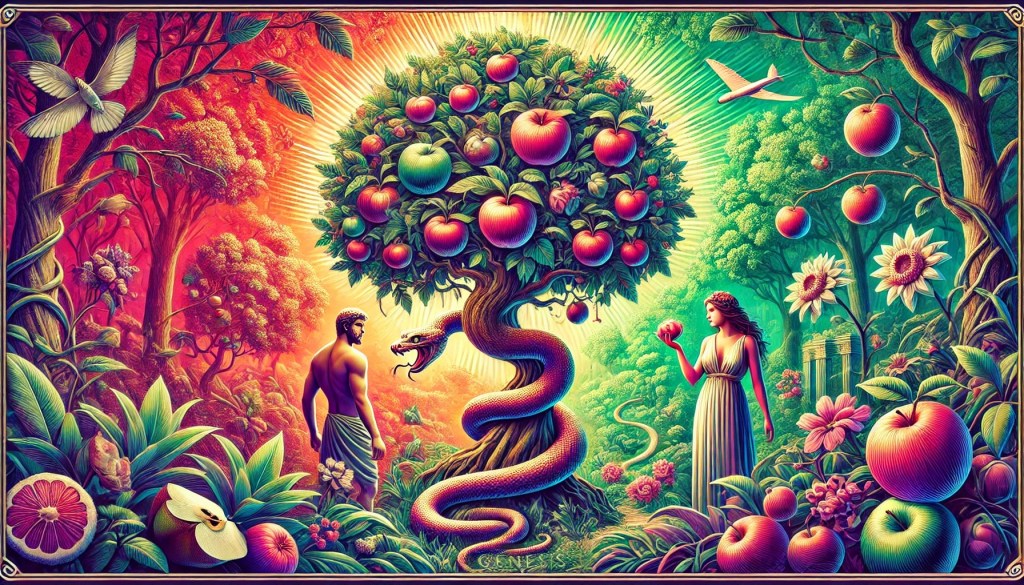
Setting the Stage
Genesis, the first book of the Bible, lays the foundational narratives of creation, humanity, and the origins of sin. Genesis 3 is particularly pivotal as it recounts the first sin and its far-reaching consequences. This chapter not only provides a theological explanation for the existence of sin and suffering but also introduces key themes like temptation, disobedience, and the need for redemption. Understanding Genesis 3 is crucial for comprehending the entirety of salvation history, as it sets the stage for the necessity of Christ’s redemptive work.
Genesis 3New Revised Standard Version Catholic Edition
The First Sin and Its Punishment
3 Now the serpent was more crafty than any other wild animal that the Lord God had made. He said to the woman, “Did God say, ‘You shall not eat from any tree in the garden’?” 2 The woman said to the serpent, “We may eat of the fruit of the trees in the garden; 3 but God said, ‘You shall not eat of the fruit of the tree that is in the middle of the garden, nor shall you touch it, or you shall die.’” 4 But the serpent said to the woman, “You will not die; 5 for God knows that when you eat of it your eyes will be opened, and you will be like God, knowing good and evil.” 6 So when the woman saw that the tree was good for food, and that it was a delight to the eyes, and that the tree was to be desired to make one wise, she took of its fruit and ate; and she also gave some to her husband, who was with her, and he ate. 7 Then the eyes of both were opened, and they knew that they were naked; and they sewed fig leaves together and made loincloths for themselves.
8 They heard the sound of the Lord God walking in the garden at the time of the evening breeze, and the man and his wife hid themselves from the presence of the Lord God among the trees of the garden. 9 But the Lord God called to the man, and said to him, “Where are you?” 10 He said, “I heard the sound of you in the garden, and I was afraid, because I was naked; and I hid myself.” 11 He said, “Who told you that you were naked? Have you eaten from the tree of which I commanded you not to eat?” 12 The man said, “The woman whom you gave to be with me, she gave me fruit from the tree, and I ate.” 13 Then the Lord God said to the woman, “What is this that you have done?” The woman said, “The serpent tricked me, and I ate.” 14 The Lord God said to the serpent,
“Because you have done this,
cursed are you among all animals
and among all wild creatures;
upon your belly you shall go,
and dust you shall eat
all the days of your life.
15 I will put enmity between you and the woman,
and between your offspring and hers;
he will strike your head,
and you will strike his heel.”16 To the woman he said,
“I will greatly increase your pangs in childbearing;
in pain you shall bring forth children,
yet your desire shall be for your husband,
and he shall rule over you.”17 And to the man he said,
“Because you have listened to the voice of your wife,
and have eaten of the tree
about which I commanded you,
‘You shall not eat of it,’
cursed is the ground because of you;
in toil you shall eat of it all the days of your life;
18 thorns and thistles it shall bring forth for you;
and you shall eat the plants of the field.
19 By the sweat of your face
you shall eat bread
until you return to the ground,
for out of it you were taken;
you are dust,
and to dust you shall return.”20 The man named his wife Eve, because she was the mother of all living. 21 And the Lord God made garments of skins for the man and for his wife, and clothed them.
22 Then the Lord God said, “See, the man has become like one of us, knowing good and evil; and now, he might reach out his hand and take also from the tree of life, and eat, and live forever”— 23 therefore the Lord God sent him forth from the garden of Eden, to till the ground from which he was taken. 24 He drove out the man; and at the east of the garden of Eden he placed the cherubim, and a sword flaming and turning to guard the way to the tree of life.
Exagesis of Genesis 3
Verses 1-5: The Serpent’s Deception
1 Now the serpent was more crafty than any other wild animal that the Lord God had made. He said to the woman, “Did God say, ‘You shall not eat from any tree in the garden’?”
The serpent’s craftiness is emphasized to highlight the cunning nature of temptation. The early Church Fathers, including St. Irenaeus, identified the serpent with Satan, the deceiver who seeks to undermine God’s creation (Against Heresies, Book 4).
2 The woman said to the serpent, “We may eat of the fruit of the trees in the garden; 3 but God said, ‘You shall not eat of the fruit of the tree that is in the middle of the garden, nor shall you touch it, or you shall die.’”
Eve’s addition of “nor shall you touch it” to God’s command (Genesis 2:16-17) shows an initial distortion of God’s word, which opens the door for doubt and further deception.
4 But the serpent said to the woman, “You will not die; 5 for God knows that when you eat of it your eyes will be opened, and you will be like God, knowing good and evil.”
The serpent’s lie directly contradicts God’s command and entices Eve with the promise of divine knowledge. The Catechism of the Catholic Church (CCC 398) explains that this desire to “be like God” reflects a fundamental disobedience and distrust in God’s goodness.
Verses 6-7: The Act of Disobedience
6 So when the woman saw that the tree was good for food, and that it was a delight to the eyes, and that the tree was to be desired to make one wise, she took of its fruit and ate; and she also gave some to her husband, who was with her, and he ate. 7 Then the eyes of both were opened, and they knew that they were naked; and they sewed fig leaves together and made loincloths for themselves.
Eve’s temptation follows a threefold pattern: physical desire, aesthetic appeal, and intellectual pride. St. John of Damascus notes that these represent the triple concupiscence (On the Orthodox Faith, Book 2). Their sudden awareness of nakedness signifies a loss of innocence and the beginning of shame and guilt.
Verses 8-13: The Divine Confrontation
8 They heard the sound of the Lord God walking in the garden at the time of the evening breeze, and the man and his wife hid themselves from the presence of the Lord God among the trees of the garden.
God’s presence in the garden illustrates the intimate relationship humanity originally had with Him. Their attempt to hide reflects the immediate estrangement caused by sin.
9 But the Lord God called to the man, and said to him, “Where are you?” 10 He said, “I heard the sound of you in the garden, and I was afraid, because I was naked; and I hid myself.”
God’s question “Where are you?” is not about location but a call to self-awareness and confession. St. Augustine interprets this as God prompting Adam to recognize his fallen state (City of God, Book 14).
11 He said, “Who told you that you were naked? Have you eaten from the tree of which I commanded you not to eat?” 12 The man said, “The woman whom you gave to be with me, she gave me fruit from the tree, and I ate.” 13 Then the Lord God said to the woman, “What is this that you have done?” The woman said, “The serpent tricked me, and I ate.”
The blame-shifting between Adam, Eve, and the serpent highlights the breakdown of relationships and responsibility caused by sin.
Verses 14-15: The Serpent’s Curse
14 The Lord God said to the serpent, “Because you have done this, cursed are you among all animals and among all wild creatures; upon your belly you shall go, and dust you shall eat all the days of your life. 15 I will put enmity between you and the woman, and between your offspring and hers; he will strike your head, and you will strike his heel.”
This protoevangelium (first gospel) in verse 15 foretells the ultimate victory of Christ over Satan. The CCC 410 explains this as the first announcement of the Messiah and Redeemer, foreshadowing Jesus’ triumph over sin and death.
Verses 16-19: The Consequences for Humanity
16 To the woman he said, “I will greatly increase your pangs in childbearing; in pain you shall bring forth children, yet your desire shall be for your husband, and he shall rule over you.”
The pains of childbirth and the dynamics of marital relationships are direct consequences of the Fall. These reflect the broader disruption of human nature and relationships.
17 And to the man he said, “Because you have listened to the voice of your wife, and have eaten of the tree about which I commanded you, ‘You shall not eat of it,’ cursed is the ground because of you; in toil you shall eat of it all the days of your life; 18 thorns and thistles it shall bring forth for you; and you shall eat the plants of the field. 19 By the sweat of your face you shall eat bread until you return to the ground, for out of it you were taken; you are dust, and to dust you shall return.”
The curse upon the ground signifies the hardship of human labor. Work, which was originally a joyful stewardship, becomes toilsome. St. John Paul II in Laborem Exercens elaborates on how human work is a means of participating in God’s creation despite its post-Fall challenges.
Verses 20-24: The Aftermath
20 The man named his wife Eve, because she was the mother of all living. 21 And the Lord God made garments of skins for the man and for his wife, and clothed them.
Naming Eve signifies Adam’s recognition of her role and the beginning of human history outside Eden. God’s provision of garments reflects His continued care even amidst judgment.
22 Then the Lord God said, “See, the man has become like one of us, knowing good and evil; and now, he might reach out his hand and take also from the tree of life, and eat, and live forever”— 23 therefore the Lord God sent him forth from the garden of Eden, to till the ground from which he was taken. 24 He drove out the man; and at the east of the garden of Eden he placed the cherubim, and a sword flaming and turning to guard the way to the tree of life.
Humanity’s expulsion from Eden underscores the separation from God caused by sin. The guarded tree of life signifies the loss of immortality but also a future hope for redemption and eternal life through Christ (CCC 401).
Living the Genesis 3 Reality
Genesis 3 is not merely an ancient story but a mirror reflecting the human condition. It invites us to acknowledge our own susceptibility to temptation, the reality of sin, and the profound need for a Savior. By contemplating this chapter, we are called to recognize God’s mercy and the hope of redemption through Jesus Christ. Embracing this narrative helps us live more intentionally, striving to align our lives with God’s will and seeking restoration in our relationship with Him.
Engage With Us!
- Temptation and Deception: How do you guard against the subtle lies that challenge your faith and values?
- Accountability: Reflect on how you take responsibility for your actions. How does blame-shifting affect your relationships?
- Redemption: How does the promise of Genesis 3:15 inspire your hope in Christ’s victory over sin?
Share your insights and join the conversation! Comment below and follow us on Instagram and Facebook for daily reflections and discussions.
Let’s journey together in understanding and living out the profound truths of Genesis 3.

 Holy Manna!
Leave a comment