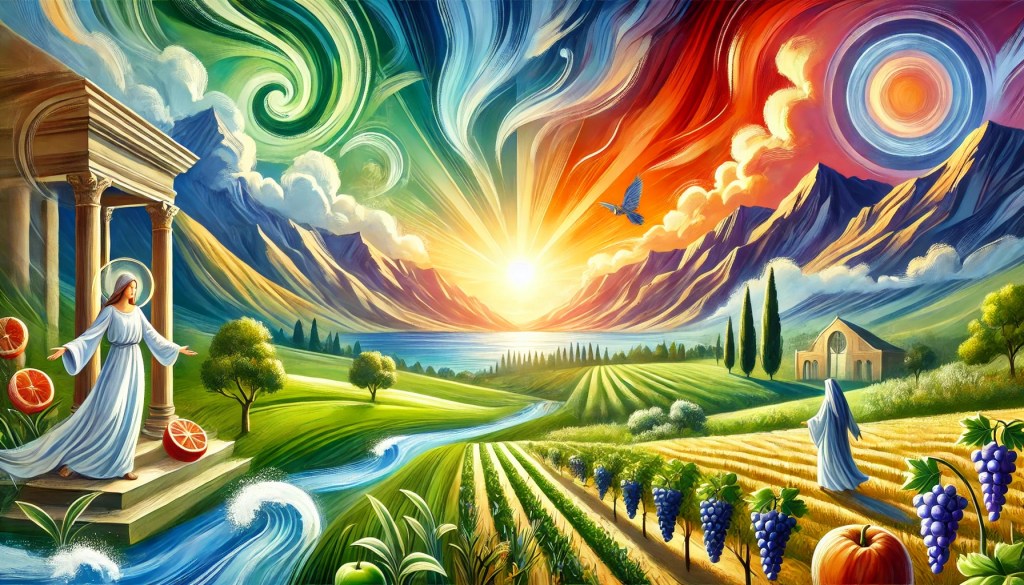
Embrace God’s Transformative Love
Today’s readings present a rich tapestry of themes centered around God’s promise of restoration, renewal, and transformation. From the prophetic vision in Amos, through the harmonious prayer in the Psalms, to the transformative teachings of Jesus in the Gospel of Matthew, these scriptures invite us to reflect deeply on the ways God seeks to renew and restore our lives and communities.
In Amos 9:11-15, we see a vision of hope and restoration, where God promises to rebuild and restore Israel after a period of destruction and exile. This theme of renewal continues in Psalm 85:9-13, which speaks of salvation, righteousness, and peace, presenting a hopeful vision of God’s blessings. Finally, Matthew 9:14-17 highlights the new covenant Jesus establishes, emphasizing the transformation He brings. Together, these passages call us to embrace God’s renewing power, trust in His steadfast love, and open our hearts to the transformative work of the Holy Spirit in our lives.
First Reading – Amos 9: 11-15
Divine Restoration
The Book of Amos, one of the twelve Minor Prophets in the Old Testament, is a compelling narrative that focuses on themes of justice, judgment, and restoration. Written during the 8th century BCE, Amos was a shepherd and fig tree farmer called by God to prophesy against the northern kingdom of Israel. His messages, filled with vivid imagery and potent language, condemned social injustices, complacency, and idolatry among the Israelites.
Amos 9:11-15 concludes the book with a vision of hope and restoration, contrasting sharply with the earlier chapters’ themes of judgment. This passage is often referred to as “The Restoration of David’s Kingdom,” highlighting God’s promise to rebuild and restore Israel after a period of destruction and exile.
Amos 9:11-15 – New Revised Standard Version Catholic Edition
The Restoration of David’s Kingdom
11 On that day I will raise up
the booth of David that is fallen,
and repair its breaches,
and raise up its ruins,
and rebuild it as in the days of old;
12 in order that they may possess the remnant of Edom
and all the nations who are called by my name,
says the Lord who does this.13 The time is surely coming, says the Lord,
when the one who plows shall overtake the one who reaps,
and the treader of grapes the one who sows the seed;
the mountains shall drip sweet wine,
and all the hills shall flow with it.
14 I will restore the fortunes of my people Israel,
and they shall rebuild the ruined cities and inhabit them;
they shall plant vineyards and drink their wine,
and they shall make gardens and eat their fruit.
15 I will plant them upon their land,
and they shall never again be plucked up
out of the land that I have given them,
says the Lord your God.
Exegesis of Amos 9: 11-15
11“On that day I will raise up the booth of David that is fallen, and repair its breaches, and raise up its ruins, and rebuild it as in the days of old;”
This verse speaks of the restoration of the Davidic dynasty, which had experienced significant decline. The “booth of David” symbolizes the house of David, indicating a humble and fallen state. The promise to “raise up” and “repair” signifies God’s intention to restore the kingdom to its former glory. This theme resonates with the Catholic teaching on God’s covenantal faithfulness (Catechism of the Catholic Church, 56-64).
12 “in order that they may possess the remnant of Edom and all the nations who are called by my name, says the Lord who does this.”
Here, the prophecy extends beyond Israel to include the “remnant of Edom” and “all the nations.” This universal vision aligns with the Catholic understanding of the Church as a global entity (CCC, 751-752). The inclusion of the nations indicates the breaking down of barriers and the extension of God’s salvific plan to all people, a theme echoed in the writings of Church Fathers like St. Augustine, who viewed the Church as a universal community (City of God, Book 22).
13 “The time is surely coming, says the Lord, when the one who plows shall overtake the one who reaps, and the treader of grapes the one who sows the seed; the mountains shall drip sweet wine, and all the hills shall flow with it.”
This verse presents an idyllic vision of prosperity and abundance, where the cycles of sowing and reaping are so continuous that they overlap. The imagery of mountains dripping with sweet wine and hills flowing with it symbolizes an era of unprecedented fertility and blessing. Such imagery reflects the eschatological hope found in Catholic eschatology, where the fulfillment of God’s kingdom brings about perfect harmony and abundance (CCC, 1042-1050).
14 “I will restore the fortunes of my people Israel, and they shall rebuild the ruined cities and inhabit them; they shall plant vineyards and drink their wine, and they shall make gardens and eat their fruit.”
God’s promise to “restore the fortunes” and rebuild the “ruined cities” highlights themes of renewal and regeneration. This restoration is both physical and spiritual, indicating a return to covenantal faithfulness and divine blessing. The rebuilding of cities and cultivation of vineyards can be seen as metaphors for spiritual renewal and growth, a concept deeply rooted in Ignatian spirituality which emphasizes ongoing conversion and growth in God’s grace (The Spiritual Exercises of St. Ignatius, Annotation 1).
15 “I will plant them upon their land, and they shall never again be plucked up out of the land that I have given them, says the Lord your God.”
This final verse underscores the permanence of God’s promise. The imagery of planting signifies stability and enduring presence in the land given by God. This notion of divine fidelity and the permanence of God’s covenant is central to Catholic theology and is beautifully encapsulated in the teachings of Doctors of the Church like St. Thomas Aquinas, who speaks of God’s unchanging and eternal nature (Summa Theologica, I, q. 9, a. 1).
Reflection
The passage from Amos 9:11-15 offers a powerful message of hope and restoration. In a world often marked by division, injustice, and despair, the promise of renewal and divine fidelity is a beacon of hope. This text invites us to reflect on God’s unwavering commitment to His people and His ability to bring about profound transformation even from the ruins of our lives.
The imagery of rebuilding and restoration challenges us to look beyond our current struggles and trust in God’s plan for renewal. It encourages us to participate actively in God’s work of restoration by living out our faith through acts of justice, compassion, and service. The vision of a world overflowing with abundance and harmony calls us to foster communities that reflect these divine attributes.
This passage also reminds us of the inclusivity of God’s love and salvation. The extension of the promise to “all the nations who are called by my name” highlights the universality of God’s grace and the breaking down of barriers that divide us. It calls us to embrace a spirit of inclusivity and to recognize the dignity and worth of every person as part of God’s redemptive plan.
In our journey of faith, let us be inspired by the promise of restoration in Amos 9:11-15. May it fuel our hope, strengthen our resolve, and guide our actions as we strive to live out the values of the kingdom of God in our daily lives.
Responsorial Psalm – Psalm 85: 9-13
Harmony and Hope
Psalm 85 is a prayer for restoration and blessing, reflecting the Israelites’ longing for God’s favor and the return of prosperity to their land. Traditionally attributed to the sons of Korah, this psalm is set against a backdrop of exile and suffering, making it a profound plea for divine intervention and renewal.
The verses 9-13 focus on the themes of salvation, righteousness, and peace, presenting a hopeful vision of God’s future blessings. This passage resonates deeply with the desire for spiritual and societal renewal, encouraging believers to trust in God’s steadfast love and faithfulness.
Psalm 85:9-13 – New Revised Standard Version Catholic Edition
9 Surely his salvation is at hand for those who fear him,
that his glory may dwell in our land.10 Steadfast love and faithfulness will meet;
righteousness and peace will kiss each other.
11 Faithfulness will spring up from the ground,
and righteousness will look down from the sky.
12 The Lord will give what is good,
and our land will yield its increase.
13 Righteousness will go before him,
and will make a path for his steps.
Exegesis of Psalm 85: 9-13
9 “Surely his salvation is at hand for those who fear him, that his glory may dwell in our land.”
This verse underscores the nearness of God’s salvation for those who revere Him. The concept of fearing God is not about terror but about a profound respect and awe for His majesty and holiness. According to the Catechism of the Catholic Church (CCC), the fear of the Lord is a gift of the Holy Spirit that perfects our hearts to reverence God and to avoid sin (CCC, 1831). The promise that “his glory may dwell in our land” reflects the hope that God’s presence will be visibly manifest among His people, bringing about spiritual and material prosperity.
10: “Steadfast love and faithfulness will meet; righteousness and peace will kiss each other.”
This poetic imagery illustrates the harmonious relationship between God’s attributes. “Steadfast love” (Hebrew: hesed) and “faithfulness” (emet) are central themes in the Hebrew Bible, often describing God’s unwavering commitment to His covenant people. The meeting of love and faithfulness signifies a complete and perfect union of God’s promises and His actions. Similarly, “righteousness” (tsedeq) and “peace” (shalom) embracing each other highlight the holistic well-being that comes from living in accordance with God’s will. St. Augustine, in his Expositions on the Psalms, reflects on this verse, emphasizing that true peace is found in the harmony of righteousness (Exposition on Psalm 85).
11 “Faithfulness will spring up from the ground, and righteousness will look down from the sky.”
Here, the psalmist envisions a world where faithfulness and righteousness are abundant and all-encompassing. The imagery of faithfulness springing up from the ground suggests a new creation, a rebirth of moral integrity and loyalty to God. Righteousness looking down from the sky implies divine approval and blessings showering down upon the earth. This verse echoes the themes of renewal and transformation found in Ignatian spirituality, which emphasizes continual growth in virtue and alignment with God’s will (The Spiritual Exercises of St. Ignatius, Annotation 1).
12 “The Lord will give what is good, and our land will yield its increase.”
This promise of divine provision and agricultural abundance symbolizes God’s blessings in response to the faithfulness of His people. The land yielding its increase reflects the fulfillment of God’s covenant promises, reminiscent of the blessings described in Deuteronomy 28:1-14. This verse encourages believers to trust in God’s goodness and provision, aligning with the Church’s teaching on divine providence (CCC, 302).
13 “Righteousness will go before him, and will make a path for his steps.”
Righteousness leading the way signifies that God’s actions are always just and upright. This verse can be seen as a call for believers to prepare a way for the Lord by living righteously, creating a path for His presence to enter and transform their lives. This aligns with the teachings of the Church Fathers, such as St. John Chrysostom, who emphasized that righteousness and virtuous living pave the way for God’s blessings (Homilies on the Psalms).
Reflection
Psalm 85:9-13 presents a powerful vision of renewal and divine blessing, encouraging believers to live in reverence and faithfulness to God. In a world often marked by division and injustice, this passage offers a hopeful reminder of the harmony and prosperity that come from living in accordance with God’s will.
The poetic imagery of steadfast love meeting faithfulness and righteousness kissing peace invites us to reflect on the interconnectedness of these virtues in our own lives. It challenges us to strive for a life that embodies these attributes, fostering communities where love, faithfulness, righteousness, and peace are not just ideals but lived realities.
Moreover, the promise that “the Lord will give what is good” encourages us to trust in God’s provision and goodness, even amid uncertainty and struggle. It calls us to cultivate a spirit of gratitude and dependence on God, recognizing that true abundance comes from His hand.
In our journey of faith, Psalm 85:9-13 serves as a guiding light, reminding us of the transformative power of God’s presence and the blessings that flow from living in alignment with His will. Let this passage inspire us to seek righteousness, cultivate peace, and trust in the steadfast love and faithfulness of our God.
Holy Gospel – Matthew 9: 14-17
Embracing the New
The Gospel of Matthew, written for a predominantly Jewish-Christian audience, emphasizes Jesus as the fulfillment of Old Testament prophecies and the new Moses who brings the law to its fulfillment. In Matthew 9:14-17, Jesus addresses the question of fasting raised by the disciples of John the Baptist, highlighting a deeper understanding of religious practices and the new covenant He is establishing.
This passage is situated within a series of teachings and miracles that demonstrate Jesus’ authority and the inauguration of the Kingdom of God. The context is essential to understand Jesus’ response and the metaphors He uses to explain the transformation He brings.
Exegesis of Matthew 9: 14-17
14 “Then the disciples of John came to him, saying, ‘Why do we and the Pharisees fast often, but your disciples do not fast?’”
This question reveals a tension between the old and new practices of religious observance. Fasting was a common practice among Jews, especially the Pharisees and the followers of John the Baptist, as a sign of penance and preparation for the coming of the Messiah. The question reflects a misunderstanding of the nature of Jesus’ ministry and the significance of His presence.
15 “And Jesus said to them, ‘The wedding guests cannot mourn as long as the bridegroom is with them, can they? The days will come when the bridegroom is taken away from them, and then they will fast.’”
Jesus uses the metaphor of a wedding feast to explain why His disciples do not fast. In Jewish tradition, a wedding is a time of joy and celebration, not mourning. By referring to Himself as the bridegroom, Jesus indicates that His presence is a cause for joy. The Catechism of the Catholic Church (CCC, 1612) explains that the imagery of the bridegroom is a profound symbol of Jesus’ relationship with His Church. The time of fasting will come when Jesus, the bridegroom, is taken away, alluding to His crucifixion and ascension.
16 “No one sews a piece of unshrunk cloth on an old cloak, for the patch pulls away from the cloak, and a worse tear is made.”
This analogy highlights the incompatibility of the new and the old. The new cloth represents the new covenant and the transformative teachings of Jesus, which cannot simply be added to the old ways of the Pharisaic tradition. The Church Fathers, such as St. John Chrysostom, interpret this to mean that the new teachings of Christ require a new mindset and a fresh approach to spirituality, not merely an adjustment to the old (Homilies on Matthew, Homily 31).
17 “Neither is new wine put into old wineskins; otherwise, the skins burst, and the wine is spilled, and the skins are destroyed; but new wine is put into fresh wineskins, and so both are preserved.”
The metaphor of new wine and old wineskins further emphasizes the need for a new structure to contain the new teachings and spirit of Jesus’ ministry. In Church history, this has been interpreted as the establishment of the new covenant, which required a transformation of the heart and mind, as seen in the teachings of St. Thomas Aquinas (Summa Theologica, I-II, Q. 106, Art. 1). The Ignatian Bible study approach also encourages reflecting on how one’s life can be a new wineskin, open to the transformative power of Christ (The Spiritual Exercises of St. Ignatius, Annotation 18).
Reflection
This passage challenges us to reflect on the transformation that Jesus brings into our lives. It invites us to examine our spiritual practices and to be open to the newness of life that Christ offers. The metaphors of the wedding feast, new cloth, and new wine call us to celebrate the presence of Jesus, embrace the new covenant, and allow His teachings to renew and transform us completely.
The emphasis on joy and renewal is particularly relevant today. In a world that often clings to the past and resists change, Jesus’ message is a call to embrace the new life He offers. It reminds us that our faith should not be static but dynamic, continually growing and adapting to the guidance of the Holy Spirit.
Incorporating this passage into our daily lives means being willing to let go of old habits and mindsets that hinder our spiritual growth. It means being open to the new ways God is working in our lives and the world. As the Catechism teaches, “The Christian life is not limited to the imitation of Christ; it seeks to be united with Christ” (CCC, 1694). This union with Christ is the new wine that must be poured into fresh wineskins—our renewed hearts and minds.
Faith in Action: Embrace God’s Transformative Love
As we reflect on today’s readings, we see a beautiful narrative of God’s promise to restore, renew, and transform our lives. In Amos 9:11-15, we witness God’s commitment to rebuilding what has been broken, offering a vision of hope and restoration. Psalm 85:9-13 continues this theme, highlighting the harmonious relationship between God’s steadfast love, faithfulness, righteousness, and peace. Finally, in Matthew 9:14-17, Jesus calls us to embrace the new covenant and the transformative power of His teachings.
Together, these passages invite us to deepen our faith and trust in God’s unwavering love. Let us open our hearts to His renewal, allowing His grace to transform our lives. As we strive to live out these divine values, let us support one another in our faith journey and commit to doing everything with love, as our Lord Jesus did. Engage with your community, participate in acts of service, and let the Holy Spirit guide you towards a life of righteousness and peace.
Reflect on how you can embrace God’s renewing power in your life. Participate in your community, seek spiritual growth, and encourage others to join you on this journey. Let’s walk together in faith, always striving to live with the love and compassion of Christ.
Engage with Us!
- How do you incorporate the themes of restoration and hope into your daily life?
- How do you strive to live out the virtues of love, faithfulness, righteousness, and peace in your daily life?
- How do you strive to embrace the newness of life that Jesus offers?
Share your thoughts in the comments below, and let’s inspire each other to live with faith and purpose.
Follow Us! Stay connected for more inspiring stories and reflections. Follow us on Instagram and Facebook for daily updates and community discussions.
References:
- The Holy Bible, New Revised Standard Version Catholic Edition.
- Catechism of the Catholic Church.
- St. Thomas Aquinas, “Summa Theologica.”
- St. Ignatius of Loyola, “The Spiritual Exercises.”
- St. Augustine, “City of God.”
- St. Augustine, “Expositions on the Psalms.”
- St. John Chrysostom, “Homilies on the Psalms.”
- St. John Chrysostom, “Homilies on Matthew.”

 Holy Manna!
Leave a comment