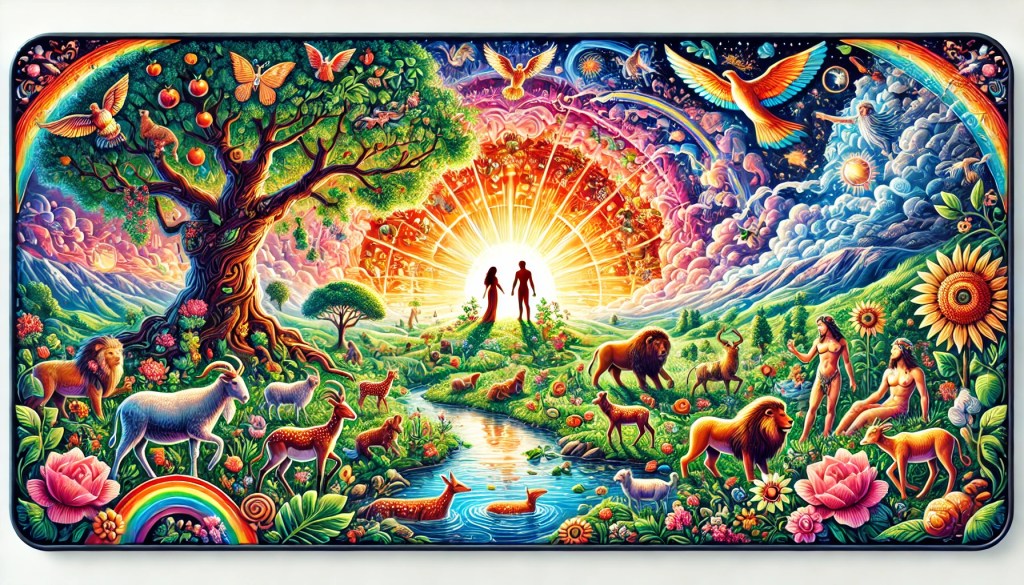
The Book of Genesis, the first book of the Bible, is a cornerstone of Judeo-Christian belief. It introduces us to the narrative of creation, detailing how God brought the universe and all its inhabitants into existence. Genesis 1, in particular, sets the stage for understanding God’s omnipotence, the inherent goodness of creation, and humanity’s unique role within it. As we delve into this chapter, we’ll explore its literary style, the author’s original intent, and how it should be read to uncover its profound theological truths.
Context and Literary Style
Genesis 1 is part of the Primeval History (chapters 1-11), which includes stories that explain the origins of the world and humanity. This section of Genesis employs a mix of mythopoetic language and structured narrative, characterized by repetitive patterns and a rhythmic cadence that suggest it was intended for oral transmission. The chapter is a grand, poetic exposition of creation, emphasizing order and purpose.
The Catechism of the Catholic Church (CCC) affirms that “the inspired books teach the truth. Since therefore all that the inspired authors or sacred writers affirm should be regarded as affirmed by the Holy Spirit, we must acknowledge that the books of Scripture firmly, faithfully, and without error teach that truth which God, for the sake of our salvation, wished to see confided to the Sacred Scriptures” (CCC, 107). This perspective underscores the theological and moral truths conveyed through the Genesis creation narrative.
Genesis 1 – New Revised Standard Version Catholic Edition
Six Days of Creation and the Sabbath
1 In the beginning when God created the heavens and the earth, 2 the earth was a formless void and darkness covered the face of the deep, while a wind from God swept over the face of the waters. 3 Then God said, “Let there be light”; and there was light. 4 And God saw that the light was good; and God separated the light from the darkness. 5 God called the light Day, and the darkness he called Night. And there was evening and there was morning, the first day.
6 And God said, “Let there be a dome in the midst of the waters, and let it separate the waters from the waters.” 7 So God made the dome and separated the waters that were under the dome from the waters that were above the dome. And it was so. 8 God called the dome Sky. And there was evening and there was morning, the second day.
9 And God said, “Let the waters under the sky be gathered together into one place, and let the dry land appear.” And it was so. 10 God called the dry land Earth, and the waters that were gathered together he called Seas. And God saw that it was good. 11 Then God said, “Let the earth put forth vegetation: plants yielding seed, and fruit trees of every kind on earth that bear fruit with the seed in it.” And it was so. 12 The earth brought forth vegetation: plants yielding seed of every kind, and trees of every kind bearing fruit with the seed in it. And God saw that it was good. 13 And there was evening and there was morning, the third day.
14 And God said, “Let there be lights in the dome of the sky to separate the day from the night; and let them be for signs and for seasons and for days and years, 15 and let them be lights in the dome of the sky to give light upon the earth.” And it was so. 16 God made the two great lights—the greater light to rule the day and the lesser light to rule the night—and the stars. 17 God set them in the dome of the sky to give light upon the earth, 18 to rule over the day and over the night, and to separate the light from the darkness. And God saw that it was good. 19 And there was evening and there was morning, the fourth day.
20 And God said, “Let the waters bring forth swarms of living creatures, and let birds fly above the earth across the dome of the sky.” 21 So God created the great sea monsters and every living creature that moves, of every kind, with which the waters swarm, and every winged bird of every kind. And God saw that it was good. 22 God blessed them, saying, “Be fruitful and multiply and fill the waters in the seas, and let birds multiply on the earth.” 23 And there was evening and there was morning, the fifth day.
24 And God said, “Let the earth bring forth living creatures of every kind: cattle and creeping things and wild animals of the earth of every kind.” And it was so. 25 God made the wild animals of the earth of every kind, and the cattle of every kind, and everything that creeps upon the ground of every kind. And God saw that it was good.
26 Then God said, “Let us make humankind[c] in our image, according to our likeness; and let them have dominion over the fish of the sea, and over the birds of the air, and over the cattle, and over all the wild animals of the earth, and over every creeping thing that creeps upon the earth.”
27 So God created humankind in his image,
in the image of God he created them;
male and female he created them.28 God blessed them, and God said to them, “Be fruitful and multiply, and fill the earth and subdue it; and have dominion over the fish of the sea and over the birds of the air and over every living thing that moves upon the earth.” 29 God said, “See, I have given you every plant yielding seed that is upon the face of all the earth, and every tree with seed in its fruit; you shall have them for food. 30 And to every beast of the earth, and to every bird of the air, and to everything that creeps on the earth, everything that has the breath of life, I have given every green plant for food.” And it was so. 31 God saw everything that he had made, and indeed, it was very good. And there was evening and there was morning, the sixth day.
Exegesis of Genesis 1
Verses 1-2: “In the beginning when God created the heavens and the earth, the earth was a formless void and darkness covered the face of the deep, while a wind from God swept over the face of the waters.”
These opening verses introduce the concept of “creation ex nihilo” (creation out of nothing), a fundamental belief in Christianity. The “formless void” and “darkness” symbolize chaos, which God transforms into order through His creative word. The “wind from God” (or Spirit of God) indicates the active presence of the Holy Spirit in creation, a theme echoed throughout Church teachings.
Verses 3-5: “Then God said, ‘Let there be light’; and there was light. And God saw that the light was good; and God separated the light from the darkness. God called the light Day, and the darkness he called Night. And there was evening and there was morning, the first day.”
God’s first creative act is the creation of light, symbolizing knowledge, goodness, and divine presence. The separation of light from darkness establishes order and the cycle of time, foundational elements of creation. St. Augustine, in The Confessions, reflects on the spiritual significance of light as a metaphor for God’s truth and the illumination of the human soul (Confessions, Book 13, Chapter 10).
Verses 6-8: “And God said, ‘Let there be a dome in the midst of the waters, and let it separate the waters from the waters.’ So God made the dome and separated the waters that were under the dome from the waters that were above the dome. And it was so. God called the dome Sky. And there was evening and there was morning, the second day.”
The creation of the sky introduces the concept of space and separation in the cosmos. This act of separating the waters and creating a habitable environment reflects God’s sovereignty and intentionality in creation.
Verses 9-13: “And God said, ‘Let the waters under the sky be gathered together into one place, and let the dry land appear.’ And it was so. God called the dry land Earth, and the waters that were gathered together he called Seas. And God saw that it was good. Then God said, ‘Let the earth put forth vegetation: plants yielding seed, and fruit trees of every kind on earth that bear fruit with the seed in it.’ And it was so. The earth brought forth vegetation: plants yielding seed of every kind, and trees of every kind bearing fruit with the seed in it. And God saw that it was good. And there was evening and there was morning, the third day.”
God’s command brings forth the physical landscape and vegetation, essential for sustaining life. The repeated affirmation that “God saw that it was good” emphasizes the inherent goodness of creation, a reflection of God’s own nature.
Verses 14-19: “And God said, ‘Let there be lights in the dome of the sky to separate the day from the night; and let them be for signs and for seasons and for days and years, and let them be lights in the dome of the sky to give light upon the earth.’ And it was so. God made the two great lights—the greater light to rule the day and the lesser light to rule the night—and the stars. God set them in the dome of the sky to give light upon the earth, to rule over the day and over the night, and to separate the light from the darkness. And God saw that it was good. And there was evening and there was morning, the fourth day.”
The creation of celestial bodies introduces the orderly passage of time and the rhythms of life. This act signifies God’s control over time and seasons, reinforcing His role as the ultimate architect of the universe.
Verses 20-23: “And God said, ‘Let the waters bring forth swarms of living creatures, and let birds fly above the earth across the dome of the sky.’ So God created the great sea monsters and every living creature that moves, of every kind, with which the waters swarm, and every winged bird of every kind. And God saw that it was good. God blessed them, saying, ‘Be fruitful and multiply and fill the waters in the seas, and let birds multiply on the earth.’ And there was evening and there was morning, the fifth day.”
The creation of aquatic life and birds demonstrates the diversity and abundance of God’s creation. The blessing to “be fruitful and multiply” reveals God’s desire for life to flourish.
Verses 24-25: “And God said, ‘Let the earth bring forth living creatures of every kind: cattle and creeping things and wild animals of the earth of every kind.’ And it was so. God made the wild animals of the earth of every kind, and the cattle of every kind, and everything that creeps upon the ground of every kind. And God saw that it was good.”
This passage highlights the creation of terrestrial animals, completing the biosphere necessary for human habitation.
Verses 26-31: “Then God said, ‘Let us make humankind in our image, according to our likeness; and let them have dominion over the fish of the sea, and over the birds of the air, and over the cattle, and over all the wild animals of the earth, and over every creeping thing that creeps upon the earth.’ So God created humankind in his image, in the image of God he created them; male and female he created them. God blessed them, and God said to them, ‘Be fruitful and multiply, and fill the earth and subdue it; and have dominion over the fish of the sea and over the birds of the air and over every living thing that moves upon the earth.’ God said, ‘See, I have given you every plant yielding seed that is upon the face of all the earth, and every tree with seed in its fruit; you shall have them for food. And to every beast of the earth, and to every bird of the air, and to everything that creeps on the earth, everything that has the breath of life, I have given every green plant for food.’ And it was so. God saw everything that he had made, and indeed, it was very good. And there was evening and there was morning, the sixth day.”
The creation of humankind is the climax of Genesis 1. Being made in the “image and likeness of God” signifies a unique relationship between humanity and the divine. This concept is pivotal in Catholic teaching, underscoring human dignity and the call to stewardship over creation (CCC, 356-357). St. John Paul II, in his encyclical Laborem Exercens, emphasizes the responsibility of humans to care for the world as co-creators with God.
Reflection
Genesis 1 invites us to marvel at the order, beauty, and purpose of God’s creation. It reminds us that everything created by God is inherently good and designed to reflect His glory. As we contemplate the majesty of the universe and our unique role within it, we are called to respond with gratitude, reverence, and a commitment to stewardship.
This passage also challenges us to live in a way that honors the image of God within us and others. It calls us to act justly, love mercy, and walk humbly with our Creator. Reflecting on Genesis 1 can inspire us to seek harmony with creation, foster relationships based on mutual respect and care, and engage in actions that promote the well-being of our planet and all its inhabitants.
As we go about our daily lives, let us remember the profound truth that we are part of a divinely ordered and purposeful creation. May this awareness guide our decisions, shape our interactions, and deepen our relationship with God, who saw all that He had made, and indeed, it was very good.
Engage with Us!
What part of Genesis 1 speaks most profoundly to you? How do you see the image of God reflected in your life and the world around you? How can we better care for creation and each other in light of this passage?
Share your thoughts in the comments below, and let’s inspire each other to live with purpose and gratitude.
Follow Us!
Stay connected for more inspiring stories and reflections. Follow us on Instagram and Facebook for daily updates and community discussions.
References:
- The Holy Bible, New Revised Standard Version Catholic Edition.
- Catechism of the Catholic Church.
- St. Augustine, “The Confessions.”
- St. John Paul II, “Laborem Exercens.”
- St. Ignatius of Loyola, “The Spiritual Exercises.”

 Holy Manna!
Leave a comment