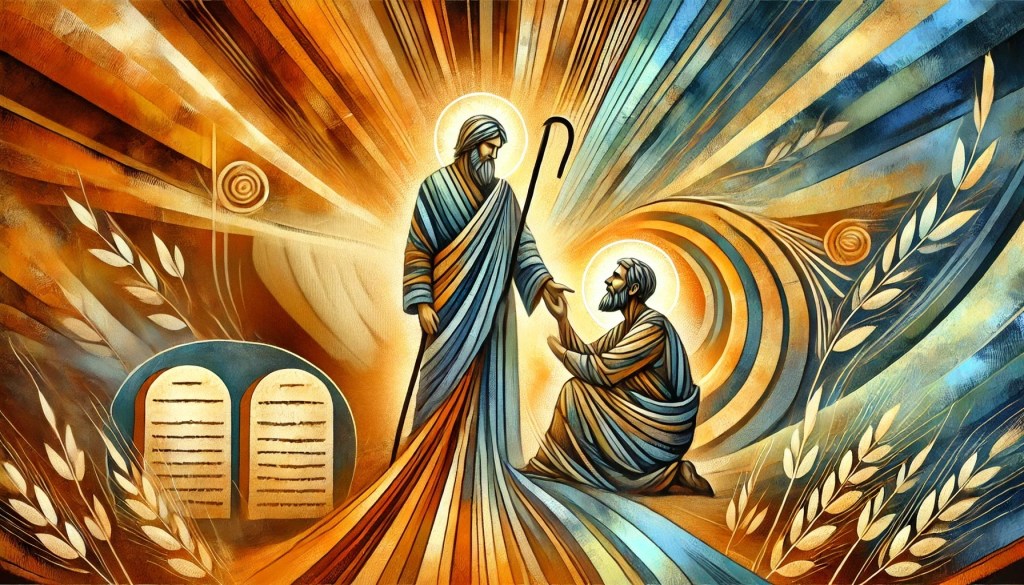
God’s Call to Justice, Wisdom, and Healing
Today’s readings invite us to explore the profound themes of justice, wisdom, and healing through the lens of faith. The First Reading from Amos 7:10-17 recounts the story of a humble shepherd turned prophet who boldly speaks out against social injustices and religious hypocrisy in Israel. The Responsorial Psalm, Psalm 19:8-11, celebrates the joy and enlightenment found in God’s commandments, emphasizing their value above all material wealth. Finally, the Gospel of Matthew 9:1-8 brings us a powerful narrative of healing and forgiveness, showcasing Jesus’ divine authority and compassionate ministry. Together, these readings challenge us to reflect on our own lives, urging us to embrace God’s call to live justly, seek wisdom, and trust in His healing power.
First Reading – Amos 7:10-17
Embracing Authenticity and Justice
In the First Reading, we dive into the profound message of a humble shepherd turned prophet. Amos, a shepherd and sycamore fig farmer from Judah, was called by God to prophesy against the northern kingdom of Israel during a time of great prosperity under King Jeroboam II. His prophecies are characterized by their strong denunciation of social injustices, religious hypocrisy, and moral decay. This passage details a confrontation between Amos and Amaziah, the priest of Bethel, illustrating the tension between true prophetic witness and institutional religion.
Amos 7:10-17 – New Revised Standard Version Catholic Edition
Amaziah Complains to the King
10 Then Amaziah, the priest of Bethel, sent to King Jeroboam of Israel, saying, “Amos has conspired against you in the very center of the house of Israel; the land is not able to bear all his words. 11 For thus Amos has said,
‘Jeroboam shall die by the sword,
and Israel must go into exile
away from his land.’”12 And Amaziah said to Amos, “O seer, go, flee away to the land of Judah, earn your bread there, and prophesy there; 13 but never again prophesy at Bethel, for it is the king’s sanctuary, and it is a temple of the kingdom.”
14 Then Amos answered Amaziah, “I am no prophet, nor a prophet’s son; but I am a herdsman, and a dresser of sycamore trees, 15 and the Lord took me from following the flock, and the Lord said to me, ‘Go, prophesy to my people Israel.’
16 “Now therefore hear the word of the Lord.
You say, ‘Do not prophesy against Israel,
and do not preach against the house of Isaac.’
17 Therefore thus says the Lord:
‘Your wife shall become a prostitute in the city,
and your sons and your daughters shall fall by the sword,
and your land shall be parceled out by line;
you yourself shall die in an unclean land,
and Israel shall surely go into exile away from its land.’”
Exegesis of Amos 7:10-17
10 Then Amaziah, the priest of Bethel, sent to King Jeroboam of Israel, saying, “Amos has conspired against you in the very center of the house of Israel; the land is not able to bear all his words. 11 For thus Amos has said, ‘Jeroboam shall die by the sword, and Israel must go into exile away from his land.’”
Amaziah, representing the religious establishment, accuses Amos of conspiracy against King Jeroboam. Amaziah’s report to the king highlights the perceived threat of Amos’s prophecies to the stability and security of Israel. The charge of conspiracy reflects the broader theme of prophetic opposition to corrupt leadership. According to the Catechism of the Catholic Church (CCC), prophets “bear witness to the one true God” and often face opposition from those in power (CCC 2584).
12 And Amaziah said to Amos, “O seer, go, flee away to the land of Judah, earn your bread there, and prophesy there; 13 but never again prophesy at Bethel, for it is the king’s sanctuary, and it is a temple of the kingdom.”
Amaziah’s command for Amos to leave Israel and prophesy in Judah underscores the rejection of God’s message by Israel’s religious leaders. By referring to Bethel as “the king’s sanctuary” and “a temple of the kingdom,” Amaziah reveals his allegiance to the king over God. This attitude reflects the broader conflict between true worship and idolatry, which Amos vehemently opposes.
14 Then Amos answered Amaziah, “I am[a] no prophet, nor a prophet’s son; but I am[b] a herdsman, and a dresser of sycamore trees, 15 and the Lord took me from following the flock, and the Lord said to me, ‘Go, prophesy to my people Israel.’
Amos’s response emphasizes his humble origins and divine calling. Unlike professional prophets, Amos was an ordinary herdsman and a dresser of sycamore trees. His calling by the Lord illustrates that God chooses unlikely individuals to deliver His messages. This echoes the theme of divine election found throughout Scripture, where God often selects the humble and lowly to accomplish His purposes (1 Samuel 16:7, Luke 1:52).
16 “Now therefore hear the word of the Lord. You say, ‘Do not prophesy against Israel, and do not preach against the house of Isaac.’ 17 Therefore thus says the Lord: ‘Your wife shall become a prostitute in the city, and your sons and your daughters shall fall by the sword, and your land shall be parceled out by line; you yourself shall die in an unclean land, and Israel shall surely go into exile away from its land.’”
Amos boldly delivers God’s judgment against Amaziah and Israel. The prophecy includes severe consequences: personal disgrace for Amaziah’s family, destruction for his children, loss of land, and his death in exile. The exile of Israel is a recurring theme in Amos, representing the ultimate punishment for their unfaithfulness and injustice. This passage highlights the seriousness of rejecting God’s prophets and the inevitability of divine judgment.
Theological Implications
- Prophetic Authority and Divine Calling: Amos’s calling as a prophet despite his humble background underscores that true prophetic authority comes from God, not human institutions. The Church Fathers, such as St. Jerome, recognized the authenticity of such divinely called prophets who speak God’s truth boldly.
- Social Justice and Righteousness: Amos’s prophecies are a stark reminder of God’s demand for justice and righteousness. The CCC states, “The Church’s social teaching is a rich treasure of wisdom about building a just society and living lives of holiness amidst the challenges of modern society” (CCC 2419). Amos’s message remains relevant in advocating for the poor and oppressed.
- Judgment and Exile: The prophecy of exile reflects the biblical theme of divine judgment for unfaithfulness. This historical context resonates with the later experiences of Israel and Judah, where exile became a reality due to their persistent disobedience. This serves as a warning and a call to repentance for all generations.
Conclusion
Amos 7:10-17 vividly portrays the conflict between true prophetic witness and institutional resistance. Amos’s unwavering proclamation of God’s message, despite opposition, serves as an enduring example of faithfulness and courage. This passage calls us to heed God’s call to justice and righteousness, recognizing the serious consequences of rejecting His word.
Reflecting on Amos 7:10-17, we are challenged to consider how we respond to God’s call in our own lives. Are we open to hearing difficult truths, even when they challenge our comfort and status quo? Amos’s courage and faithfulness inspire us to stand up for justice and righteousness, trusting in God’s guidance and authority. Let us pray for the grace to be attentive to God’s voice, to act justly, and to proclaim His truth with boldness and humility.
Reflection
In today’s world, standing up for what’s right can feel daunting, especially when it goes against the grain. Amos’s story encourages us to remain steadfast in our values, to advocate for justice, and to live authentically in our faith. His example teaches us that no matter our background, we can be called to make a difference. Let’s draw inspiration from his courage and commitment to truth, striving to create a just and righteous society.
Responsorial Psalm – Psalm 19: 8-11
Finding Joy and Wisdom in God’s Commandments
In Psalm 19:8-11, we encounter a profound celebration of God’s law. Psalm 19, attributed to King David, is a beautiful piece of Hebrew poetry that first praises God for His creation and then extols the perfection of His law. Our focus today is on the latter section, where David highlights the joy, enlightenment, and righteousness that flow from following God’s commandments. This passage invites us to meditate on the immense value of divine law in our lives.
Psalm 19:8-11 – New Revised Standard Version Catholic Edition
8 the precepts of the Lord are right,
rejoicing the heart;
the commandment of the Lord is clear,
enlightening the eyes;9 the fear of the Lord is pure,
enduring forever;
the ordinances of the Lord are true
and righteous altogether.10 More to be desired are they than gold,
even much fine gold;
sweeter also than honey,
and drippings of the honeycomb.11 Moreover by them is your servant warned;
in keeping them there is great reward.
Exegesis of Psalm 19:8-11
8 the precepts of the Lord are right, rejoicing the heart; the commandment of the Lord is clear, enlightening the eyes;
David begins by affirming that God’s precepts are “right” and “clear.” The term “right” signifies moral correctness and alignment with God’s will, bringing joy to the believer’s heart. The “clarity” of God’s commandments provides understanding and enlightenment, guiding us on the path of righteousness. St. Augustine, in his reflections, emphasizes that God’s law provides true wisdom, illuminating our lives (St. Augustine, Expositions on the Book of Psalms, Psalm 19).
9 the fear of the Lord is pure, enduring forever; the ordinances of the Lord are true and righteous altogether.
Here, “the fear of the Lord” refers to a reverential awe and respect for God, which is “pure” and everlasting. This fear is about recognizing God’s majesty and holiness. The “ordinances” or judgments of the Lord are described as “true and righteous altogether,” highlighting their reliability and justice. The Catechism of the Catholic Church (CCC) explains that the moral law is God’s instruction for humanity, guiding us toward a life of holiness and justice (CCC 1950).
10 More to be desired are they than gold, even much fine gold; sweeter also than honey, and drippings of the honeycomb.
David uses two powerful metaphors to describe the value of God’s laws: they are more desirable than gold and sweeter than honey. Gold, symbolizing the highest form of wealth, and honey, representing the sweetest natural substance, are both surpassed in value by God’s commandments. St. Thomas Aquinas, in his Summa Theologica, notes that divine wisdom and law surpass all earthly goods and pleasures because they lead to eternal happiness (Summa Theologica, I-II, Q. 100, Art. 2).
11 Moreover by them is your servant warned; in keeping them there is great reward.
God’s laws serve as warnings, guiding us away from sin and toward righteousness. The psalmist also highlights the “great reward” in keeping God’s commandments, which is not merely material but spiritual, leading to a deeper relationship with God and eternal life. The CCC states, “The moral law finds its fullness and its unity in Christ. Jesus Christ is in person the way of perfection. He is the end of the law, for only he teaches and bestows the justice of God” (CCC 1953).
Theological Insights and Practical Relevance
David’s celebration of God’s commandments underscores their guidance and joy. They are not just rules but pathways to true happiness and fulfillment. The enduring nature of God’s law reflects its divine origin and eternal relevance, aligning with the Church’s understanding of moral teachings as timeless truths leading to human flourishing.
By comparing God’s laws to gold and honey, David emphasizes the superior value of spiritual wisdom over material wealth, a perspective that resonates deeply with teachings of the Church Fathers who prioritized spiritual growth and divine wisdom over earthly gains.
Reflection
Reflecting on Psalm 19:8-11, we are invited to reassess our values and priorities. Do we seek God’s wisdom as fervently as we pursue earthly success? Are we allowing His commandments to enlighten our eyes and guide our hearts? This passage challenges us to deepen our reverence for God’s law and to find joy in living according to His righteous precepts. Let us pray for the grace to desire God’s commandments more than gold and to experience their sweetness in our daily lives, ultimately leading us closer to Him.
In our fast-paced, success-driven world, David’s words remind us of what truly matters. By embracing and living out these divine truths, we align ourselves with God’s will and receive the spiritual rewards promised to His faithful servants. This call to prioritize spiritual wisdom over material wealth is especially resonant today, encouraging us to seek deeper meaning and fulfillment in our relationship with God.
Holy Gospel – Matthew 9:1-8
Healing and Forgiveness
Today’s Gospel from Matthew 9:1-8 brings us a powerful story of healing and forgiveness that challenges us to reflect on the depth of our faith and trust in Jesus. The Gospel of Matthew, traditionally attributed to the Apostle Matthew, is the first book of the New Testament, bridging the Old and New Testaments and highlighting how Jesus fulfills Old Testament prophecies about the Messiah. This passage, where Jesus heals a paralyzed man, underscores His divine authority to forgive sins and perform miracles.
Matthew 9:1-8 – New Revised Standard Version Catholic Edition
9 1 And after getting into a boat he crossed the sea and came to his own town.
Jesus Heals a Paralytic
2 And just then some people were carrying a paralyzed man lying on a bed. When Jesus saw their faith, he said to the paralytic, “Take heart, son; your sins are forgiven.” 3 Then some of the scribes said to themselves, “This man is blaspheming.” 4 But Jesus, perceiving their thoughts, said, “Why do you think evil in your hearts? 5 For which is easier, to say, ‘Your sins are forgiven,’ or to say, ‘Stand up and walk’? 6 But so that you may know that the Son of Man has authority on earth to forgive sins”—he then said to the paralytic—“Stand up, take your bed and go to your home.” 7 And he stood up and went to his home. 8 When the crowds saw it, they were filled with awe, and they glorified God, who had given such authority to human beings.
Exagesis on Matthew 9:1-8
1 And after getting into a boat he crossed the sea and came to his own town.
Jesus returns to Capernaum, His ministry’s central hub, often symbolizing a new phase of teaching and healing.
2 And just then some people were carrying a paralyzed man lying on a bed. When Jesus saw their faith, he said to the paralytic, “Take heart, son; your sins are forgiven.”
The friends of the paralyzed man demonstrate great faith by bringing him to Jesus, confident in His ability to heal. Jesus’ response, “Take heart, son; your sins are forgiven,” shows His primary concern for spiritual healing, revealing that sin and its forgiveness are central to His mission. The Catechism of the Catholic Church (CCC) reminds us that “only God forgives sins” (CCC 1441), and here Jesus asserts His divine authority to do so.
3 Then some of the scribes said to themselves, “This man is blaspheming.”
The scribes, experts in Jewish law, internally accuse Jesus of blasphemy, believing only God can forgive sins. This reflects their misunderstanding of Jesus’ divine nature and mission.
4 But Jesus, perceiving their thoughts, said, “Why do you think evil in your hearts?*
Jesus challenges the scribes’ skepticism by addressing their internal thoughts, demonstrating His omniscience, a characteristic attributed to God alone. This highlights the moral state of the scribes’ hearts, contrasting their lack of faith with the faith of the paralytic’s friends.
5 For which is easier, to say, ‘Your sins are forgiven,’ or to say, ‘Stand up and walk’?*
Jesus poses a rhetorical question to the scribes. On the surface, saying “Your sins are forgiven” might seem easier because it lacks immediate visible evidence. However, Jesus emphasizes that both statements are equally profound and authoritative, requiring divine power.
6 But so that you may know that the Son of Man has authority on earth to forgive sins”—he then said to the paralytic—“Stand up, take your bed and go to your home.”
To prove His authority to forgive sins, Jesus heals the paralytic physically, commanding him to “Stand up, take your bed and go to your home.” This public miracle serves as a tangible sign of His divine authority.
7 And he stood up and went to his home.
The immediate healing of the paralytic validates Jesus’ authority and the faith of those who brought him. This act restores the man’s physical health and signifies his spiritual renewal.
8 When the crowds saw it, they were filled with awe, and they glorified God, who had given such authority to human beings.
The crowd’s reaction of awe and glorification of God reflects the recognition of divine intervention, highlighting the broader impact of Jesus’ miracles.
Theological Implications
- Authority of Jesus: This passage underscores Jesus’ authority to forgive sins and perform miracles, affirming His divinity. Church Fathers like St. Augustine emphasized the significance of Jesus’ divine authority as a foundation for Christian faith and practice.
- Faith and Healing: The faith of the paralytic’s friends plays a crucial role, demonstrating the power of intercessory faith. The CCC teaches that “faith is necessary for salvation” (CCC 161), illustrating how faith can lead to spiritual and physical healing.
- Forgiveness of Sins: The theme of forgiveness aligns with the Church’s sacramental understanding of reconciliation. The CCC states, “Through the sacrament of Reconciliation, the faithful receive pardon through God’s mercy for the offense committed against him” (CCC 1422). Jesus’ act of forgiving sins here prefigures this sacrament.
- Miracles as Signs: Jesus’ healing miracles are signs of His divine identity and mission, revealing God’s compassion and power, inviting a response of faith and discipleship.
Reflection
Reflecting on this Gospel passage, we are invited to consider the depth of our own faith. Do we approach Jesus with the same confidence as the friends of the paralytic, trusting in His power to heal and forgive? This story challenges us to recognize Jesus’ authority in our lives and to seek His forgiveness and healing. Let us pray for the grace to deepen our faith, trust in Jesus’ compassionate authority, and bring others to Him for healing and renewal. By doing so, we join the crowds in glorifying God for the wondrous works He continues to perform in our lives today.
In a world where we often seek quick fixes and visible results, this passage reminds us of the profound and often unseen power of spiritual healing. Jesus invites us to trust in His ability to transform our lives from the inside out, offering us not only physical restoration but also deep spiritual renewal. Let’s embrace this call to faith, recognizing that true healing and forgiveness come from the One who knows us completely and loves us unconditionally.
Faith in Action: A Call to Justice, Wisdom, and Healing
As we reflect on today’s readings, we see a powerful call to embrace God’s justice, wisdom, and healing in our lives. The First Reading from Amos reminds us of the courage required to speak out against injustice and hypocrisy, even when it is uncomfortable. Psalm 19 celebrates the joy and enlightenment that come from following God’s commandments, encouraging us to prioritize spiritual wisdom over material wealth. In the Gospel of Matthew, Jesus’ healing of the paralytic illustrates His divine authority to forgive sins and restore us both physically and spiritually. These readings collectively challenge us to deepen our faith, trust in God’s guidance, and strive to live according to His will. Let us take these lessons to heart, seeking to grow closer to God and reflect His love and righteousness in all we do.
Please share your thoughts and reflections in the comments below. Here are a few questions to consider:
- In what ways can you, like Amos, stand up for justice and speak truth in your community?
- How can you make God’s commandments a more central part of your daily life, finding joy and wisdom in them?
- What steps can you take to deepen your faith and trust in Jesus’ authority to heal and forgive?
Let us support each other in our faith journey, always striving to do everything with love, as our Lord Jesus did.

 Holy Manna!
Leave a comment