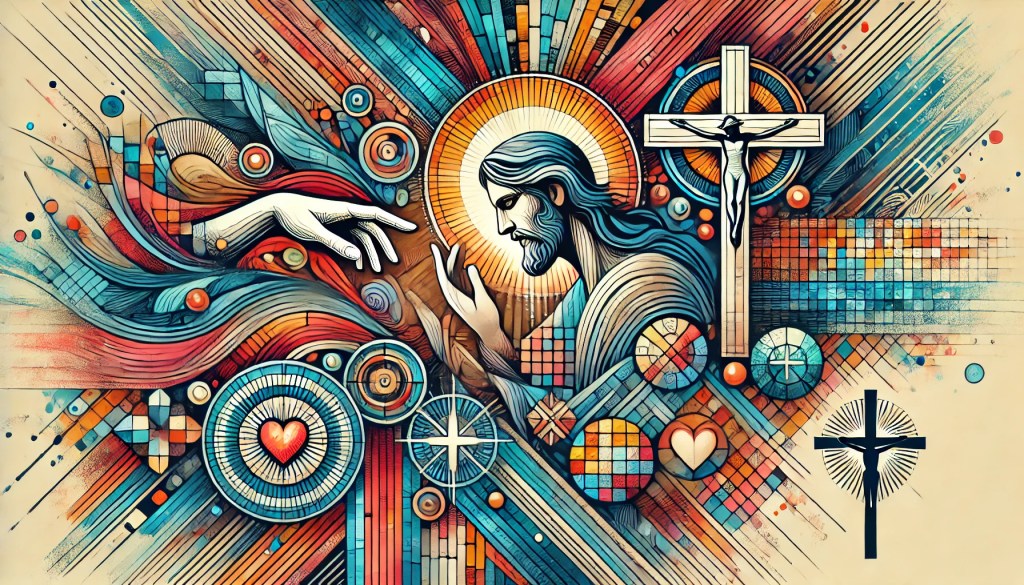
Embracing Faith Beyond Doubt
Today, as we celebrate the Feast of Saint Thomas the Apostle, we delve into the powerful messages from the readings that intertwine to offer us profound insights into faith, identity, and universal praise. The first reading from Ephesians 2:19-22 speaks of our unity in Christ, being built together into a holy temple. The Responsorial Psalm, Psalm 117, calls all nations to praise the Lord, highlighting God’s steadfast love and faithfulness. Finally, the Gospel of John 20:24-29 recounts the transformative journey of Thomas from doubt to a bold proclamation of faith. Together, these readings invite us to deepen our faith, embrace our identity in Christ, and join the universal call to worship.
First Reading – Ephesians 2: 19-22
Built on the Cornerstone: Embracing Our Identity in Christ
In the First Reading, we dive into a powerful passage from the Letter to the Ephesians, traditionally attributed to St. Paul. This letter was written to address both Jewish and Gentile Christians, emphasizing unity within the Church as the Body of Christ. Composed during Paul’s imprisonment, it reflects his deep theological insights and pastoral care for the early Christian communities. In Ephesians 2:19-22, Paul speaks about reconciliation through Christ, highlighting our transition from alienation to unity within God’s family.
Ephesians 2:19-22 – New Revised Standard Version Catholic Edition
19 So then you are no longer strangers and aliens, but you are citizens with the saints and also members of the household of God, 20 built upon the foundation of the apostles and prophets, with Christ Jesus himself as the cornerstone. 21 In him the whole structure is joined together and grows into a holy temple in the Lord; 22 in whom you also are built together spiritually into a dwelling place for God.
Exegesis of Ephesians 2:19-22
19 So then you are no longer strangers and aliens, but you are citizens with the saints and also members of the household of God,
In this verse, Paul speaks directly to Gentile converts, affirming their new identity in Christ. No longer “strangers and aliens,” they are now “citizens with the saints” and members of “the household of God.” The metaphor of citizenship is especially powerful in the Roman Empire context, where citizenship conferred significant rights and privileges. The Catechism of the Catholic Church (CCC) explains that the Church is “a communion of life, love, and truth” (CCC 771), reflecting the communal and inclusive nature of God’s family.
20 built upon the foundation of the apostles and prophets, with Christ Jesus himself as the cornerstone.
Paul emphasizes the foundational role of the apostles and prophets in the Church, with Christ as the cornerstone. The cornerstone is crucial for the building’s stability and alignment. St. Augustine, in his work “City of God,” states, “Our Lord Jesus Christ is in His own person the cornerstone who joins together both walls of partition” (Book 17, Chapter 3), indicating Christ’s unifying role in bringing together Jews and Gentiles.
21 In him the whole structure is joined together and grows into a holy temple in the Lord;
The imagery of a building growing into a “holy temple in the Lord” signifies the organic and dynamic nature of the Church. This growth is not merely structural but spiritual, guided by the Holy Spirit. St. Thomas Aquinas notes that this growth occurs through charity, which binds all believers together in Christ (Aquinas, Commentary on Ephesians).
22 in whom you also are built together spiritually into a dwelling place for God.
This verse culminates in declaring that believers are being built together “into a dwelling place for God.” The indwelling presence of God among His people is a central theme in Christian theology. The Ignatius Catholic Study Bible notes that this indwelling fulfills Old Testament prophecies, such as Ezekiel’s vision of the new temple (Ezekiel 37:27), where God promises to dwell among His people.
Theological Implications and Historical Context
Inclusion and Unity: The incorporation of Gentiles into the people of God emphasizes the universal scope of salvation. This inclusion was a significant development in the early Church, which had to reconcile Jewish traditions with the influx of Gentile converts.
Apostolic Foundation: The Church’s foundation on the apostles and prophets, with Christ as the cornerstone, underscores continuity and fidelity to apostolic teaching. This principle is echoed in the Church’s magisterium, maintaining the teaching authority of the apostles through their successors (CCC 857).
Spiritual Growth and Temple Imagery: The growth into a holy temple suggests both individual and communal sanctification. This growth is facilitated by the sacraments, particularly the Eucharist, described as “the source and summit of the Christian life” (CCC 1324).
Conclusion
Ephesians 2:19-22 offers profound insight into the Church’s nature as a unified and holy community built on the foundation of apostolic teaching and centered on Christ. This passage calls us to recognize our identity and mission within God’s household, continually growing together into a dwelling place for the divine presence. By understanding and living out these truths, we can fully participate in the life and mission of the Church.
Reflection
Reflecting on Ephesians 2:19-22, we see the profound transformation through Christ. As members of God’s household, built on the foundation of the apostles and prophets with Christ as the cornerstone, we are called to embrace our identity in the Church. This passage invites us to live out our faith authentically, grounded in the Church’s teachings, and actively participate in our community’s spiritual growth.
As we contemplate being “citizens with the saints,” let’s strive to deepen our relationship with Christ and each other, fostering unity and love. Through prayer, sacraments, and acts of charity, we contribute to the Church’s mission and become a dwelling place for God. This reflection encourages us to recognize our role in the divine family and build our lives on the solid foundation of Christ.
Responsorial Psalm – Psalm
A Call to Universal Praise
Today, we’re reflecting on Psalm 117, the shortest chapter in the Bible, yet rich with profound theological significance. Nestled within the fifth book of Psalms, known for its themes of praise and worship, Psalm 117 serves as a universal call to all nations to worship the Lord. Its brevity doesn’t diminish its power; instead, it highlights a concise yet powerful message about God’s steadfast love and faithfulness that transcends the boundaries of Israel to include all peoples.
Psalm 117 – New Revised Standard Version Catholic Edition
Universal Call to Worship
1 Praise the Lord, all you nations!
Extol him, all you peoples!
2 For great is his steadfast love toward us,
and the faithfulness of the Lord endures forever.
Praise the Lord!
Exegesis of Psalm 117
1 Praise the Lord, all you nations! Extol him, all you peoples!
This opening verse is a bold and inclusive call to worship, extending beyond Israel to “all nations” and “all peoples.” This universality aligns with the broader biblical narrative where God’s salvation reaches out to all humanity. In the New Testament, St. Paul references Psalm 117 in Romans 15:11 to emphasize the inclusion of the Gentiles in God’s plan of salvation: “And again, ‘Praise the Lord, all you Gentiles, and let all the peoples extol him.’” The Catechism of the Catholic Church (CCC) reinforces this universal call, stating that “the Church, sent by Christ to reveal and communicate the love of God to all men and nations, has as its mission the proclamation and establishment of the Kingdom of God among all peoples” (CCC 831).
2 For great is his steadfast love toward us, and the faithfulness of the Lord endures forever. Praise the Lord!
The psalmist then explains the reason for this universal call to praise: God’s “steadfast love” and “faithfulness.” The Hebrew term for steadfast love, “hesed,” signifies loyal, covenantal love, while “faithfulness” (Hebrew: “emet”) denotes reliability and truth. These attributes of God are foundational to understanding His relationship with humanity. St. Augustine, in his “Expositions on the Psalms,” reflects on this verse, emphasizing that God’s love and faithfulness are the grounds for our praise: “For what greater cause is there that nations should praise Him, than the mercy which has been shown to us?” (Exposition on Psalm 117).
Theological Implications and Historical Context
Covenantal Relationship: The mention of God’s “steadfast love” points to the covenantal relationship between God and His people. This covenantal love finds its fulfillment in the New Covenant through Jesus Christ. The Catechism teaches that “the Church is the place where humanity must rediscover its unity and salvation” (CCC 845), highlighting the fulfillment of God’s promises in Christ.
Universal Salvation: The call to all nations to praise God anticipates the universal scope of salvation, a central theme in both the Old and New Testaments. This universality is reflected in the Church’s mission to evangelize and bring the Gospel to all corners of the world, as mandated by Christ in the Great Commission (Matthew 28:19-20).
Eternal Attributes of God: The psalmist’s affirmation of God’s enduring faithfulness and steadfast love underscores the eternal and unchanging nature of God. These divine attributes assure believers of God’s constant presence and support throughout history.
Conclusion
Psalm 117, though brief, encapsulates a profound call to universal worship rooted in God’s steadfast love and enduring faithfulness. This psalm invites all people to recognize and respond to God’s gracious and reliable character by offering Him praise. It serves as a reminder of the inclusivity of God’s salvific plan and the Church’s mission to proclaim this good news to all nations.
Reflection
Psalm 117 calls us to join a universal chorus of praise, recognizing God’s steadfast love and faithfulness that transcend all barriers. As we reflect on this psalm, let us renew our commitment to live out the Church’s missionary mandate, sharing the joy of God’s love with all people. May we, like the psalmist, proclaim God’s greatness, inviting others to experience the enduring love and faithfulness of the Lord. “Praise the Lord!”
In a world where boundaries often divide, Psalm 117 reminds us of the unity we find in worship and the universal call to praise our Creator. This timeless message resonates deeply, inviting everyone to partake in the joy and love that come from knowing and praising God. So, as you go about your day, let this psalm inspire you to share that love and joy with those around you, breaking down barriers and building bridges through the universal language of praise.
Holy Gospel – John 20: 24-29
Embracing Faith Beyond Doubt
Today’s Holy Gospel centers on John 20:24-29, a passage that recounts the post-resurrection appearance of Jesus to Thomas, often referred to as “Doubting Thomas.” The Gospel of John is distinct among the four Gospels in its theological depth and emphasis on the divinity of Christ.
This Gospel narrative delves into themes of faith, doubt, and the blessedness of believing without seeing. Occurring after Jesus’ resurrection, it reinforces the reality of His risen presence and mission.
John 20:24-29 -New Revised Standard Version Catholic Edition
Jesus and Thomas
24 But Thomas (who was called the Twin), one of the twelve, was not with them when Jesus came. 25 So the other disciples told him, “We have seen the Lord.” But he said to them, “Unless I see the mark of the nails in his hands, and put my finger in the mark of the nails and my hand in his side, I will not believe.”
26 A week later his disciples were again in the house, and Thomas was with them. Although the doors were shut, Jesus came and stood among them and said, “Peace be with you.” 27 Then he said to Thomas, “Put your finger here and see my hands. Reach out your hand and put it in my side. Do not doubt but believe.” 28 Thomas answered him, “My Lord and my God!” 29 Jesus said to him, “Have you believed because you have seen me? Blessed are those who have not seen and yet have come to believe.”
Exegesis of John 20:24-29
24 But Thomas (who was called the Twin), one of the twelve, was not with them when Jesus came. 25 So the other disciples told him, “We have seen the Lord.” But he said to them, “Unless I see the mark of the nails in his hands, and put my finger in the mark of the nails and my hand in his side, I will not believe.”
Thomas, one of the twelve apostles, wasn’t present during Jesus’ initial appearance to the other disciples. His skepticism is evident; he demands tangible evidence—seeing and touching Jesus’ wounds—to believe in the resurrection. The Catechism of the Catholic Church (CCC) acknowledges that “faith is certain,” but also recognizes that “the experience of evil and suffering, injustice and death, seem to contradict the Good News” and can lead to doubt (CCC 164). Thomas’s doubt is a common human experience when grappling with faith and the unseen.
26 A week later his disciples were again in the house, and Thomas was with them. Although the doors were shut, Jesus came and stood among them and said, “Peace be with you.” 27 Then he said to Thomas, “Put your finger here and see my hands. Reach out your hand and put it in my side. Do not doubt but believe.”
A week later, Jesus appears again, despite the locked doors, emphasizing His glorified, transcendent body. His greeting, “Peace be with you,” echoes His earlier message of peace (John 20:19, 21). Addressing Thomas directly, Jesus invites him to touch His wounds, providing the proof Thomas sought. This compassionate gesture from Jesus highlights His understanding of our struggles with faith. St. Augustine, in his “Homilies on the Gospel of John,” interprets this as Jesus offering “not just to be seen, but also to be touched by one who doubted” (Homily 121).
28 Thomas answered him, “My Lord and my God!”
Thomas’s response, “My Lord and my God!” is a profound declaration of faith and recognition of Jesus’ divinity. This exclamation encapsulates the ultimate revelation of Jesus’ identity in John’s Gospel. The Catechism explains that “the confession of Thomas has been adopted as the exclamation of the liturgical and personal prayer of Christians” (CCC 448). This moment transforms Thomas from a skeptic to a model of faith.
29 Jesus said to him, “Have you believed because you have seen me? Blessed are those who have not seen and yet have come to believe.”
Jesus’ final statement to Thomas addresses the essence of faith. He acknowledges Thomas’s belief but extends a blessing to those who believe without seeing. This blessing reaches all future generations of Christians who would come to faith through the apostles’ witness and the Church’s teachings, rather than through direct encounters with the risen Christ. The Ignatius Catholic Study Bible notes that this beatitude emphasizes the virtue of faith, which is “the assurance of things hoped for, the conviction of things not seen” (Hebrews 11:1).
Theological Implications and Historical Context
The Nature of Faith: Thomas’s journey from doubt to faith underscores that faith involves trust in the unseen. The Catechism states that “faith is the theological virtue by which we believe in God and believe all that he has said and revealed to us” (CCC 1814).
Christ’s Divinity: Thomas’s declaration, “My Lord and my God!” is one of the clearest affirmations of Christ’s divinity in the New Testament. This recognition aligns with the Church’s teaching on the dual nature of Christ as both fully divine and fully human.
Witness and Testimony: The apostles’ testimony is foundational to the Christian faith. Their witness serves as the basis for the Church’s teachings and the faith of future generations, as stated in the Creed: “We believe in one, holy, catholic, and apostolic Church” (Nicene Creed).
Conclusion
John 20:24-29 presents a powerful narrative on faith, doubt, and recognizing Jesus’ divinity. Thomas’s transformation from skepticism to a bold proclamation of faith encourages believers to embrace the blessedness of believing without seeing. This passage invites us to deepen our faith, trust the apostles’ testimony, and recognize Jesus as our Lord and God.
Reflection
Reflecting on this passage, we are reminded of the importance of faith, even when faced with doubt. Thomas’s experience encourages us to seek a deeper relationship with Christ, trusting in His presence and promises. As we navigate our own journeys of faith, may we echo Thomas’s declaration, acknowledging Jesus as our Lord and God, and find strength in the blessedness of believing without seeing.
In a world where doubt and skepticism often challenge our faith, Thomas’s story serves as a beacon of hope. It reminds us that questioning is part of the journey, but ultimately, faith calls us to trust in the unseen and the testimony of those who have gone before us. Let this passage inspire you to deepen your faith, embrace your doubts, and find peace in the presence of Christ.
Faith Unseen: Embracing the Call of Saint Thomas
As we reflect on today’s readings and the Feast of Saint Thomas the Apostle, we are reminded of the transformative power of faith. Ephesians 2:19-22 calls us to recognize our identity as members of God’s household, built on the foundation of the apostles with Christ as the cornerstone. Psalm 117 urges all nations to join in a universal chorus of praise, celebrating God’s steadfast love and faithfulness. The Gospel of John 20:24-29 highlights Thomas’s journey from doubt to faith, underscoring the blessedness of believing without seeing. These passages together invite us to deepen our faith, embrace our identity in Christ, and actively participate in the mission of the Church. Let us take this opportunity to strengthen our relationship with God, trust in His promises, and share the joy of our faith with others.
Please share your thoughts and reflections in the comments below. Consider these questions to help guide your reflections:
- How can you contribute to building a “holy temple” in your community?
- What are some ways you can participate in the universal call to praise God?
- How do you handle moments of doubt in your faith journey?
Let us support each other in our faith journey and strive to do everything with the love that our Lord Jesus exemplified.

 Holy Manna!
Leave a comment