Faith, Perseverance, and Divine Providence
Hey everyone! Welcome to the inagural post of Holy Manna!
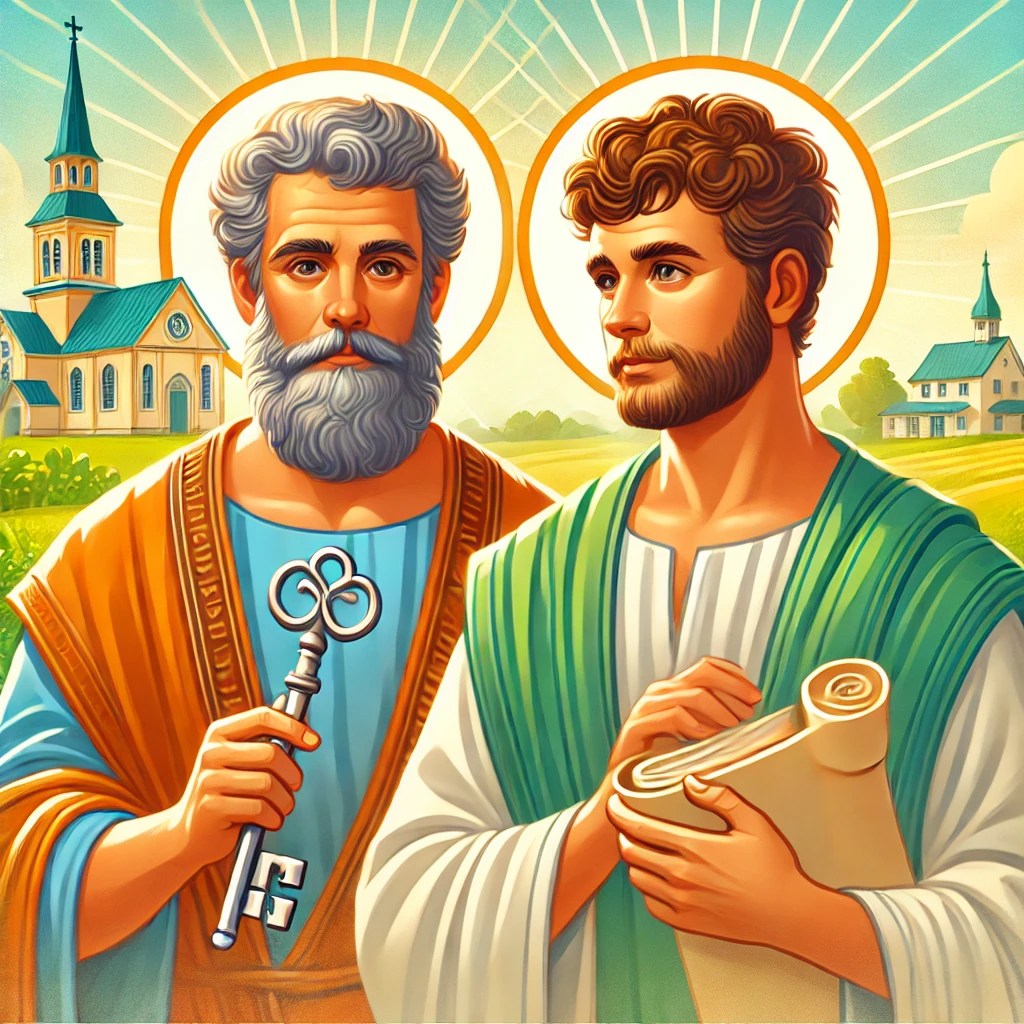
Today, we’re celebrating the Solemnity of Saints Peter and Paul, two of the biggest heroes of the early Church. Peter, the rock on which Jesus built His Church, and Paul, the unstoppable apostle to the Gentiles, both played monumental roles in spreading the Gospel. Their incredible journeys of faith, missionary zeal, and ultimate sacrifices continue to inspire us to live our faith with courage and conviction. As we dive into today’s readings, let’s reflect on their lives and seek their intercession to strengthen our own commitment to Christ and His Church.
First Reading – Acts 12: 1-11
Trusting Divine Providence
Today, we’re diving into a really powerful passage from the Book of Acts. It’s a timely reflection as we celebrate the Solemnity of Saints Peter and Paul. But first, let’s set the scene.
The Book of Acts, written by Luke, is like a highlight reel of the early Church’s epic journey. It’s packed with stories of growth, miracles, and, yes, some pretty intense persecution. Acts 12 zeroes in on the time around AD 44, during King Herod Agrippa I’s reign. It’s a rollercoaster ride featuring the martyrdom of James, Peter’s imprisonment, and his miraculous escape.
Acts 12: 1-11
James Killed and Peter Imprisoned
12 About that time King Herod laid violent hands upon some who belonged to the church. 2 He had James, the brother of John, killed with the sword. 3 After he saw that it pleased the Jews, he proceeded to arrest Peter also. (This was during the festival of Unleavened Bread.) 4 When he had seized him, he put him in prison and handed him over to four squads of soldiers to guard him, intending to bring him out to the people after the Passover. 5 While Peter was kept in prison, the church prayed fervently to God for him.
Peter Delivered from Prison
6 The very night before Herod was going to bring him out, Peter, bound with two chains, was sleeping between two soldiers, while guards in front of the door were keeping watch over the prison. 7 Suddenly an angel of the Lord appeared and a light shone in the cell. He tapped Peter on the side and woke him, saying, “Get up quickly.” And the chains fell off his wrists. 8 The angel said to him, “Fasten your belt and put on your sandals.” He did so. Then he said to him, “Wrap your cloak around you and follow me.” 9 Peter went out and followed him; he did not realize that what was happening with the angel’s help was real; he thought he was seeing a vision. 10 After they had passed the first and the second guard, they came before the iron gate leading into the city. It opened for them of its own accord, and they went outside and walked along a lane, when suddenly the angel left him. 11 Then Peter came to himself and said, “Now I am sure that the Lord has sent his angel and rescued me from the hands of Herod and from all that the Jewish people were expecting.”
First Reading Exegesis
Persecution and Martyrdom (Verses 1-2)
“About that time King Herod laid violent hands upon some who belonged to the church. He had James, the brother of John, killed with the sword.”
Herod Agrippa I wasn’t winning any popularity contests with the Christians. To cozy up to the Jewish authorities, he started persecuting the early Christians. James, one of Jesus’ closest disciples, became the first apostle to be martyred. This guy was known as one of the “Sons of Thunder” (Mark 3:17). Jesus even prophesied that James would share in His suffering (Matthew 20:23). James’ martyrdom is a sobering reminder of the cost of discipleship. It’s a powerful witness to the faith, as the Catechism of the Catholic Church (CCC 2473) says: “Martyrdom is the supreme witness given to the truth of the faith: it means bearing witness even unto death.”
Peter’s Imprisonment and the Church’s Prayer (Verses 3-5)
“After he saw that it pleased the Jews, he proceeded to arrest Peter also. (This was during the festival of Unleavened Bread.)”
Peter’s arrest during Passover wasn’t just a coincidence. Herod planned to make a spectacle of it after the festival, further threatening the young Church. But here’s where it gets really interesting: the community’s response was to come together and pray fervently for Peter. This highlights the power of collective prayer, which was a cornerstone of early Christian life (Acts 2:42-47).
Divine Intervention and Peter’s Escape (Verses 6-11)
“Suddenly an angel of the Lord appeared… ‘Get up quickly.’ And the chains fell off his wrists.”
Talk about a plot twist! An angel appears and frees Peter, illustrating God’s incredible care for His followers. The angel’s instructions—“Get up quickly”—are reminiscent of the Exodus, symbolizing deliverance. Peter’s initial disbelief shows just how mind-blowing this divine intervention was. St. John Chrysostom once commented on Peter’s peace in prison, pointing out his immense faith: “Peter, in prison, sleeps, expecting to be slain; but an angel comes, and the prison doors are opened.”
The Catechism reminds us of the role of angels in CCC 332: “Angels have been present since creation and throughout the history of salvation.”
Peter’s Realization and Gratitude (Verse 11)
“Then Peter came to himself and said, ‘Now I am sure that the Lord has sent his angel and rescued me from the hands of Herod.’”
Peter’s realization of his miraculous escape is a profound moment of faith and gratitude. This event encourages all believers to trust in God’s providence, no matter how bleak the situation might seem. The power of prayer and God’s intervention in Peter’s life underscores the importance of intercessory prayer, as highlighted in CCC 2629: “The vocabulary of supplication in the New Testament includes asking, beseeching, invoking, entreating, crying out…”
Conclusion
Acts 12:1-11 is an awe-inspiring chapter that showcases the early Church’s struggles and victories. James’ martyrdom and Peter’s deliverance remind us of the cost of discipleship and the incredible power of faith and prayer. This passage calls us to trust in divine providence, remain steadfast in our prayers, and find inspiration in the martyrs’ witness.
Reflection
So, as we reflect on this reading, let’s ask ourselves: How strong is our faith? Are we ready to stand firm like the apostles, even when things get tough? And how can we support our community through prayer, trusting that God’s got our back, even in the darkest times?
Responsorial Psalm – Psalm 34: 2-9
Discovering the Goodness of God
Psalm 34 is a beautiful song of praise from David. This psalm is thought to be written after David cleverly escaped a tricky situation by pretending to be mad (check out 1 Samuel 21:13-15 for the backstory). It’s all about thanksgiving and trusting in God’s deliverance—something that feels especially relevant today.
Psalm 34: 2-9
2 My soul makes its boast in the Lord;
let the humble hear and be glad.
3 O magnify the Lord with me,
and let us exalt his name together.4 I sought the Lord, and he answered me,
and delivered me from all my fears.
5 Look to him, and be radiant;
so your faces shall never be ashamed.
6 This poor soul cried, and was heard by the Lord,
and was saved from every trouble.
7 The angel of the Lord encamps
around those who fear him, and delivers them.
8 O taste and see that the Lord is good;
happy are those who take refuge in him.
9 O fear the Lord, you his holy ones,
for those who fear him have no want.
Psalm Exegesis
Boasting in the Lord (Verse 2)
“My soul makes its boast in the Lord; let the humble hear and be glad.”
David kicks things off by saying that he’s proud of one thing: God. Not his own achievements or status, but God’s greatness. It’s a refreshing reminder for us to root our confidence in something bigger than ourselves. When we focus on God’s greatness, it’s not about us anymore, and that’s incredibly freeing!
This ties into what the Catechism says about prayer (CCC 2559): “Humility is the foundation of prayer.” So, let’s boast in the Lord together and invite others to share in that joy!
Collective Worship (Verse 3)
“O magnify the Lord with me, and let us exalt his name together.”
David isn’t just having a solo worship session—he’s calling everyone to join in. There’s something powerful about worshipping together, right? Think of it like a concert where everyone’s singing along, but instead of a band, we’re praising God. St. Augustine reminds us that unity in worship strengthens the Church, and honestly, who doesn’t love being part of something bigger than themselves?
Seeking and Deliverance (Verse 4)
“I sought the Lord, and he answered me, and delivered me from all my fears.”
Here, David gets real about his fears. We all have them, right? But he sought God, and guess what? God showed up. This verse is a solid reminder that seeking God in prayer brings real answers and comfort. As the Catechism puts it (CCC 2626), this is about entering into a dialogue with God, where His gifts meet our needs.
Radiance and No Shame (Verse 5)
“Look to him, and be radiant; so your faces shall never be ashamed.”
Ever notice how someone’s face lights up when they’re truly happy? That’s the kind of radiance David is talking about. When we turn to God, we shine with His light, and we won’t feel shame. It’s like having a spiritual glow-up! The transformative power of God’s grace (CCC 1996) is what makes us radiant.
The Poor Soul and Divine Hearing (Verse 6)
“This poor soul cried, and was heard by the Lord, and was saved from every trouble.”
David describes himself as a “poor soul,” showing humility and reliance on God. God hears and saves him, which is super comforting. It reminds us that God’s always listening, ready to respond to our cries, no matter our status or situation. St. John Chrysostom highlights God’s profound love for all His children, reminding us that we’re never alone.
Angelic Protection (Verse 7)
“The angel of the Lord encamps around those who fear him, and delivers them.”
How cool is this? David tells us that God sends angels to protect those who respect and revere Him. It’s like having a divine security team! The Catechism (CCC 336) reassures us that angels watch over us throughout our lives. Knowing that we have such protection is incredibly comforting.
Experiencing God’s Goodness (Verse 8)
“O taste and see that the Lord is good; happy are those who take refuge in him.”
David invites us to experience God’s goodness firsthand. It’s not just theoretical—it’s personal and tangible. Think of it like trying a new favorite food; once you taste it, you know how good it is! This verse connects beautifully to the Eucharist, where we “taste and see” God’s goodness (CCC 1324).
Holy Fear and Provision (Verse 9)
“O fear the Lord, you his holy ones, for those who fear him have no want.”
This isn’t about being scared; it’s about having reverence and awe for God. When we live with this holy fear, we find that we lack nothing. God provides! The Catechism (CCC 1831) reminds us that the fear of the Lord is a gift of the Holy Spirit, guiding us to live rightly.
Conclusion
Psalm 34:2-9 is a heartfelt expression of praise and trust in God. David’s words encourage us to be humble, to worship together, and to find joy in God’s deliverance. We’re reminded of the protective presence of God and His angels, and the deep fulfillment that comes from a life of reverence.
Reflection
So, how can we cultivate that deep trust in God like David did? Let’s think about our own experiences of God’s goodness and deliverance. How can we invite others into our communal worship? And how can we keep boasting in the Lord in our daily lives?
Second Reading – 2 Timothy 4: 6-8, 17-18
Preserving the Faith
Imagine getting a heartfelt letter from a mentor who’s been through it all—triumphs, struggles, and now facing the end of his journey. That’s exactly what we find in this letter from Paul to his protégé, Timothy. It’s a mix of farewell and a pep talk to keep the faith alive.
2 Timothy 4: 6-8, 17-18
6 As for me, I am already being poured out as a libation, and the time of my departure has come. 7 I have fought the good fight, I have finished the race, I have kept the faith. 8 From now on there is reserved for me the crown of righteousness, which the Lord, the righteous judge, will give me on that day, and not only to me but also to all who have longed for his appearing.
17 But the Lord stood by me and gave me strength, so that through me the message might be fully proclaimed and all the Gentiles might hear it. So I was rescued from the lion’s mouth. 18 The Lord will rescue me from every evil attack and save me for his heavenly kingdom. To him be the glory forever and ever. Amen.
Second Reading Exegesis
Paul’s Imminent Departure (Verse 6)
“As for me, I am already being poured out as a libation, and the time of my departure has come.”
Paul uses the imagery of a libation, an offering poured out in worship, to describe his life. He’s basically saying, “I’ve given it my all.” This sacrificial language is a beautiful reminder that our lives can be an offering to God, just like Paul’s. As the Catechism says (CCC 2099), our sacrifices are signs of adoration and gratitude.
The Good Fight and the Finished Race (Verse 7)
“I have fought the good fight, I have finished the race, I have kept the faith.”
Here, Paul drops some sports metaphors, and who doesn’t love a good sports analogy? He’s saying he’s given his all, fought the battles, and crossed the finish line. It’s about perseverance and dedication. Just like in a marathon or any challenge, staying the course is key. St. John Chrysostom praises Paul’s endurance, reminding us that our spiritual journey is about wrestling with challenges and sticking it out.
The Crown of Righteousness (Verse 8)
“From now on there is reserved for me the crown of righteousness, which the Lord, the righteous judge, will give me on that day, and not only to me but also to all who have longed for his appearing.”
Paul talks about his heavenly reward, the “crown of righteousness.” It’s not just for him; it’s for everyone who eagerly awaits Jesus’ return. Think of it like a medal ceremony after a tough competition. As the Catechism (CCC 1024) reminds us, heaven is the ultimate fulfillment of our deepest longings. It’s the ultimate prize!
Divine Strength and Proclamation (Verse 17)
“But the Lord stood by me and gave me strength, so that through me the message might be fully proclaimed and all the Gentiles might hear it. So I was rescued from the lion’s mouth.”
Paul credits his strength and ability to share the Gospel to God’s presence. The imagery of being rescued from the “lion’s mouth” shows how God protects us, even in the face of danger. St. Augustine tells us that God doesn’t abandon us; He empowers us to stand strong and share His truth.
Divine Rescue and Heavenly Salvation (Verse 18)
“The Lord will rescue me from every evil attack and save me for his heavenly kingdom. To him be the glory forever and ever. Amen.”
Paul expresses confidence in God’s ultimate deliverance—not just from physical dangers but from all evil. It’s about trusting that God’s got our backs, leading us to His heavenly kingdom. This assurance of salvation aligns with the Catechism (CCC 1042), which speaks of the hope of new heavens and a new earth. It’s about the ultimate unity we’ll experience with God.
Conclusion
2 Timothy 4:6-8, 17-18 captures Paul’s reflections at the end of his life. It’s about living sacrificially, persevering in faith, and finding strength in God. Paul’s journey encourages us to stay steadfast in our faith, knowing that God is always with us, offering ultimate deliverance.
Reflection
This passage challenges us to reflect on our own faith journey. Are we living our lives as offerings to God? How do we persevere when things get tough? And how do we draw strength from God to share the Good News?
Holy Gospel – Matthew 16: 13-19
Discovering our Foundation
This part of the Gospel is like the ultimate reveal party, where Jesus asks His disciples who they think He is, and Peter drops some major truth bombs. But first, let’s set the scene.
Matthew’s Gospel presents Jesus as the Messiah and King, fulfilling all those Old Testament prophecies we’ve heard about. This particular passage happens in Caesarea Philippi, a place known for its strong pagan presence. Imagine talking about divine truths in the middle of a bustling, worldly city—it’s a perfect backdrop for Jesus’ question and Peter’s epic confession.
Matthew 16: 13-19
Peter’s Declaration about Jesus
13 Now when Jesus came into the district of Caesarea Philippi, he asked his disciples, “Who do people say that the Son of Man is?” 14 And they said, “Some say John the Baptist, but others Elijah, and still others Jeremiah or one of the prophets.” 15 He said to them, “But who do you say that I am?” 16 Simon Peter answered, “You are the Messiah, the Son of the living God.” 17 And Jesus answered him, “Blessed are you, Simon son of Jonah! For flesh and blood has not revealed this to you, but my Father in heaven. 18 And I tell you, you are Peter, and on this rock I will build my church, and the gates of Hades will not prevail against it. 19 I will give you the keys of the kingdom of heaven, and whatever you bind on earth will be bound in heaven, and whatever you loose on earth will be loosed in heaven.”
Holy Gospel Exegesis
Jesus’ Question to the Disciples (Verse 13)
“Now when Jesus came into the district of Caesarea Philippi, he asked his disciples, ‘Who do people say that the Son of Man is?’”
Jesus kicks things off by asking His disciples what the word on the street is about Him. “Son of Man” is a title He uses a lot, blending His humanity and divine mission. According to the Catechism (CCC 440), this title points to Jesus’ role as the prophesied Messiah and divine judge.
Varied Opinions (Verse 14)
“And they said, ‘Some say John the Baptist, but others Elijah, and still others Jeremiah or one of the prophets.’”
The disciples relay the buzz—they compare Jesus to John the Baptist, Elijah, Jeremiah, and other prophets. People recognize His authority but don’t fully get His true identity. St. Jerome notes that the crowd saw Jesus as just another prophet, not realizing He was so much more.
Peter’s Confession (Verses 15-16)
“He said to them, ‘But who do you say that I am?’ Simon Peter answered, ‘You are the Messiah, the Son of the living God.’”
Then Jesus makes it personal, asking His disciples directly. Peter, always the bold one, steps up and declares, “You are the Messiah, the Son of the living God.” This is huge! Peter nails it, recognizing Jesus’ true identity. The Catechism (CCC 442) calls this confession a key moment for the Church’s understanding of Jesus.
Jesus’ Affirmation (Verse 17)
“And Jesus answered him, ‘Blessed are you, Simon son of Jonah! For flesh and blood has not revealed this to you, but my Father in heaven.’”
Jesus blesses Peter, affirming that this revelation came straight from God. St. Augustine highlights that Peter spoke through divine inspiration, not human wisdom. It’s a reminder that true understanding of Jesus comes from above.
Peter, the Rock (Verse 18)
“And I tell you, you are Peter, and on this rock I will build my church, and the gates of Hades will not prevail against it.”
Here’s where Jesus renames Simon as Peter (which means rock) and declares him the foundation of the Church. This is a cornerstone moment, showing Peter’s unique role and the Church’s enduring strength against evil. The Catechism (CCC 881) explains this as the basis for the papacy.
The Keys of the Kingdom (Verse 19)
“I will give you the keys of the kingdom of heaven, and whatever you bind on earth will be bound in heaven, and whatever you loose on earth will be loosed in heaven.”
Jesus gives Peter the “keys of the kingdom,” symbolizing authority to bind and loose—basically, to govern the Church’s teachings and discipline. St. John Chrysostom emphasizes that these keys represent the governance of the Church, ensuring it stays true to Christ’s teachings. The Catechism (CCC 553) elaborates on this authority, showing how Peter’s role was crucial for the early Church and remains important today.
Conclusion
Matthew 16:13-19 is a game-changer for understanding Peter’s foundational role and the papal office in the Church. Peter’s confession of Jesus as the Messiah and Son of God is matched by Jesus’ declaration of Peter as the rock on which the Church is built. This passage highlights the divinely revealed nature of Jesus’ identity, the Church’s enduring strength, and the unique role of Peter and his successors.
Reflection
This reading invites us to reflect on our own understanding and confession of Jesus’ identity. How do we recognize and proclaim Jesus as the Messiah in our daily lives? How do we support the Church’s mission and uphold the teachings entrusted to it through apostolic authority?
Living Boldly in Faith: A Call to Action
As we reflect on today’s readings and the incredible lives of Saints Peter and Paul, we’re reminded of the immense power of faith, prayer, and community. Peter’s miraculous escape and Paul’s unwavering proclamation of the Gospel demonstrate that no matter the challenges we face, God is with us, guiding and protecting us. James’ martyrdom highlights the ultimate cost of discipleship, challenging us to live our faith with courage and conviction. Psalm 34 encourages us to seek and trust in God’s deliverance, while Paul’s letter to Timothy inspires us to persevere in our faith journey.
Let these reflections inspire you to deepen your relationship with God. Embrace humility and prayer, support one another in community worship, and stand firm in your faith, even in tough times. Just as Peter and Paul dedicated their lives to spreading the Gospel, let’s strive to live out our faith boldly, trusting in God’s providence and finding strength in His love and grace. Remember, you are never alone—God’s presence, along with the prayers of the saints, is always with you. Let’s go forth with renewed dedication to live as true disciples of Christ, making a difference in our world.
Feel free to share your thoughts and experiences in the comments. How will you take these lessons to heart and grow closer to God in your daily life? Let’s support and inspire each other on this journey of faith.

 Holy Manna!
Leave a comment